
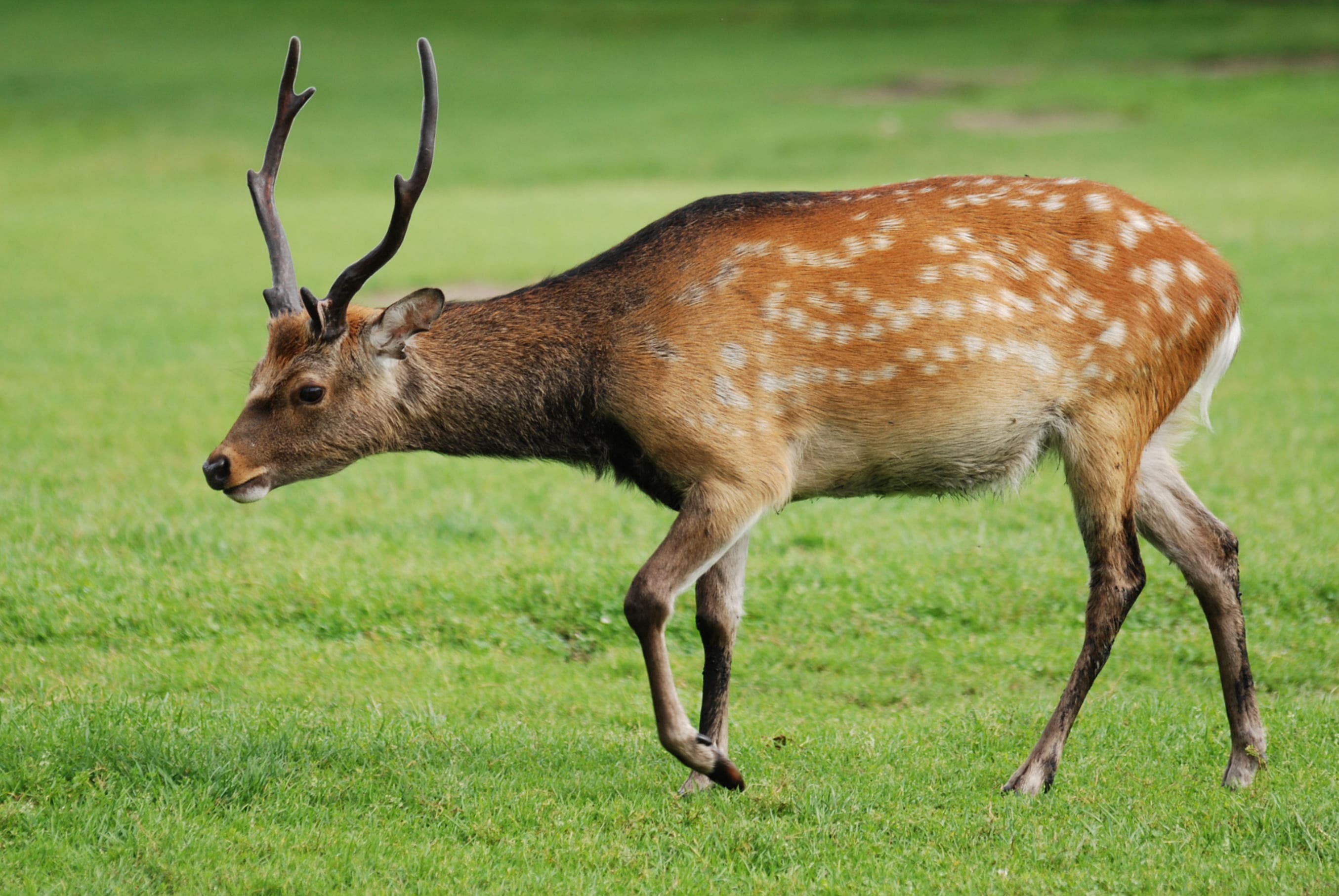
Formosan sika deer once roamed all across the plains and low forests of Taiwan in enormous herds. About a hundred years ago, they almost disappeared from the wild. People realised what was happening and decided to do something about it. A small group of deer were carefully looked after in parks, and slowly their numbers began to grow again.
Today, thanks to those efforts, there are several wild herds living in protected places like Kenting National Park in southern Taiwan. The deer have learned to live in coastal forests, near grasslands and even close to villages. Park rangers keep track of them and make sure they have plenty of food and water.
Baby sika deer are born in early summer, covered in extra-bright white spots. The spots are so clear at first that they almost glow. The babies stay hidden in the long grass for the first few weeks while their mothers come to feed them. The spots blend in with the spots of sunlight that fall through the leaves.
Males grow antlers each year - big branching ones that look almost like the bare twigs of a tree. The antlers fall off in late winter and brand new ones grow back, a little bigger than before. By autumn they have a full new pair, ready to use.