
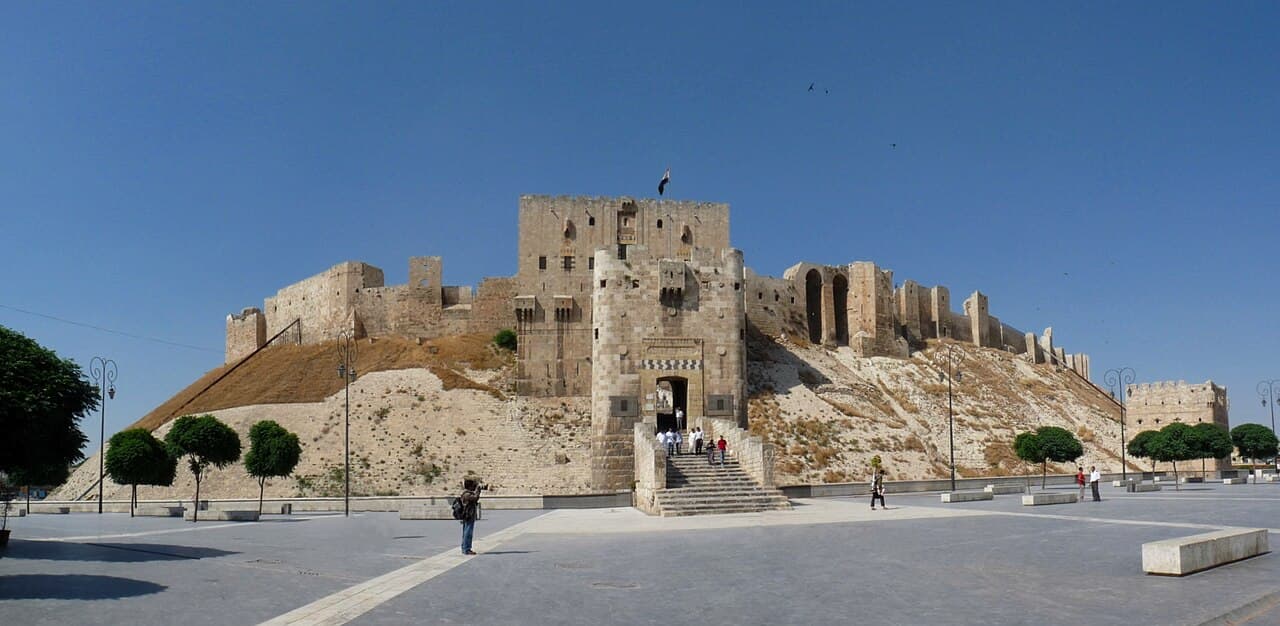
The hill the citadel sits on has been used as a stronghold for at least 3,000 years, though the buildings you can see today are mostly from around 800 years ago. The entrance is a long, steep bridge over a moat, leading through a series of gates that zigzag to slow anyone trying to rush in. Inside, there is a throne room, bathhouses, a palace and even a tiny amphitheatre.
The souks below the citadel are extraordinary - 13 kilometres of covered lanes in total. Each section traditionally sold one type of goods: the goldsmiths' quarter, the spice quarter, the soap quarter (Aleppo soap, made with laurel berry oil, is famous around the world and is one of the oldest types of soap still made today). The lanes have stone arched ceilings that keep them cool even in summer heat.
Aleppo soap deserves a special mention. Made from olive oil and the oil of laurel berries, it has been produced in Aleppo for at least 2,000 years and was traded across the Mediterranean world. You can still buy the same type of soap today - it starts out dark green on the outside and lighter inside, and the longer it cures the better it gets.
Aleppo's craftsmanship tradition covers silk weaving, glassblowing, woodcarving and metalwork. Artisan workshops tucked into the souk lanes have passed skills from parent to child for generations, keeping ancient techniques alive in the middle of a living, bustling city.