
Classroom lesson · Nile Confluence at Khartoum · 🇸🇩 Sudan

Nile Confluence at Khartoum

Where the Blue Nile and White Nile shake hands

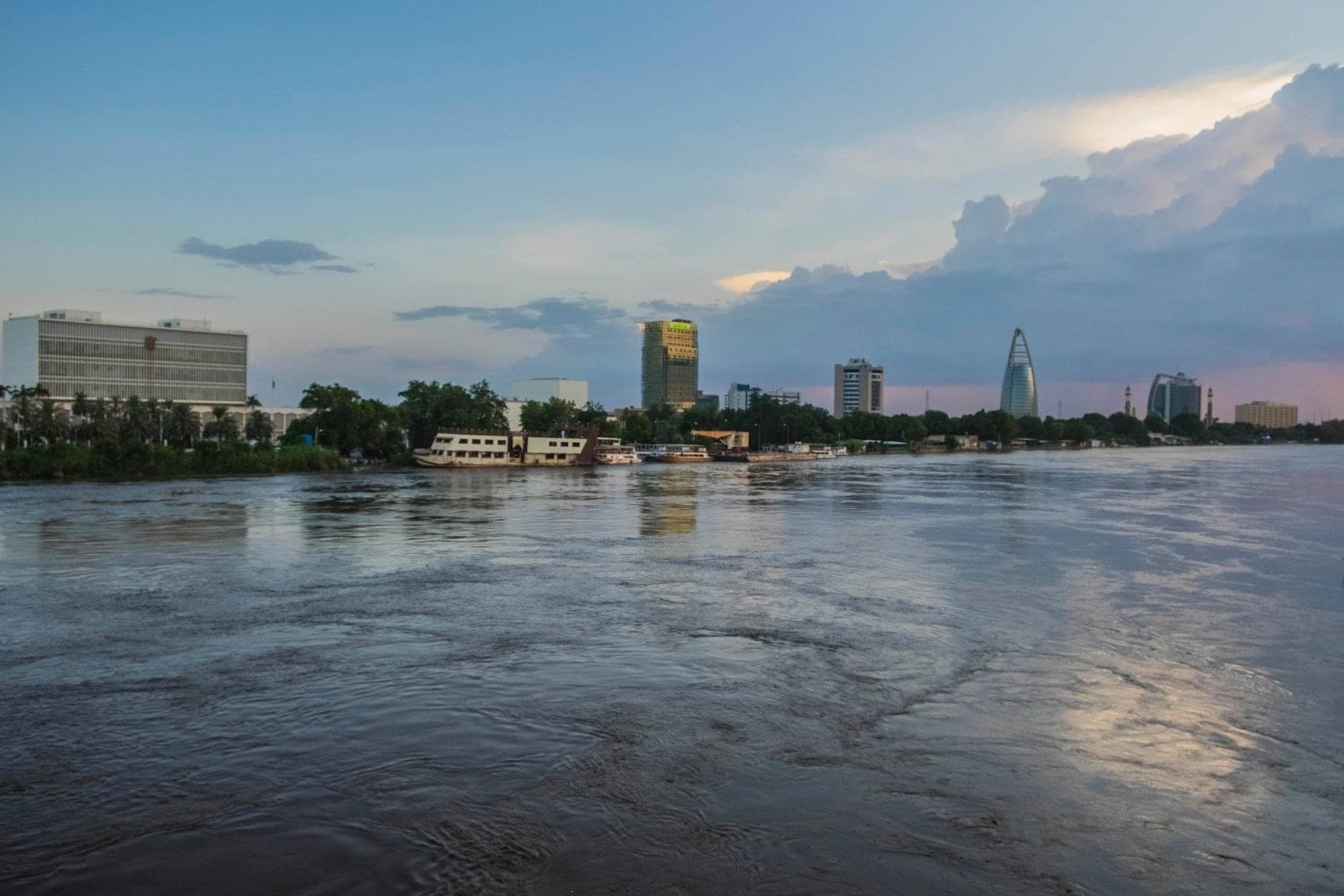
Aerial view of the Blue Nile and White Nile merging at Khartoum, showing two differently coloured rivers joining

Photo · Wikimedia Commons

What is it?

At Khartoum, Sudan's capital city, two great rivers meet and become one. The Blue Nile rushes in from the mountains of Ethiopia, carrying dark, mineral-rich water. The White Nile arrives from the lakes of East Africa, carrying lighter, silty water. You can actually see the two colours side by side before they mix into the mighty Nile River.

Tell me more

The Blue Nile and White Nile have completely different journeys before they meet. The Blue Nile starts at Lake Tana high in the Ethiopian mountains, where heavy rains rush down steep valleys and pick up rich dark soil along the way. The White Nile starts much further south, flowing gently from Lake Victoria through flat wetlands called the Sudd in South Sudan.

When the two rivers meet at Khartoum, the water from each one does not mix straight away. For a short stretch, you can look down from a bridge and see a clear line where darker blue-grey water sits next to lighter tan-coloured water - like two halves of a smoothie that haven't been stirred yet. Gradually the currents blend the two together into the single Nile that then flows north through Sudan and Egypt all the way to the Mediterranean Sea.

The Nile at Khartoum is incredibly important for the people and wildlife of Sudan. Farmers grow crops in the thin strip of green land along its banks. Birds like the African fish eagle and the sacred ibis live near the water. Hippos, Nile monitor lizards and soft-shelled turtles also call the river home. The Nile has kept this part of Africa alive and green for thousands of years.

In the classroom

Walk your class through this in 15 minutes.

Talk together

Discussion prompts

  1. 01Why do you think the two rivers stay separate for a little while instead of mixing straight away? What does that remind you of?
  2. 02Farmers have grown food beside the Nile for thousands of years. What do rivers give to the land around them?
  3. 03If you were naming the rivers, would you have called them the Blue Nile and White Nile? What names would you choose, and why?
  4. 04What animals would you hope to spot on a boat trip along the Nile? Which surprises you most from the list?
Try this

Classroom activity

Fill two clear cups with water - add a little blue food colouring to one and a little brown to the other. Very slowly pour one into a tall glass, then very slowly pour the second down the side. Watch how long the two colours stay separate before mixing. Draw what you saw and label it as 'Blue Nile' and 'White Nile'.