
Classroom lesson 路 Wildlife馃嚤馃嚢 Sri Lanka

The Sri Lanka junglefowl

The wild bird that may be the great-great-grandparent of every chicken

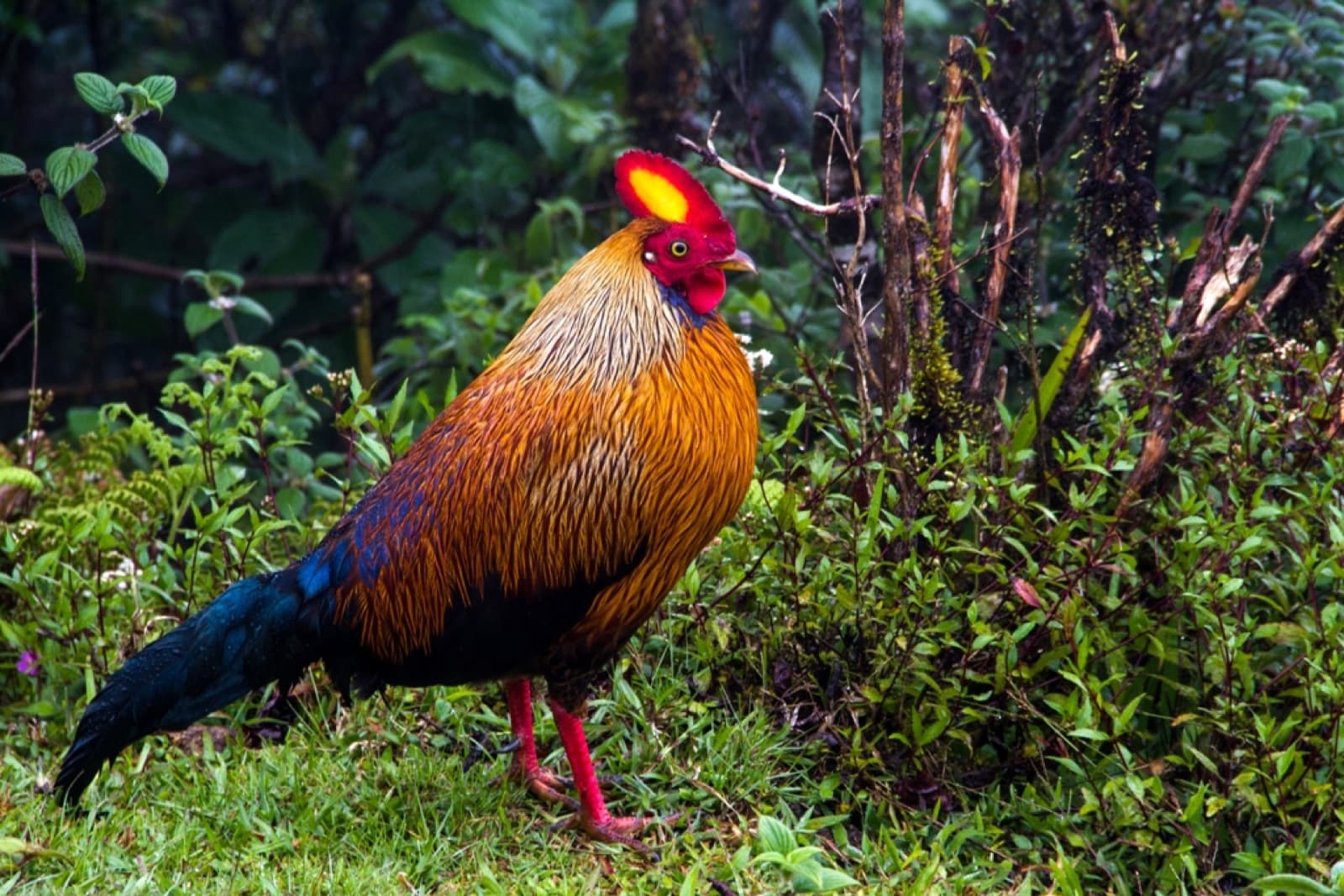
A male Sri Lanka junglefowl with orange-red plumage and a yellow face wattle

Photo 路 Wikimedia Commons

What is it?

The Sri Lanka junglefowl is Sri Lanka's national bird. It lives only on this island. The male is one of the most spectacular birds you can imagine - flame-orange feathers, a bright yellow patch on his face, and a long shiny tail. Scientists think his relatives are the great-great-grandparents of every chicken in the world.

Tell me more

All chickens on Earth descend from wild junglefowl. Most come from the red junglefowl of India, but some scientists think the Sri Lanka junglefowl shared in the story too. Wild chickens started living near humans thousands of years ago, and over many generations they became the friendly farmyard hen you might know.

Male Sri Lanka junglefowl are show-offs. They have brilliant orange and gold feathers, with a long, curving tail that shines almost like a polished metal. The female is much plainer - browner, smaller, and easier to hide while sitting on eggs in a nest on the ground.

They live in the thick forests of Sri Lanka, scratching about on the floor for seeds, insects and small fruit. They roost - sleep - high up in trees at night, where snakes and wildcats can't reach them.

Like a farmyard rooster, the male crows. But the Sri Lankan call sounds different - more like a loud 'cor-cor-CHOI' that echoes through the forest at dawn. If you ever go camping in a Sri Lankan rainforest, this is the sound that will wake you up.

In the classroom

Walk your class through this in 15 minutes.

Talk together

Discussion prompts

  1. 01How might a chicken in a farmyard be different from its wild ancestor in a jungle?
  2. 02Why are male birds often brighter than female ones? (Hint: who sits on the nest?)
  3. 03What animal alarm clocks would wake you up in different places around the world?
Try this

Classroom activity

Each pupil draws their own 'national bird' for an imaginary country - giving it colours, a special call, and a name. Then make a class wall of national birds and vote for the most spectacular.