
Classroom lesson 路 Wildlife馃嚤馃嚢 Sri Lanka

Sri Lankan leopards

The highest density of leopards in the world - and they're tree climbers

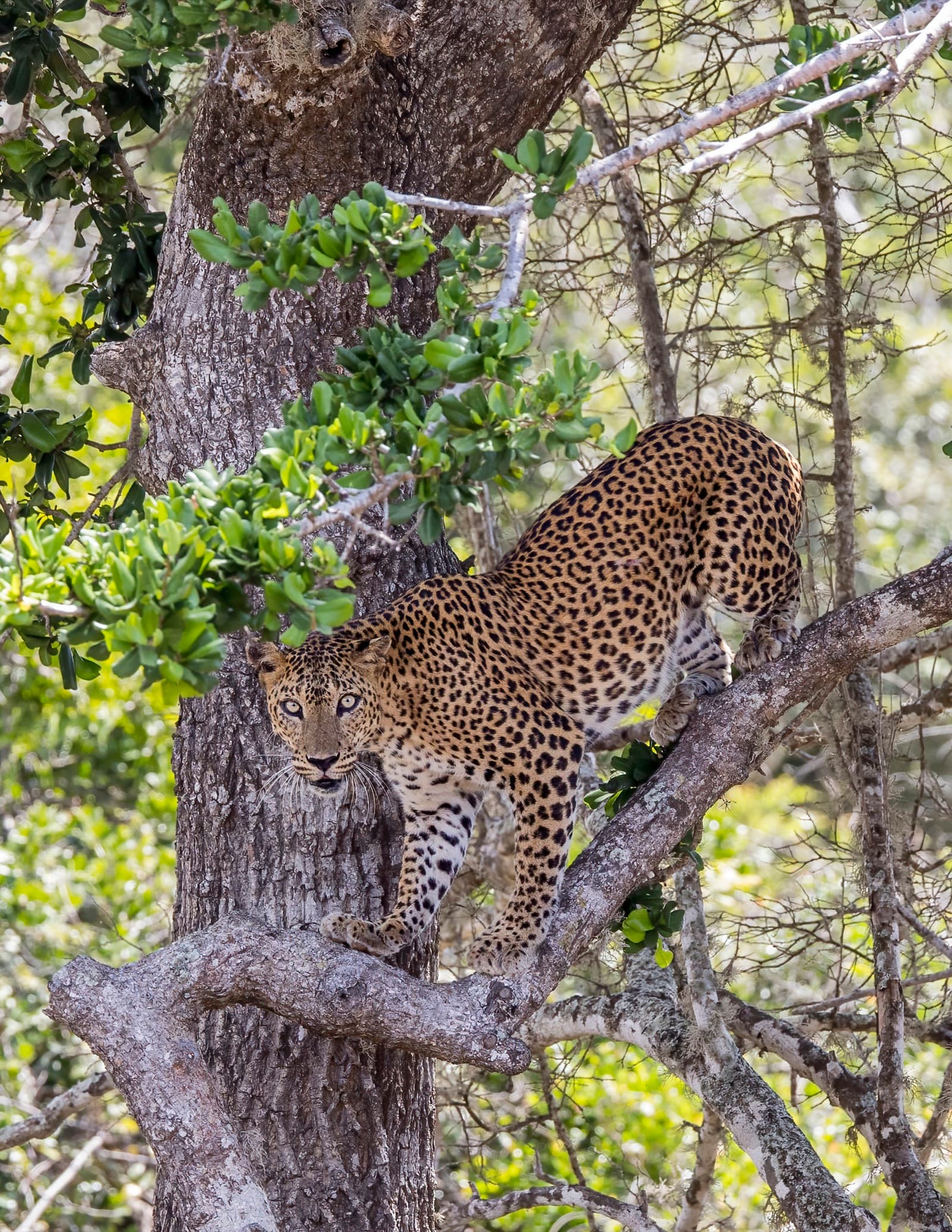
A Sri Lankan leopard standing on a tree branch in Yala National Park

Photo 路 Wikimedia Commons

What is it?

The Sri Lankan leopard is a special kind of leopard that lives nowhere else in the world. Yala National Park, in the south of Sri Lanka, has more leopards packed into one place than anywhere else on Earth. They are also famous for climbing high up into trees - their own version of a treehouse.

Tell me more

Leopards are big, spotted cats - cousins of lions and tigers. The Sri Lankan kind is a bit bigger than the Indian leopard, partly because it doesn't have to compete with tigers or lions on the island. It is the top hunter, the boss of the food chain.

Each leopard has a different pattern of spots, called 'rosettes' because they look like tiny rose flowers. The pattern is unique - like a fingerprint - so park rangers who study them can tell each leopard apart.

Sri Lankan leopards love trees. They drag their meals up into the branches to eat in peace, away from other animals. They sleep up there too, draped over a thick branch like a long furry sock. Some leopards spend more time up in the trees than on the ground.

Leopards are mostly active at dawn and dusk, when the light is low. They hunt deer, wild boar and monkeys. They are masters of patience - sometimes a leopard will lie completely still for an hour, waiting for the right moment to pounce. Their spots help them disappear into the dappled shadow under a tree.

In the classroom

Walk your class through this in 15 minutes.

Talk together

Discussion prompts

  1. 01Why might it help a leopard to drag its meal up a tree before eating?
  2. 02How do spots help a leopard hide? Where would they NOT work as camouflage?
  3. 03Lots of animals are most active at dawn and dusk. Why might that be a smart time to hunt?
Try this

Classroom activity

Each pupil designs their own leopard - draw a sketch and give it a unique rosette pattern. Then hold them up at the front. Can the class spot any two with the same pattern? (They shouldn't be able to - just like real leopards.)