
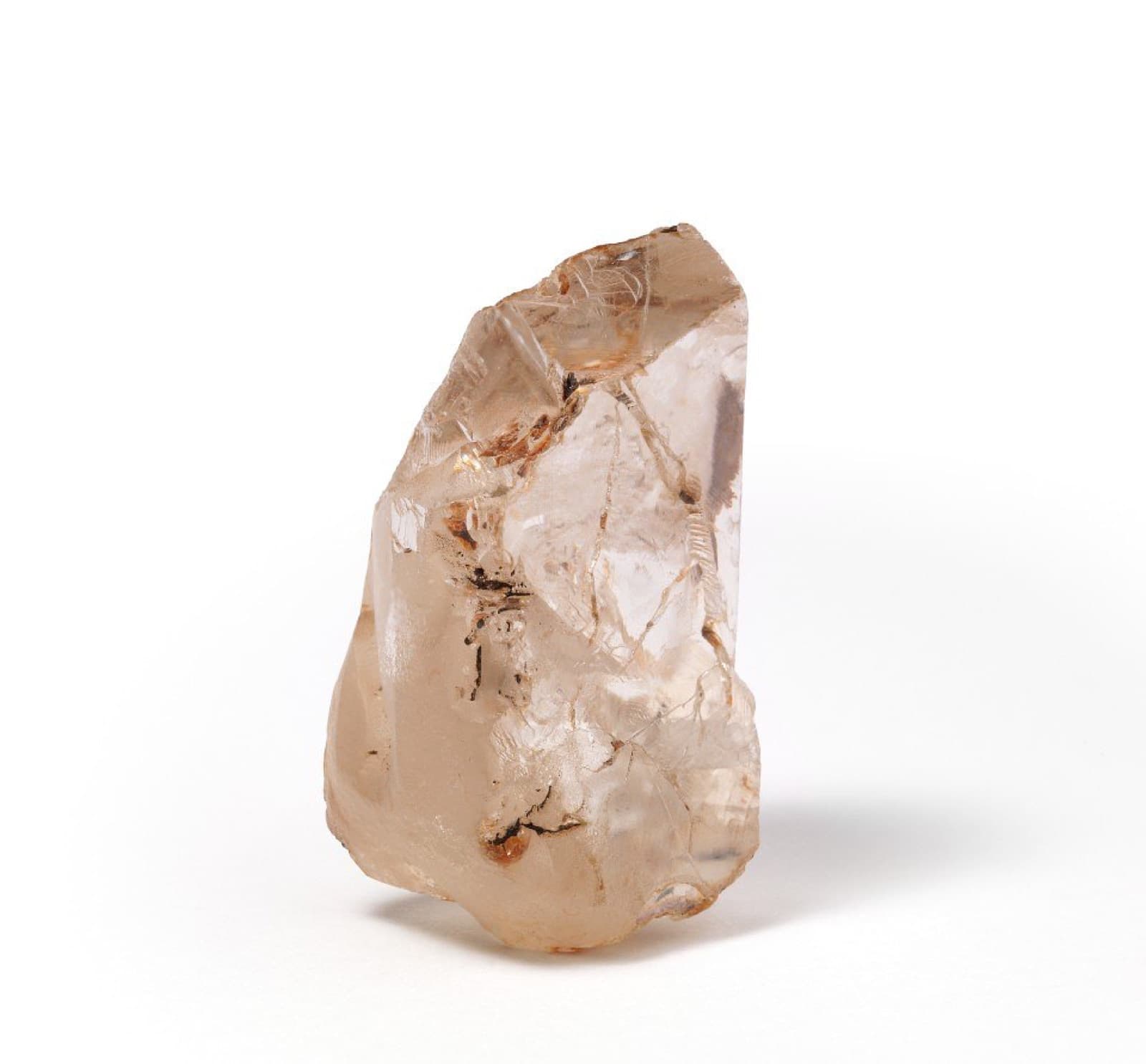
Diamonds form deep below the ground, around 150 km down, where it is hotter than an oven and the pressure is enormous. Volcanoes long ago carried them upwards in special tunnels of rock called 'kimberlite pipes', named after the South African town of Kimberley.
When diamonds were first found in South Africa in the 1860s, a town grew up around the discovery so quickly that people dug a hole called the Big Hole - one of the largest holes ever dug by hand. You can still visit the edge of it today.
A diamond fresh out of the ground doesn't sparkle. It looks like a piece of cloudy glass. To make it sparkle, a diamond cutter carefully grinds tiny flat surfaces called 'facets' onto it. Each facet bends the light in a different direction, which is why a cut diamond shines.
Diamonds are not just used in jewellery. Because they are so hard, they are also used to cut things. Drills with diamond tips can cut through stone, glass, even other diamonds. Many of the diamonds in factories around the world are made for cutting, not for wearing.