
Classroom lesson · Music · 🇸🇹 São Tomé and Príncipe

Ússua Singing

Joyful traditional songs that have been sung on the islands for centuries

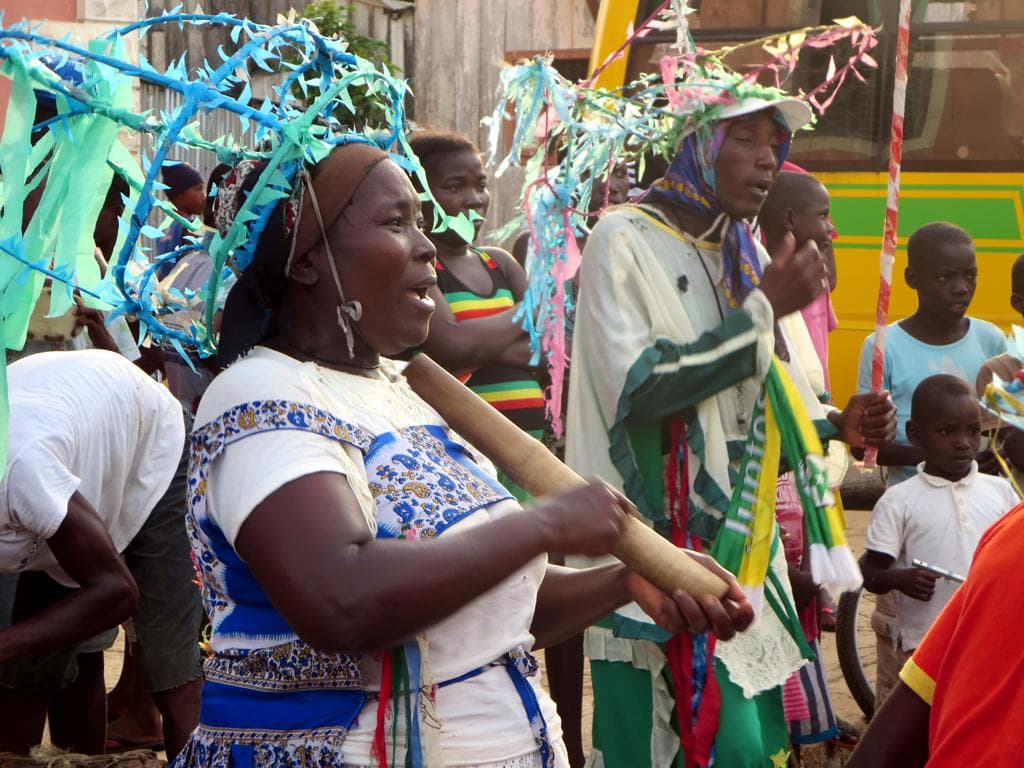
A group of singers in colourful traditional dress performing ússua on São Tomé

Photo · Wikimedia Commons

What is it?

Ússua is a traditional style of singing and music from São Tomé island. Groups of singers come together to perform in a call-and-response style - one voice or group sings a line and the rest answer back. The music is joyful, rhythmic and deeply tied to the island's culture and identity.

Tell me more

In call-and-response singing, a leader starts a phrase and the group echoes or answers. This style is found in many cultures across Africa and among communities of African heritage around the world. It is a very natural and social way to make music - everyone can join in, even people who do not know the song, by following the group's response.

Ússua has been part of life on São Tomé for many generations. It is performed at celebrations, festivals and community gatherings, where it brings people together. The rhythms often have a swaying, dance-like quality that naturally makes listeners want to move.

Traditional instruments that accompany ússua include drums and percussion made from local materials. The music builds in energy as the singing continues, and performances can become very lively, with singers, drummers and dancers all joining together.

Young people on São Tomé learn ússua through listening and participating - joining in with the responses, picking up the rhythms, and gradually learning to lead. It is a living tradition, kept alive by communities who value it as part of who they are.

In the classroom

Walk your class through this in 15 minutes.

Talk together

Discussion prompts

  1. 01Have you ever done call-and-response in a song, a game or a chant? What did it feel like?
  2. 02Why might music that everyone can join in with be especially good for bringing a community together?
  3. 03Ússua is passed on by listening and joining in rather than reading it from paper. What do you think are the advantages of learning music that way?
Try this

Classroom activity

Create a simple classroom call-and-response. The teacher (leader) makes up a phrase - for example 'We are learning today!' - and the class responds with 'Yes we are!' Try different rhythms and volumes. Then let a pupil take the lead and make up their own phrase for the class to answer.