
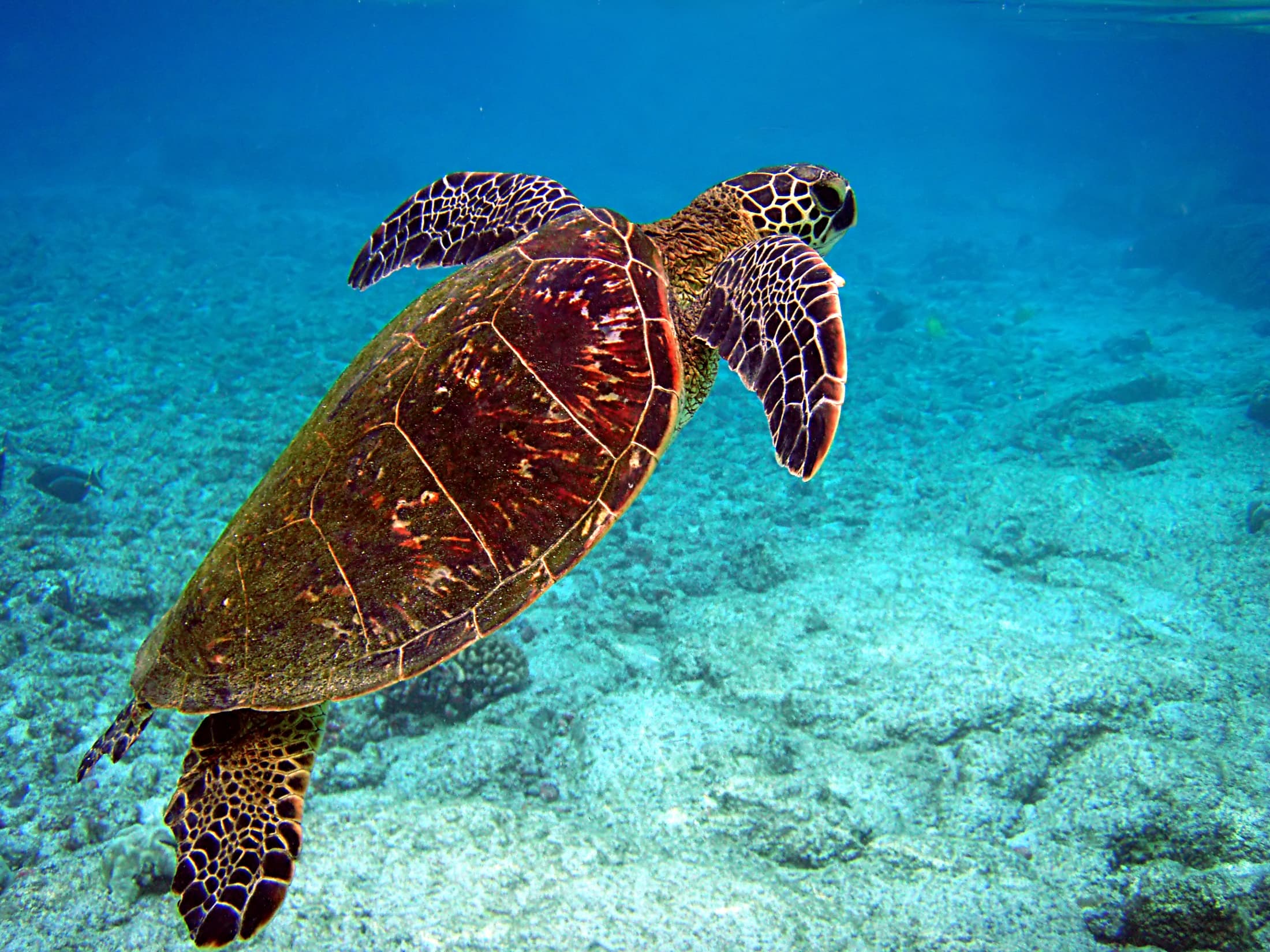
Green sea turtles get their name not from the colour of their shell (which is usually brown or olive), but from the greenish colour of their fat, which comes from the sea grasses and algae they eat. They are powerful swimmers with large flippers that sweep them through the water almost like wings.
Every few years, a female green sea turtle makes a remarkable journey - sometimes thousands of kilometres across the ocean - back to the very beach where she was born. She crawls ashore at night, digs a hole in the sand with her back flippers, lays around 100 eggs, covers them up, and returns to the sea. She may do this several times in one season.
The eggs incubate in the warm sand for about two months. When the tiny hatchlings are ready, they dig upward through the sand and scramble toward the sea - usually at night, guided by the brightness of the open horizon over the water. Many local people feel a great pride and responsibility for looking after the nesting beaches.
The beaches of São Tomé and Príncipe are carefully monitored during nesting season. Community members and scientists work together to count nests and make sure the turtles are not disturbed. The turtles have been swimming these waters for millions of years - they are living links to prehistoric times.