
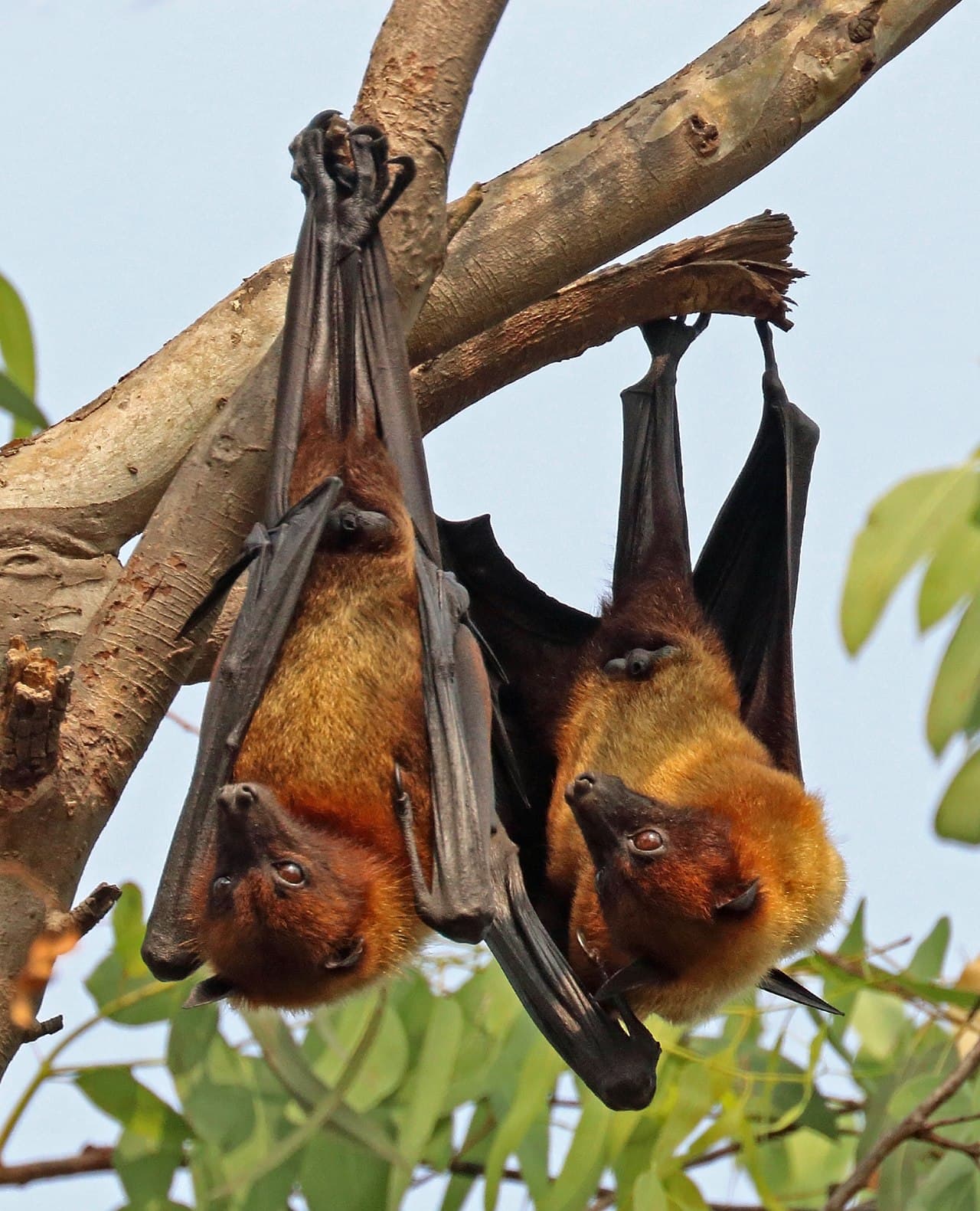
Flying foxes sleep during the day, hanging upside down in groups - called camps - high in the forest canopy. They wrap their dark, leathery wings around themselves like a cloak. If you look up into the trees in the forest, you might see hundreds of them hanging together. They wake up at dusk and set off to find food.
Flying foxes eat fruit, flowers and nectar. As they travel from tree to tree in the dark, they drop seeds in their droppings and carry pollen on their fur. This helps new trees and plants grow all across the forest. Scientists call this service 'pollination and seed dispersal' - and the flying fox does it better and faster than almost any other animal in Samoa.
In Samoan culture, flying foxes have a special place. They have been eaten as a traditional food for centuries, and they appear in legends and songs. Today, people are working hard to protect them because their forests are being reduced. Seeing a colony of flying foxes stream out of the trees at sunset - hundreds of them filling the sky - is one of the most amazing sights in Samoa.