
Classroom lesson 路 Wildlife馃嚪馃嚰 Rwanda

Mountain gorillas

Gentle giants of the misty volcano forests

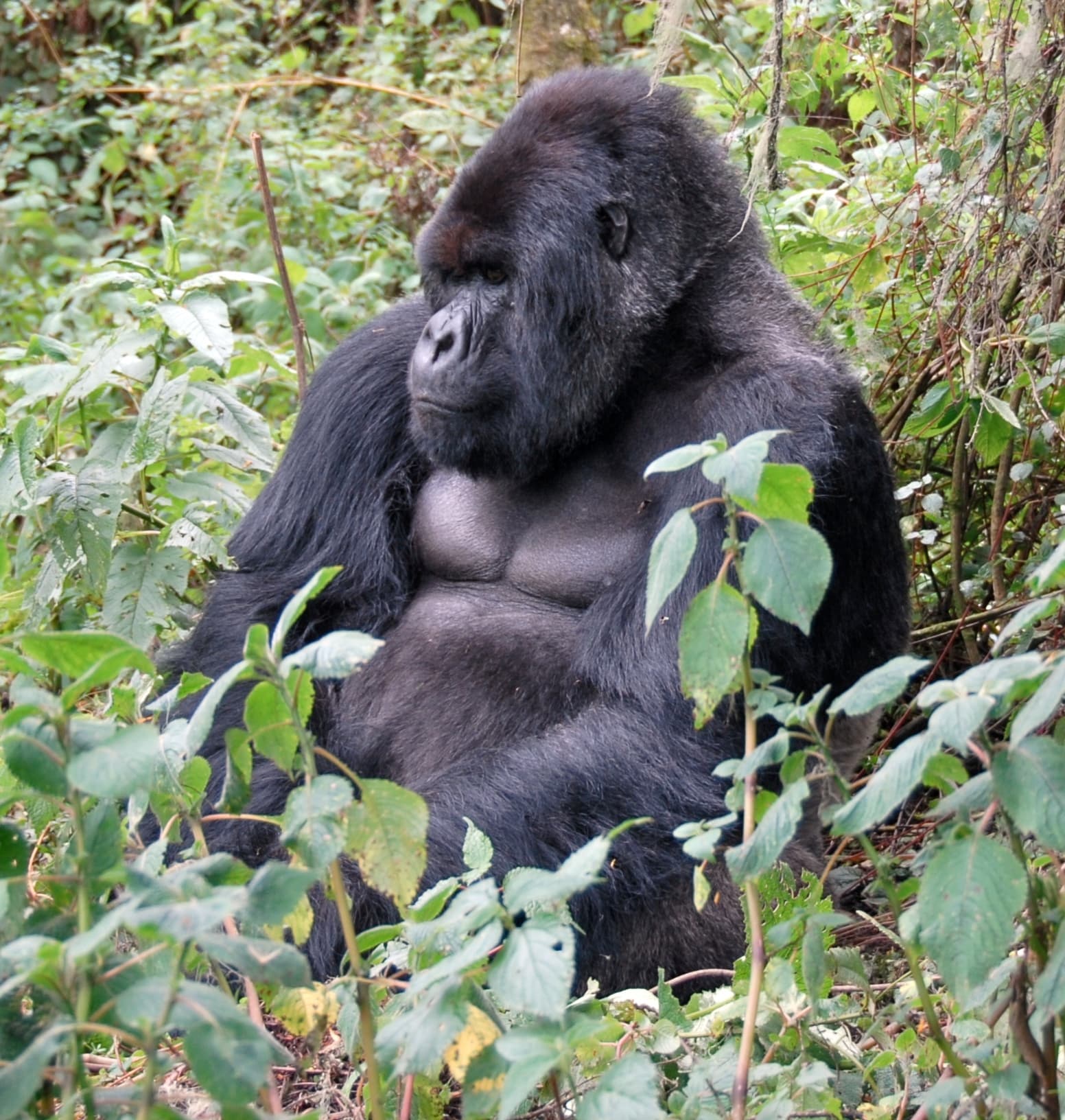
A mountain gorilla family resting in the misty bamboo forest of Volcanoes National Park

Photo 路 Wikimedia Commons

What is it?

Mountain gorillas are huge, gentle apes that live in the misty forests of Rwanda, Uganda and the Democratic Republic of Congo. They are one of the largest primates in the world. There are only about 1,000 left in the wild, and around half of them live on the volcanoes of northern Rwanda.

Tell me more

An adult male mountain gorilla, called a silverback, can weigh 180 kilograms - more than two grown-ups put together. Despite their size, they are vegetarians. They spend their days quietly munching on bamboo shoots, wild celery, thistles and around 100 other kinds of plant. A big silverback can eat 30 kilograms of leaves in one day.

Mountain gorillas live in families of about 10 to 30 members, led by one silverback father. He decides where the family will eat, where they will sleep, and where they will travel. The mothers, aunties and youngsters live close together. Baby gorillas ride on their mothers' backs and play in the trees, just like human toddlers play in a park.

Each gorilla has a unique nose-print, like a human fingerprint. The bumps and wrinkles on their noses are all different. Rangers use nose-prints to recognise individual gorillas, and every gorilla in Rwanda has a name. Some are named at a special ceremony every year called Kwita Izina.

Gorillas share around 98% of their DNA with humans. They yawn when they are tired, hug each other, laugh when they are tickled, and grieve when a family member dies. Scientists who study them say that meeting a gorilla family in the forest feels like meeting cousins you have never met before.

In the classroom

Walk your class through this in 15 minutes.

Talk together

Discussion prompts

  1. 01Mountain gorillas are huge but gentle. Why do you think people sometimes assume big animals are dangerous when they aren't?
  2. 02Each gorilla has a unique nose-print. What other ways can scientists tell animals apart?
  3. 03If gorillas share 98% of our DNA, what do you think makes them most like us? What makes them different?
Try this

Classroom activity

On a piece of paper, draw a big gorilla nose with its own pattern of wrinkles. Make it different from everyone else's. Pin all the noses on the wall. Without writing names, see if your classmates can match each nose to the right pupil based on something each person tells the class about themselves. Talk about how scientists learn to recognise gorilla families.