
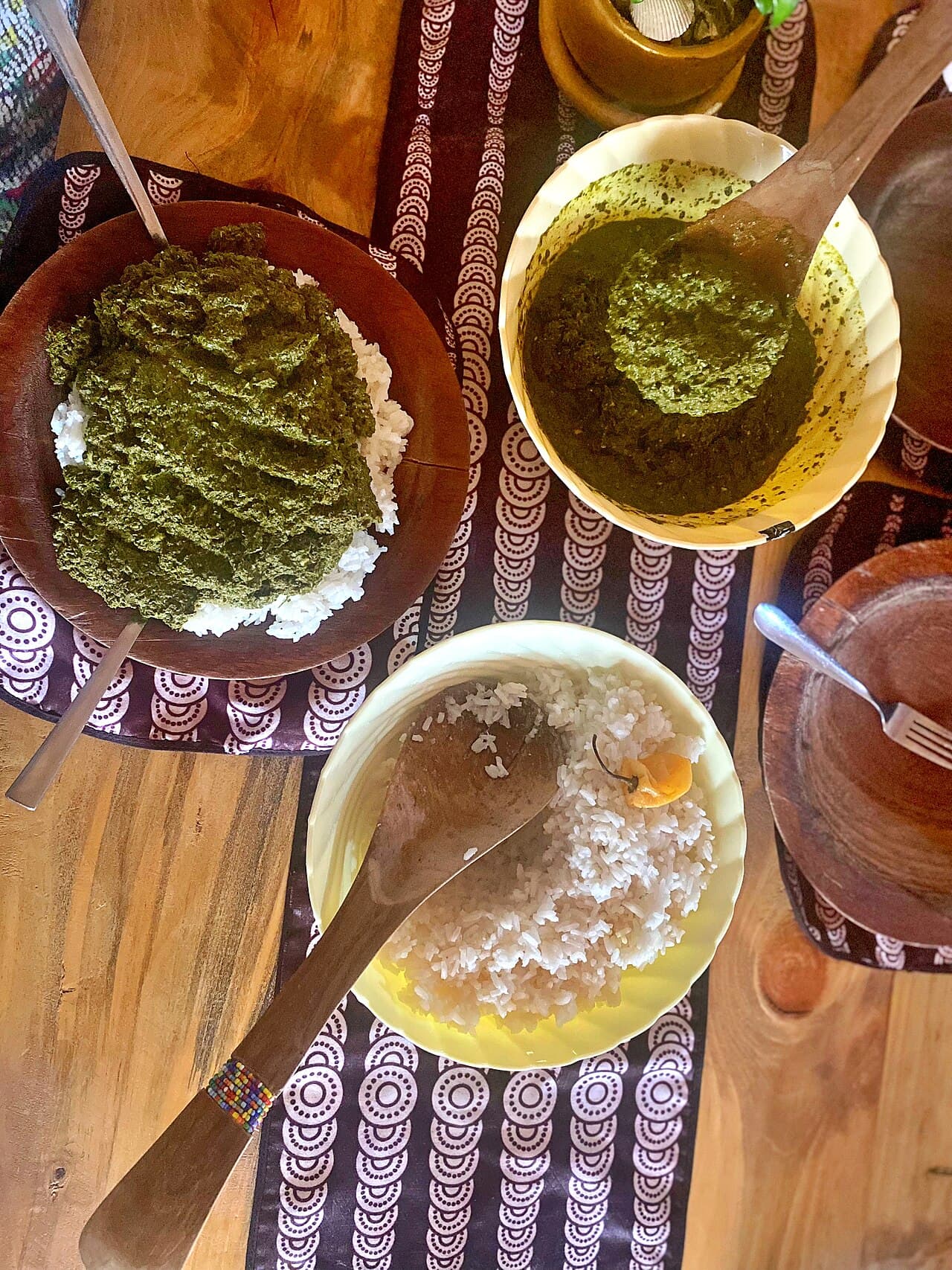
Cassava is one of the most important plants in Rwanda. The root is used for flour. The leaves, which most countries throw away, are eaten as a vegetable. To make isombe, the cook picks fresh young cassava leaves and pounds them in a big wooden mortar until they turn into a smooth green paste.
The leaves are then simmered slowly with chopped onions, garlic and sometimes pieces of aubergine or spinach. Near the end of cooking, a spoonful of peanut butter (made from ground roasted peanuts) is stirred in. The peanut butter makes the stew creamy and slightly sweet. It is one of those clever flavour combinations that nobody quite expects until they try it.
Isombe is usually eaten with ubugali, rice or boiled potatoes. You scoop up a little stew with your ubugali ball, and the warm green flavour mixes with the soft block of dough. Many Rwandan kids grow up with the smell of isombe simmering on the stove on a Sunday afternoon.
Cassava came to Africa hundreds of years ago, originally from the rainforests of South America. Today it is one of the most important crops in Rwanda, growing easily on the hillsides even when the rain is unpredictable. Rwandans say: when other crops struggle, cassava feeds the family.