
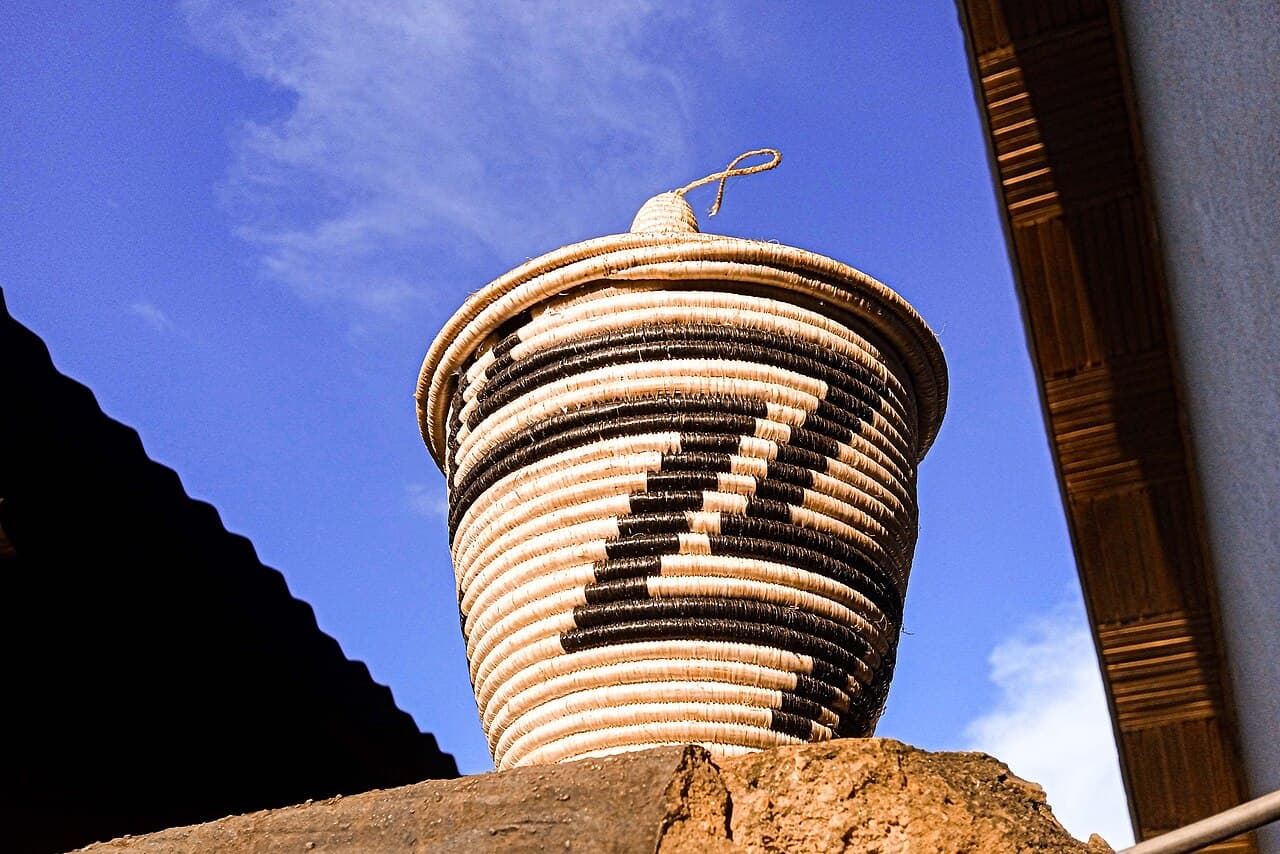
Agaseke baskets are woven by hand, usually by women who learned the skill from their mothers and grandmothers. The weaver starts at the very bottom and spirals upwards, adding strand after strand of grass. To make patterns, she swaps in coloured grass at exactly the right places. A single basket can take weeks to finish.
The lid is the most special part. It comes to a tall point at the top, sometimes 30 centimetres high. The point doesn't have a practical purpose - it is just beautiful. When you carry the basket on your head (which is a traditional way to carry things in Rwanda), the lid stands up proudly.
Agaseke baskets are traditional gifts. They might be filled with food or small treasures and given at a wedding, the birth of a baby, or to welcome a visitor. The pattern of every basket is slightly different, like a signature - so giving someone an agaseke means giving them something unique.
Today, Rwandan baskets are famous around the world. Co-operatives of women weavers sell their baskets to shops in Africa, Europe and North America. The agaseke is so important to Rwandan culture that you can see one on the country's coins and on the wall of Kigali airport, welcoming visitors home.