
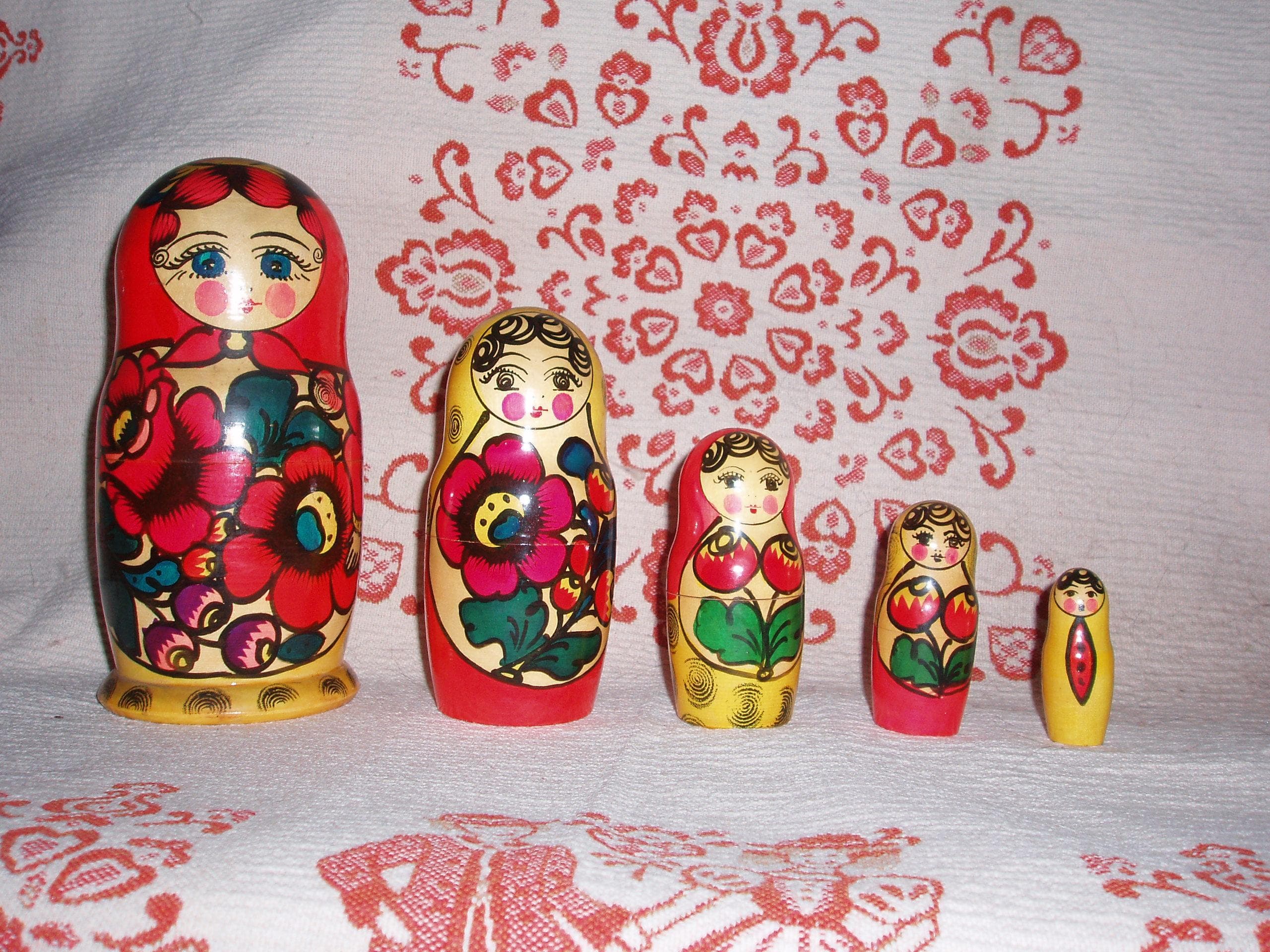
The first set of matryoshka dolls was made in 1890 by a craftsman called Vasily Zvyozdochkin, who carved the wooden shapes, and an artist called Sergei Malyutin, who painted them. The traditional design shows a rosy-cheeked woman in a peasant headscarf and dress, but today matryoshka sets come in countless designs - animals, fairy tale characters, famous footballers, astronauts and even sets showing animals inside other animals.
Making a traditional matryoshka is a skilled craft. The wood is carved from linden (lime) trees, which is light and easy to carve. Each piece must fit perfectly inside the next - not too tight and not too loose. After carving, the pieces are left to dry, sanded smooth, and then painted by hand with fine brushes. The finest matryoshkas can take days or even weeks to paint, with intricate patterns of tiny flowers, leaves and geometric shapes.
The name 'matryoshka' comes from a traditional Russian girls' name, Matryona, which has roots meaning 'mother'. This connects to the idea of the dolls - a mother containing many children inside her. The dolls became popular very quickly and were soon being sold at markets and fairs across Russia. They are made in several towns, including the famous craft town of Sergiev Posad near Moscow, where matryoshka-making has been a family tradition for generations.