
Classroom lesson · Kamchatka Volcanoes & Geysers · 🇷🇺 Russia

Kamchatka Volcanoes & Geysers

A peninsula of fire, ice and spectacular geysers

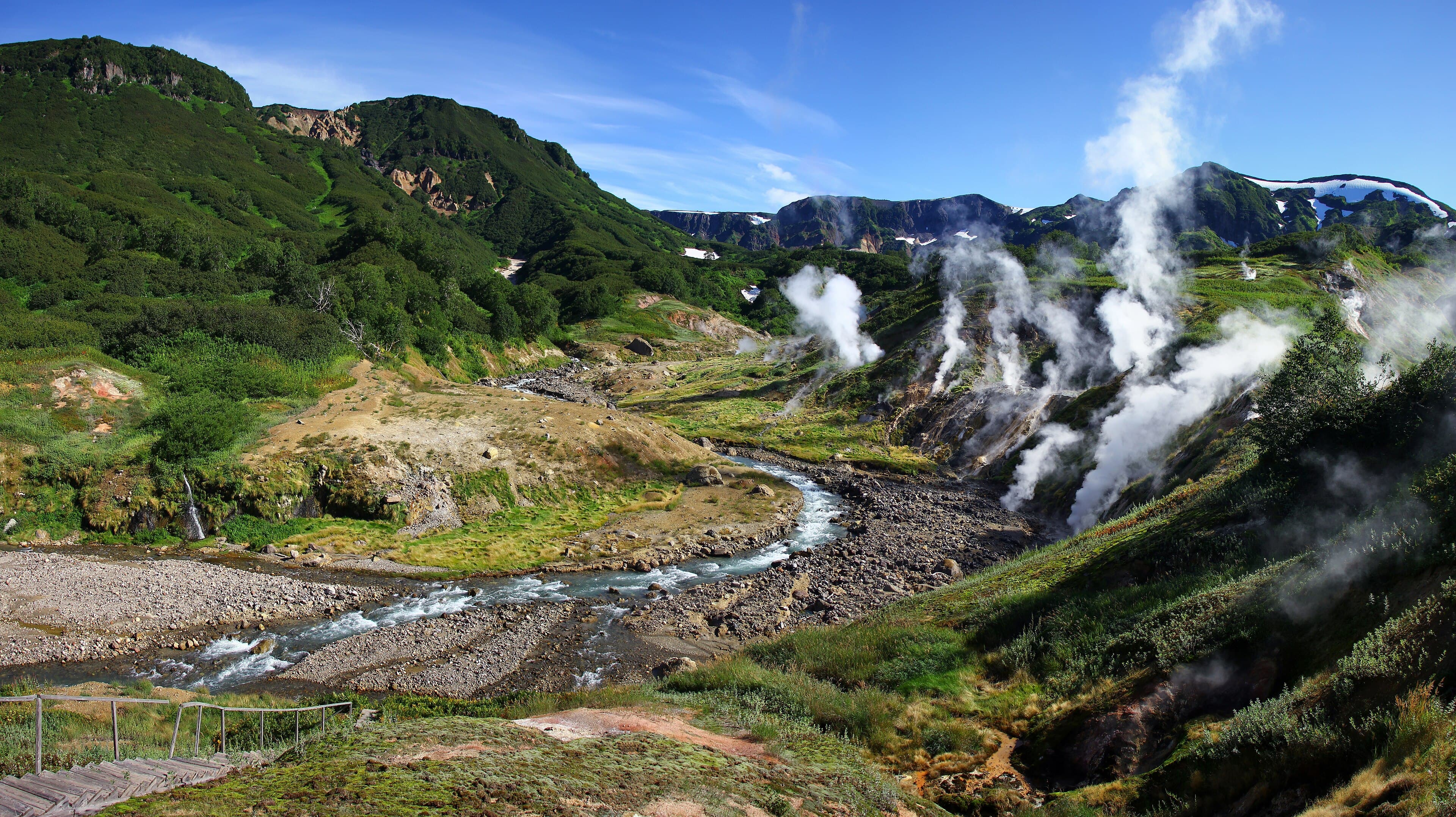
Steaming geysers erupt in a valley surrounded by snow-capped volcanoes in Kamchatka

Photo · Wikimedia Commons

What is it?

The Kamchatka Peninsula is a finger of land in Russia's far east, sticking down into the Pacific Ocean. It is home to 29 active volcanoes and one of the world's most famous geyser valleys - a hidden hollow where more than 200 hot water jets shoot into the air at regular intervals. Almost no roads reach this remote wilderness; most visitors arrive by helicopter.

Tell me more

Kamchatka sits on the 'Ring of Fire', a loop around the Pacific Ocean where many of the world's most active volcanoes and earthquakes occur. The biggest volcano, Klyuchevskaya Sopka, is nearly 5,000 metres tall and erupts quite often, sometimes sending clouds of ash and glowing rocks into the sky. Seeing a volcano erupt is exciting and spectacular - scientists study Kamchatka carefully to better understand how volcanoes work.

The Valley of Geysers was only discovered in 1941. Geysers are jets of boiling water that shoot up through cracks in the ground, heated by hot rocks underground. The biggest geyser in the valley, called Velikan (which means 'Giant'), shoots water 30 metres into the air every few hours, filling the valley with steam and rainbow mist. The ground around the geysers is bright orange and yellow because of the minerals in the water.

Despite being so wild and remote, Kamchatka is full of animals. Brown bears catch salmon in the rivers during summer - at some rivers there are so many bears fishing that you can watch dozens of them at once. Steller's sea eagles, one of the biggest eagles in the world, nest on the rocky cliffs. Whales and sea otters swim just off the coastline. Very few people live here, so the wildlife has plenty of space.

In the classroom

Walk your class through this in 15 minutes.

Talk together

Discussion prompts

  1. 01A geyser shoots boiling water into the air on a regular schedule. What do you think causes the timing to be so regular?
  2. 02Kamchatka is very remote and hard to reach. Do you think that is a good thing or a bad thing for the wildlife there?
  3. 03Scientists study Kamchatka's volcanoes closely. Why might it be important to understand when a volcano will erupt?
Try this

Classroom activity

Make a simple baking-soda-and-vinegar volcano in the classroom. Before you do it, ask children to predict: how big will the eruption be, and how long will it last? Record predictions and results. Discuss how real volcanologists make predictions about much bigger, real volcanoes.