School life
In a Namibia classroom
Local school customs vary. The best way to learn about a class's day is to ask them directly.

Africa · Country briefing
A child-friendly mission briefing for Thursday 19 November - capital, climate, school day, languages, fun facts, native animals, and five questions to ask the class on the other side of the world.
Climate in November: End of dry season or start of wet season; warm.
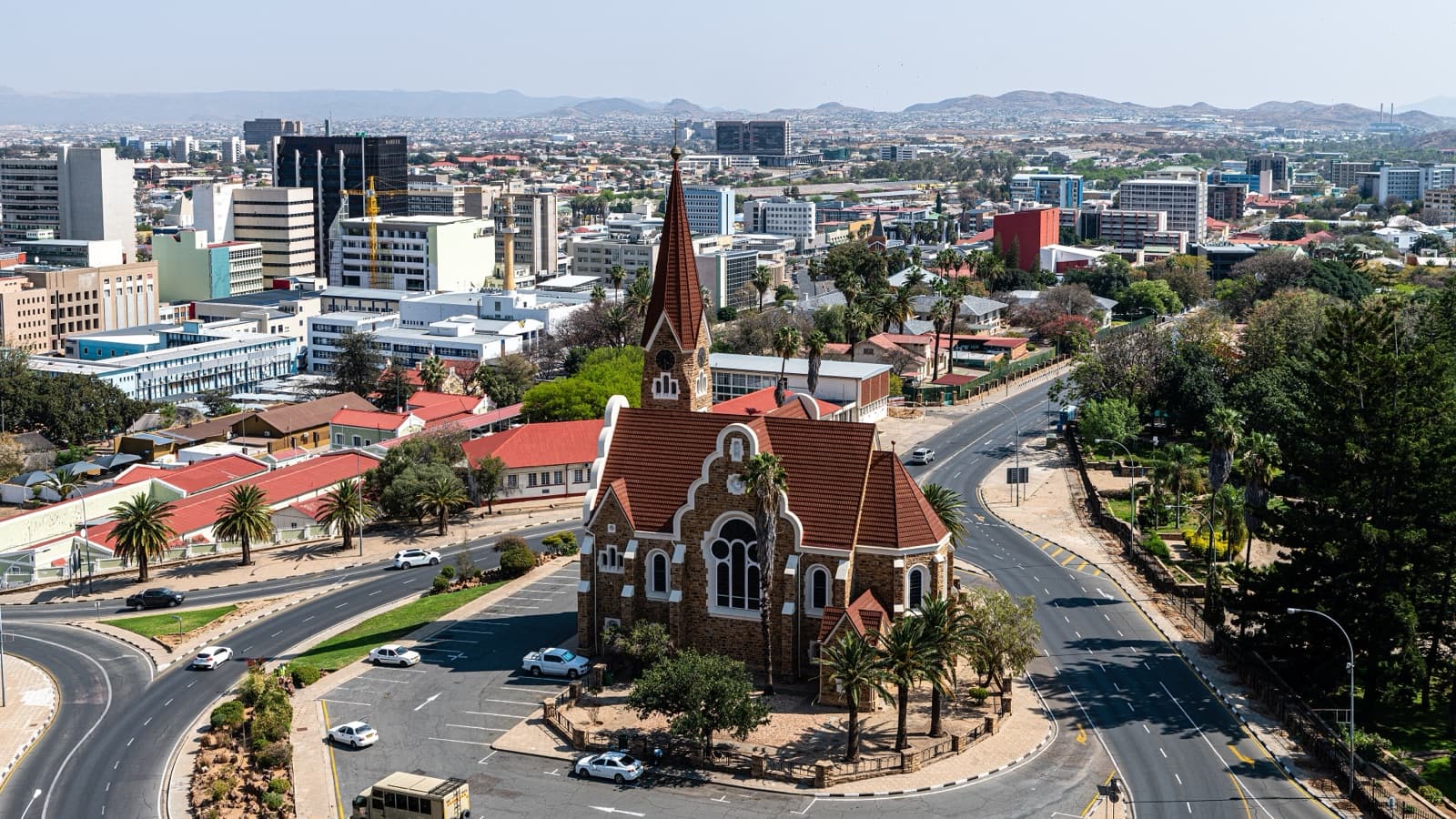
The capital
Windhoek
Photo · Wikimedia Commons
Fun facts
Sossusvlei Red Dunes
Some of the tallest sand dunes on Earth, glowing orange and red
Open lesson
Fish River Canyon
The second-largest canyon in the world, carved over millions of years
Open lesson
Skeleton Coast
A wild, misty coastline where the desert meets the ocean
Open lesson
Damaraland Rock Art
Ancient paintings and carvings made by the San people thousands of years ago
Open lesson
Welwitschia
A plant that can live for more than 1,000 years in the desert
Open lesson
Kapana
Namibia's favourite street food - sizzling grilled meat straight from the fire
Open lesson
Tap any card to open a class-ready mini-lesson - for the teacher to walk through, or an older child to read aloud.
Native animals
Etosha Salt Pan
A vast shimmering white pan that becomes a wildlife paradise
Open lesson
Oryx
Namibia's national animal, built for life in the desert
Open lesson
Black Rhino
One of the world's rarest animals, thriving in Namibia's rocky desert
Open lesson
Cheetah
The fastest land animal on Earth, and Namibia has the world's largest population
Open lesson
Desert Elephant
Elephants that have adapted to survive in one of Earth's driest landscapes
Open lesson
Tap any animal to open a class-ready lesson about it.
School life
Local school customs vary. The best way to learn about a class's day is to ask them directly.
Greetings to learn
Five questions to ask
What not to assume
Culture
Food
Music
Festivals
Tap any chip to open a class-ready lesson - what it is, why it matters, fun facts.
Choose Namibia when you register - we'll show you the time-zone feasibility.
We'd like to use Google Analytics cookies to see how this site is used and make it better. No advertising, and never any pupil data. How we use cookies.