
Classroom lesson · Eye of the Sahara · 🇲🇷 Mauritania

Eye of the Sahara

Giant rings carved into the desert - visible from space

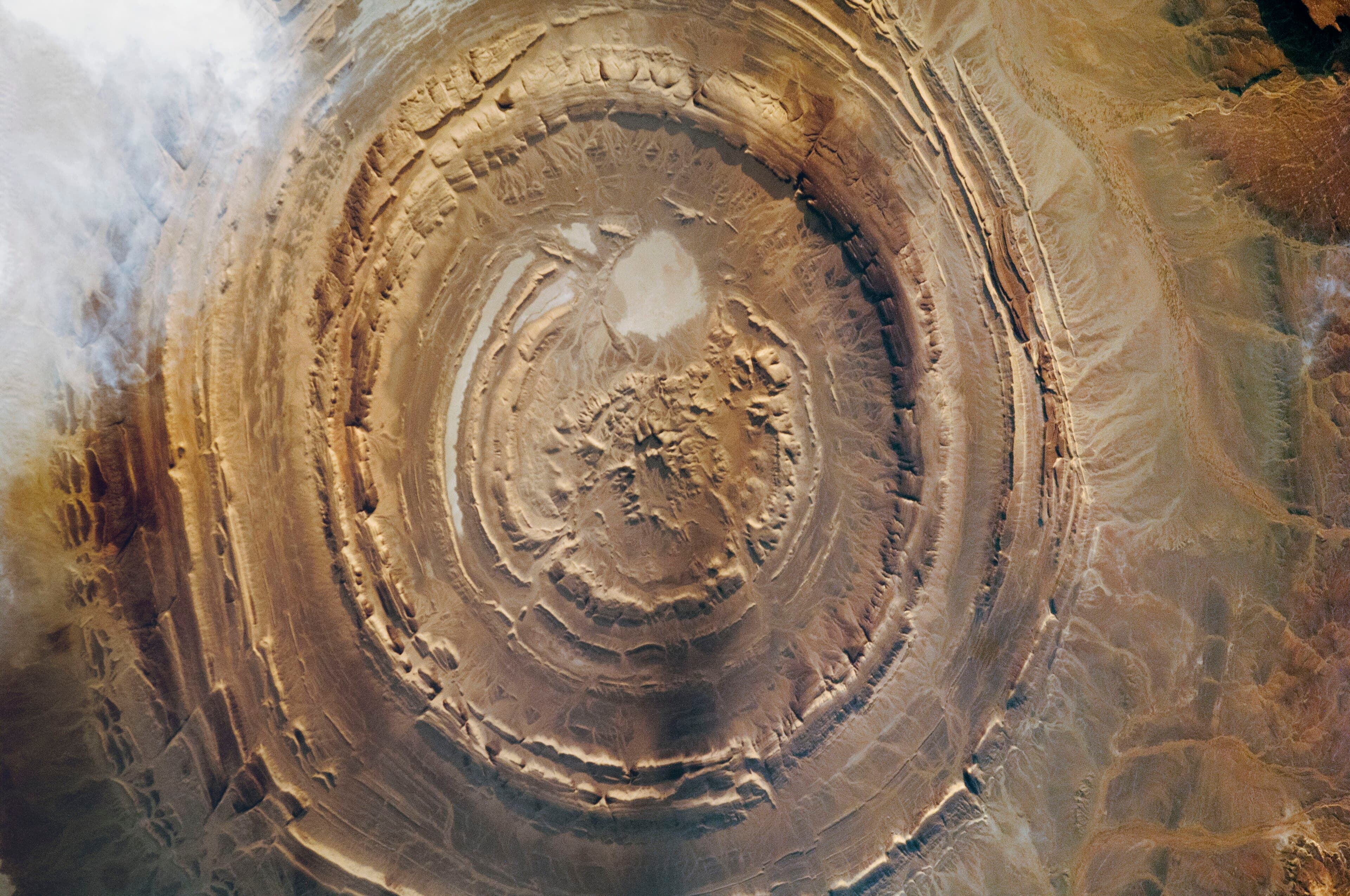
Aerial view of the Richat Structure showing its giant circular rings in the Saharan rock

Photo · NASA / Wikimedia Commons

What is it?

The Richat Structure is a huge set of circles in the Sahara Desert that looks exactly like a giant eye staring up at the sky. It is about 50 kilometres across - wide enough to fit a whole city inside - and astronauts can easily spot it from space. Scientists think it formed millions of years ago as layers of rock slowly wore away to make those perfect rings.

Tell me more

When astronauts first saw the Richat Structure from orbit, they used it as a landmark to know where they were over Africa - it is that easy to spot. The rings are made of different types of rock that wore away at different speeds over millions of years, leaving ridges that look like the rings of a bulls-eye target.

The rocks in the outer rings are over 500 million years old. That is so long ago that even the dinosaurs had not appeared yet. Some of the rocks contain tiny fossils of ancient sea creatures, which tells us that long, long ago this part of the Sahara was covered by a shallow ocean.

For most of history, people on the ground could not really see what it looked like because you need to be very high up to see the whole pattern. It was only when aircraft and then spacecraft began flying over it that humans realised how incredible it was. Now scientists visit in jeeps to study the different rock layers.

Today the Eye of the Sahara is one of Mauritania's most famous landmarks. No one lives right inside it, but Tuareg nomads have crossed its sands for centuries, using its rocky ridges as shelter from desert winds.

In the classroom

Walk your class through this in 15 minutes.

Talk together

Discussion prompts

  1. 01Why might astronauts find a big circular shape useful as a landmark from space?
  2. 02If rocks from here contain sea fossils, what does that tell us about how Earth has changed over millions of years?
  3. 03How would you feel looking down at the Eye of the Sahara from a spacecraft? What would you think if you saw it for the first time?
  4. 04Can you think of any other natural shapes on Earth that look different from the air than from the ground?
Try this

Classroom activity

Give each pupil a large sheet of paper. Using a compass (or circular objects like cups and plates of different sizes), draw five concentric rings. Colour each ring a different earth tone - brown, orange, red, cream, grey - to represent different rock layers. Label your 'Eye of the Sahara' and write one fact inside each ring.