
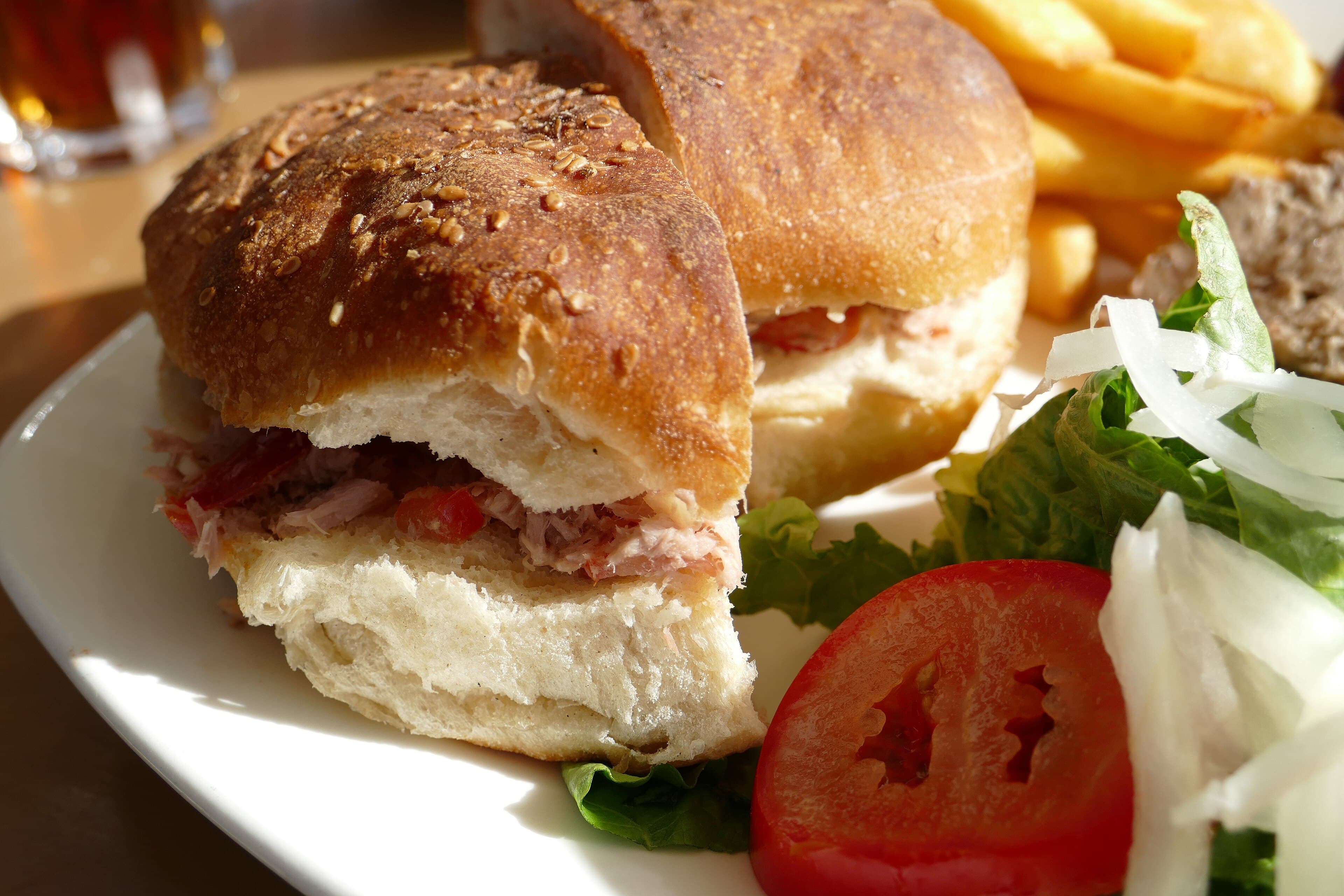
The bread itself is baked in wood-fired ovens in many Maltese villages. The outside is hard and crusty, the inside is soft and full of air. When you cut it open, you can rub the inside with a sliced tomato to soak the bread in tomato juice before you add anything else.
The classic filling is called 'ħobż biż-żejt' (say 'HOBZ biz-ZAYT'), which just means 'bread with oil'. You spread the bread with olive oil and tomato, then layer on tuna, olives, capers, sliced onion, and sometimes a hard-boiled egg or sliced cheese. Then you squash it shut and eat.
Many Maltese workers and schoolchildren take a ftira to work or school in a bit of greaseproof paper. By lunchtime the flavours have soaked into the bread - which somehow makes it taste even better. A good ftira gets tastier as the morning goes on.
In 2020, UNESCO added the making of ftira to its list of important world cultural traditions - the same list that includes tango from Argentina and Japanese paper-making. The Maltese were very proud. Their humble sandwich is now officially world heritage.