
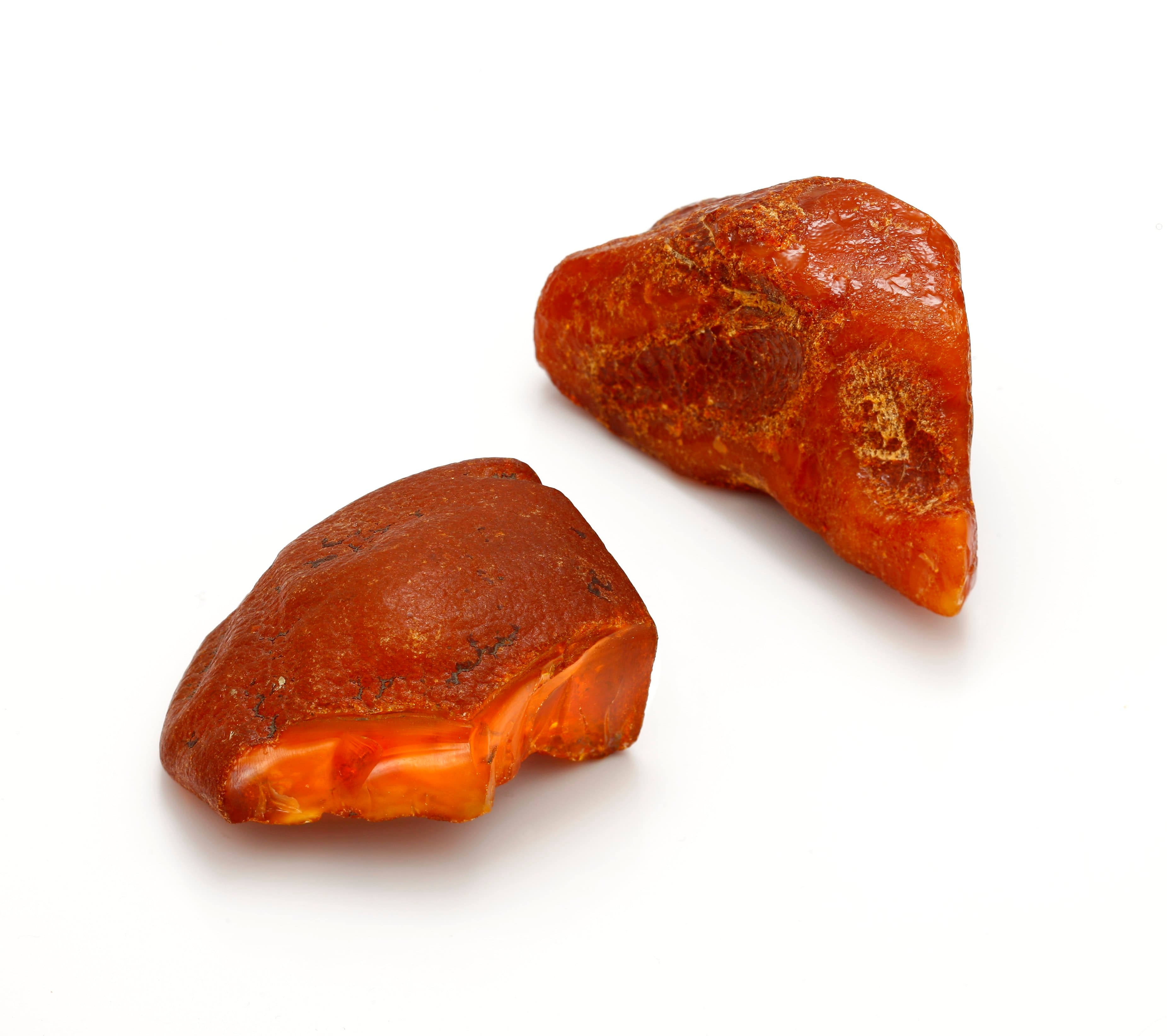
Amber starts its life as sticky sap that oozes out of old conifer trees. Over millions of years, it gets buried, squashed, and slowly hardens into what we call amber. The Baltic Sea has been washing amber up onto beaches for thousands of years, ever since prehistoric deposits on the sea floor were disturbed by waves and currents.
Some amber has incredible treasures trapped inside it - a bubble of air from 40 million years ago, or the perfectly preserved body of an insect, a spider, or even a tiny plant. Scientists study these trapped creatures to learn what life was like on Earth long before humans appeared. It is like a time capsule made of golden glass.
Lithuania has a whole Amber Museum in Palanga, a seaside town, where you can see thousands of pieces of amber, including some with spectacular insect inclusions. Amber jewellery - necklaces, bracelets, and earrings - has been made and traded from this region for at least 6,000 years.
Beachcombing for amber is a popular activity after storms, when the sea churns up the bottom and sends pieces floating to shore. A piece of fresh amber feels slightly warm to the touch and is much lighter than you would expect for a 'stone'. If you rub it on a woolly jumper, it creates static electricity - an experiment you can do in the classroom!