
Classroom lesson 路 Wildlife馃嚤馃嚠 Liechtenstein

Alpine Ibex

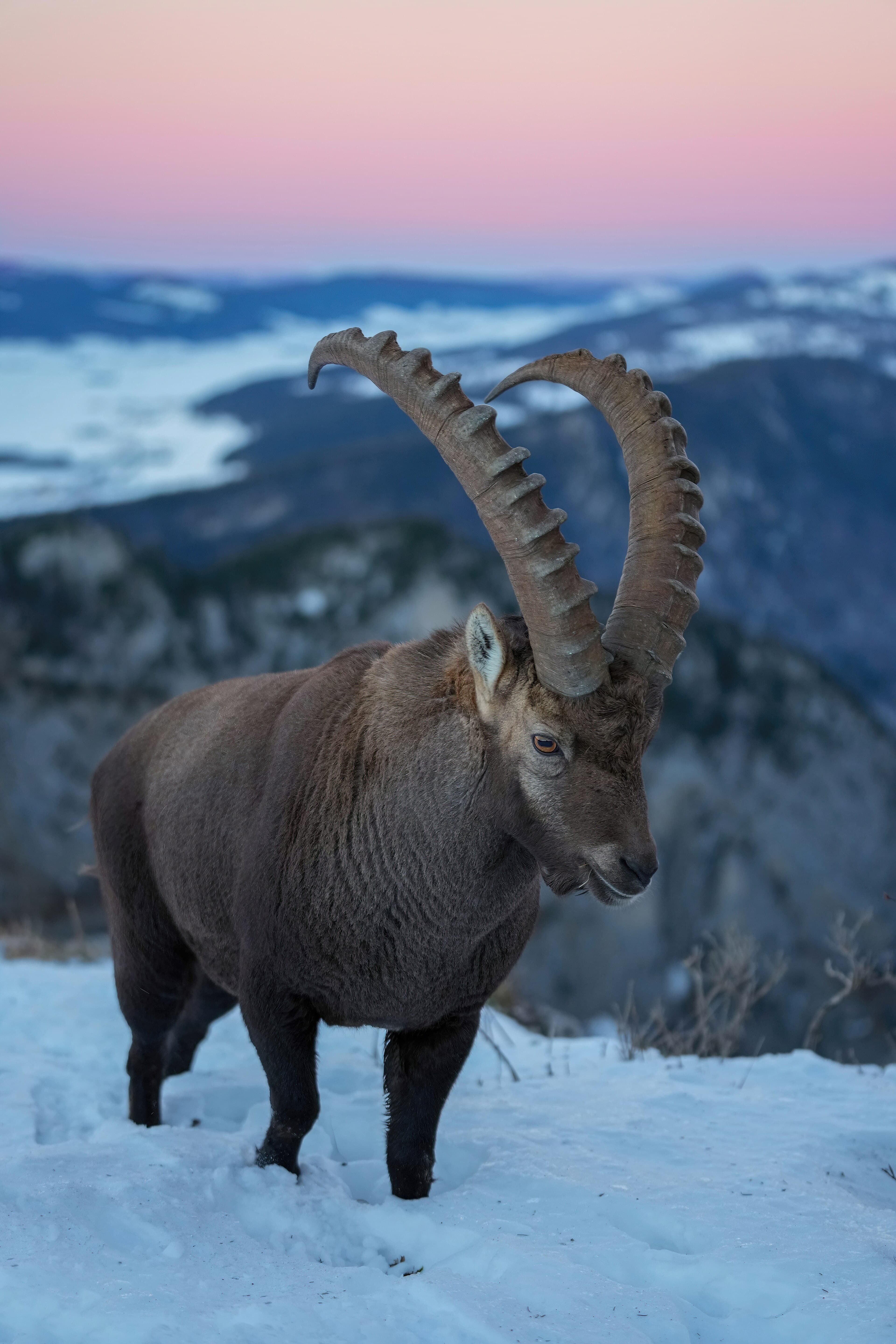
A wild mountain goat with enormous curved horns

An alpine ibex standing on a rocky mountain ledge with its large curved horns

Photo 路 Wikimedia Commons

What is it?

The alpine ibex is a wild goat that lives high in the mountains of Liechtenstein and the surrounding Alps. It has thick, curved horns that can grow more than a metre long, and it is an extraordinary climber - able to walk along cliff faces and rocky ledges that look impossible to reach. Spotting one in the wild is a real treat.

Tell me more

Ibex are perfectly built for mountain life. Their hooves have hard outer edges for gripping rock and soft inner pads for friction - like natural climbing shoes. They can stand on ledges only a few centimetres wide, balanced perfectly while munching on patches of grass growing in tiny cracks.

In winter, ibex grow a thick coat to stay warm in the freezing mountain temperatures. They move lower down the slopes when snow covers the highest peaks, then return to the heights in summer when the meadows are full of fresh grass and alpine flowers.

A century ago, ibex had almost disappeared from the Alps because too many had been hunted. Thanks to careful protection, their numbers have recovered wonderfully. Today you can sometimes spot groups of ibex on the mountain ridges above Malbun, especially in the early morning when they come out to feed.

In the classroom

Walk your class through this in 15 minutes.

Talk together

Discussion prompts

  1. 01The ibex's hooves work like climbing shoes. Can you think of other animals that have body parts specially shaped for where they live?
  2. 02Ibex nearly disappeared but were saved by protection laws. Why is it important to protect animals that are becoming rare?
  3. 03Would you rather watch ibex from far away with binoculars or up close? What are the pros and cons of each?
Try this

Classroom activity

Design your own mountain animal. Think about what challenges it faces (cold, steep rocks, deep snow) and draw the special features it would have to survive. Label each feature and explain what it does.