
Classroom lesson 路 Wildlife馃嚤馃嚮 Latvia

Eurasian Lynx

A secretive wild cat with tufted ears and enormous paws

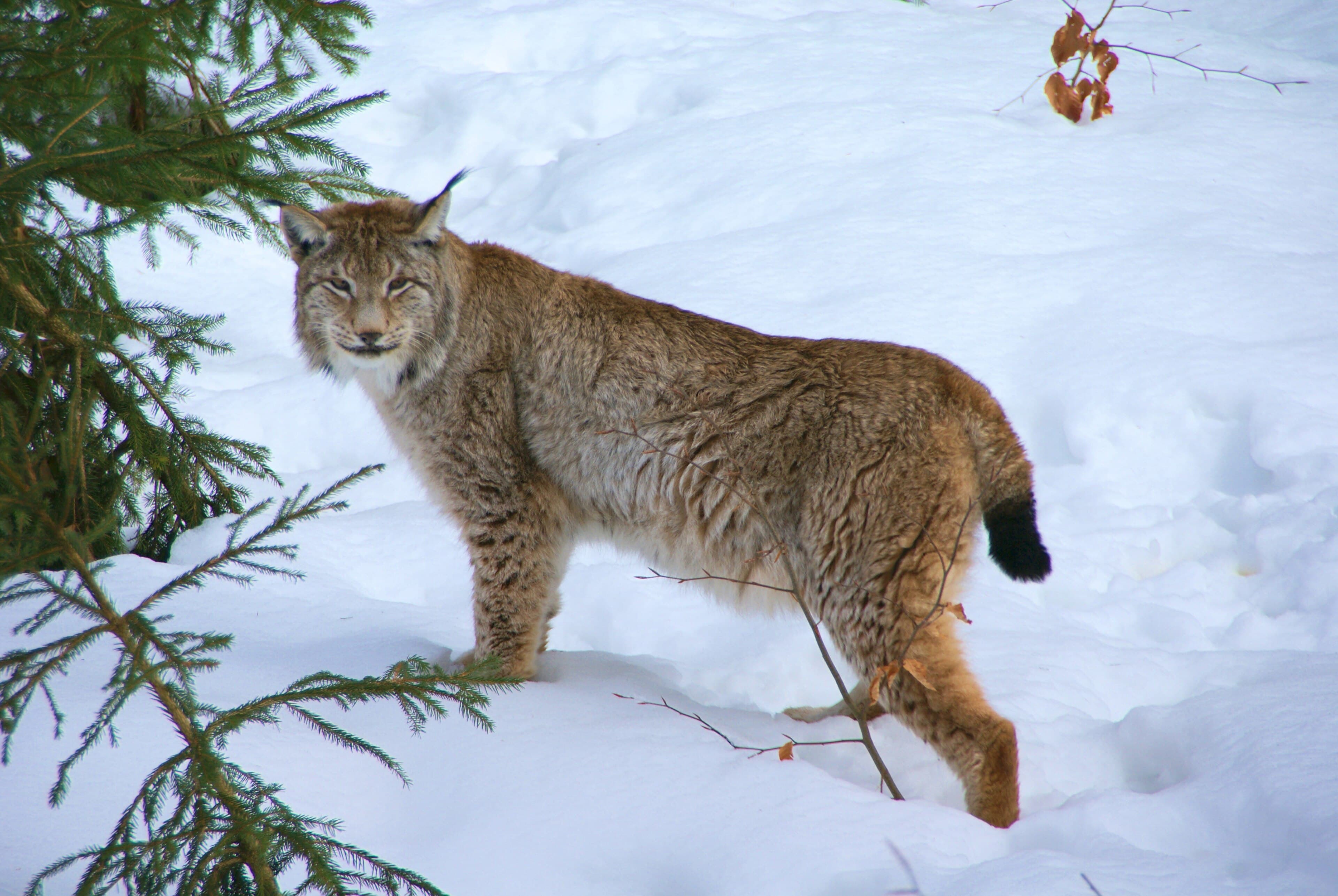
A Eurasian lynx with tufted ears resting on a snowy forest floor in Latvia

Photo 路 Wikimedia Commons

What is it?

The Eurasian lynx is a large wild cat that lives in the forests of Latvia. It looks a bit like a big house cat but with a spotted coat, a very short tail, long legs and pointy tufts of black fur on top of its ears. Lynx are some of the most secretive animals in Europe - even people who spend years walking in Latvian forests almost never see one.

Tell me more

Lynx are perfectly built for hunting in snowy forests. Their enormous paws act like snowshoes, spreading their weight across the snow so they sink in much less than their prey. Their spotted, greyish-brown coat makes them almost invisible against tree bark and patchy snow.

A lynx hunts mostly at night, creeping silently through the forest on its big padded paws. Its favourite prey in Latvia is roe deer, but it will also catch hares, foxes and sometimes birds. Lynx do not chase their food for long distances - instead they get as close as possible and then leap.

Latvia is one of the best countries in Europe for lynx. Because forests cover such a large part of the country and human settlements are often small and spread apart, the lynx has plenty of quiet territory. The whole of Europe only has around 9,000 Eurasian lynx, so Latvia's population is genuinely important.

Baby lynx are called kittens - just like house cats. A mother lynx usually has two or three kittens and raises them on her own through their first winter, teaching them to hunt before they go off to find their own territories the following spring.

In the classroom

Walk your class through this in 15 minutes.

Talk together

Discussion prompts

  1. 01Why might big paws be such a useful adaptation for an animal that lives where it snows a lot?
  2. 02Lynx are nocturnal hunters. What advantages does hunting at night give them?
  3. 03If you were designing a camouflage pattern for an animal that lives in a forest, what colours and shapes would you choose?
Try this

Classroom activity

Trace your own hand on paper - then draw a lynx paw at the same scale using research images. Label the differences: tufts of fur between the toes, wider spread, retractable claws. Write why each feature helps the lynx survive.