
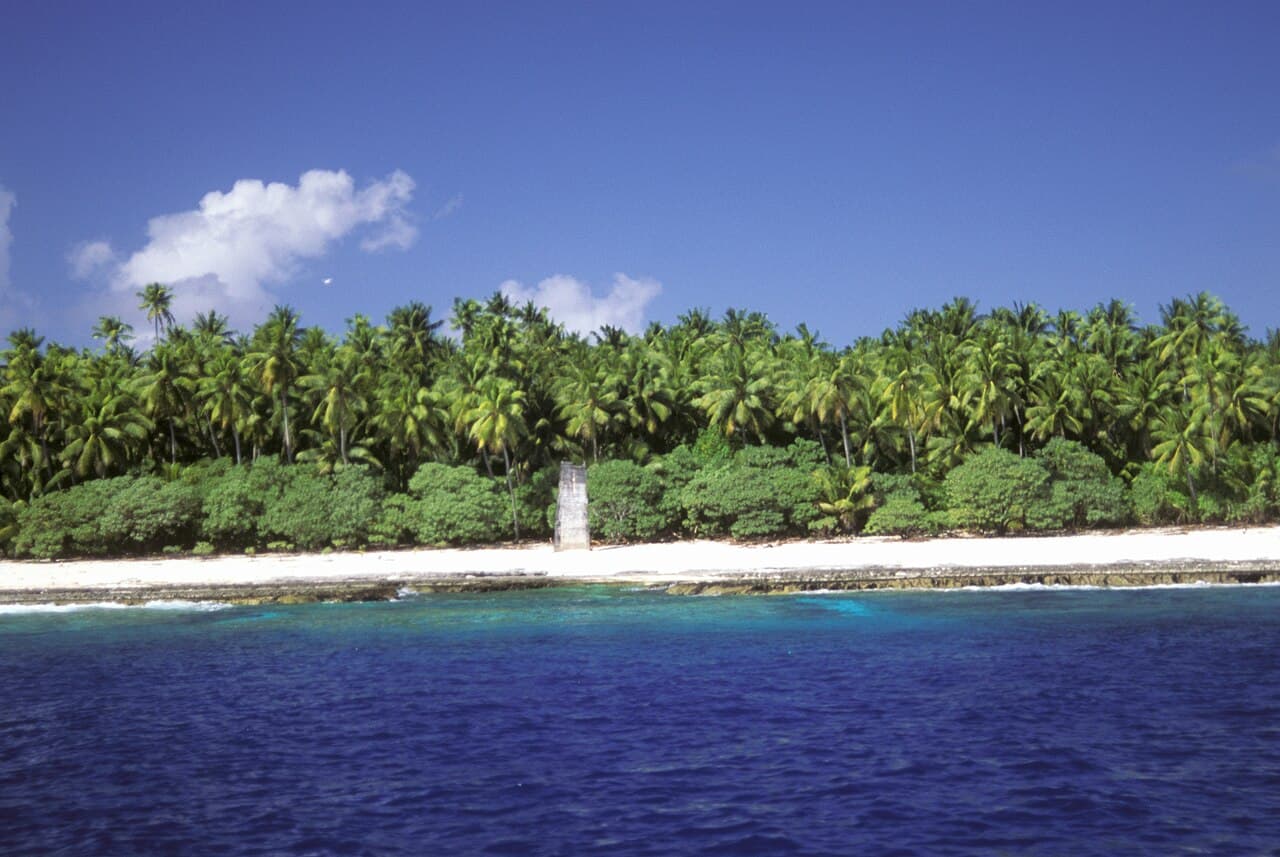
Most coral atolls form when a volcano sinks and leaves a reef ring at sea level. Banaba is different - tectonic movements long ago lifted its reef rock high above the ocean. Walking on Banaba means climbing steep paths through dense forest on ancient coral limestone, finding caves and rocky overhangs that feel nothing like the flat sandy atolls nearby.
Because it sits high and has rocky soil full of minerals, Banaba developed its own unique plants and trees. Dense jungle covers much of the island, fed by rainwater that collects in rock pools and natural hollows. The forest is home to seabirds that nest on the cliffs and land birds that cannot be found on the low atolls.
Very few people live on Banaba today - most of the original community resettled on a Fijian island called Rabi long ago - but the island is still considered home by the Banaban people, and it remains part of Kiribati. Elders still visit to tend to the land and keep their connection to their ancestral island alive.