
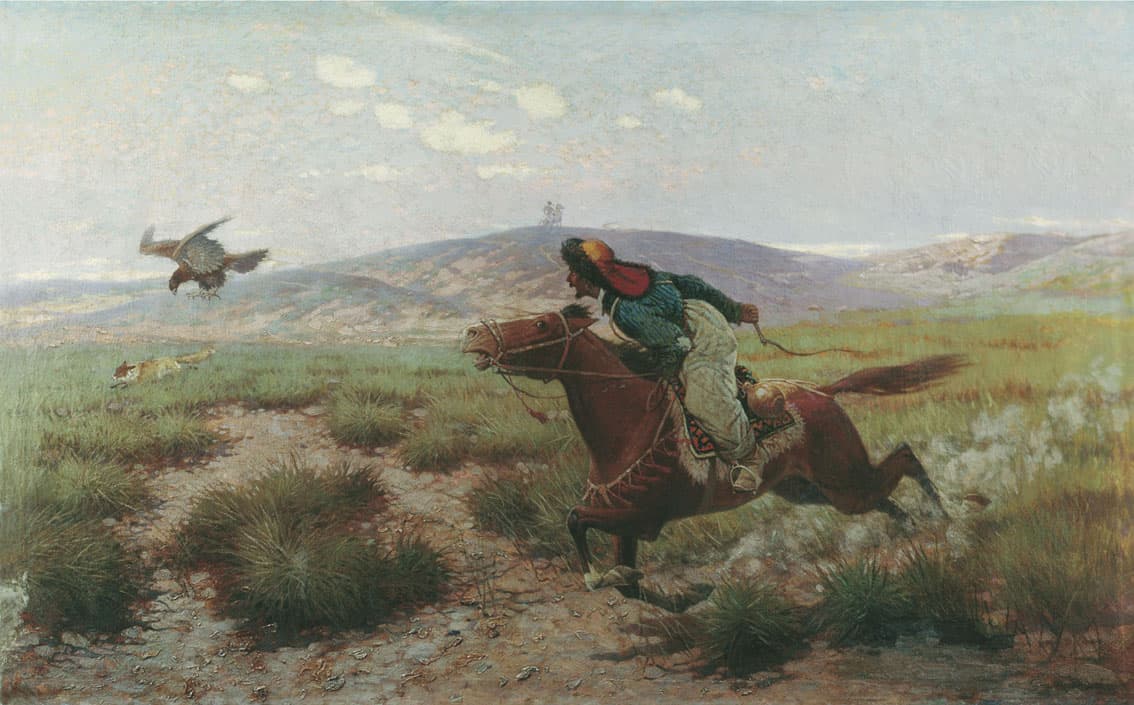
Training a golden eagle takes enormous patience. The berkutchi starts when the eagle is still young, getting it used to the sound of horses, the feel of the gloved arm, and the command to return. The eagle is never forced - it learns gradually, and the relationship that develops is one of genuine partnership.
During a traditional hunt, the berkutchi rides fast across the hillside on horseback. When the eagle spots prey - a fox or a rabbit moving below - the rider releases it and it launches off the glove, folds its wings and dives at breathtaking speed. The eagle's keen eyesight lets it spot things a human would completely miss.
Eagle hunters wear beautifully embroidered coats and hats trimmed with fur. The eagle sits on a thick leather glove called a baldak, which protects the rider's arm from the eagle's powerful talons. The eagle's head is sometimes covered with a small hood - called a tomaga - to keep it calm when not hunting.
UNESCO has recognised Kazakh (and Kyrgyz) eagle hunting as an Intangible Cultural Heritage of Humanity - meaning it is a tradition so unique and valuable that the world wants to make sure it is never lost. Young Kazakhs, including girls and boys, are learning the art today to keep it alive.