
Classroom lesson · Wildlife · 🇯🇲 Jamaica

Sea Turtles of Jamaica

Ancient ocean travellers that nest on Jamaican beaches

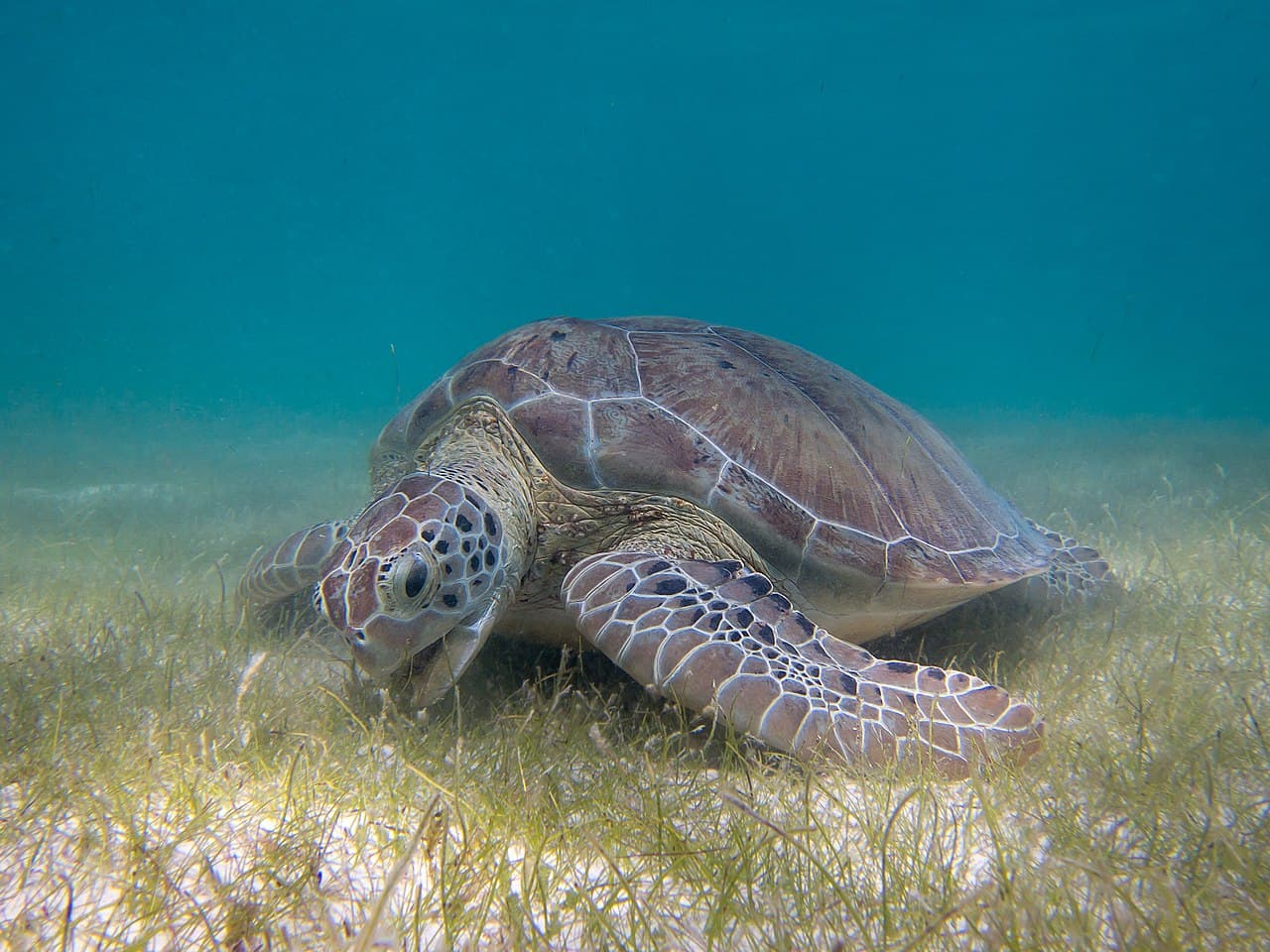
A large green sea turtle swimming gracefully above a coral reef in clear blue water

Photo · Wikimedia Commons

What is it?

Three species of sea turtle nest on Jamaica's beaches: the loggerhead, the hawksbill, and the green turtle. Sea turtles have been swimming in the world's oceans for over 100 million years - they were here long before the dinosaurs disappeared. Jamaica's warm, sandy beaches and clear waters make a perfect home for them.

Tell me more

Female sea turtles come ashore at night to lay their eggs on the same beaches where they themselves were born - sometimes travelling thousands of kilometres across the ocean to get back to the right beach. Scientists think they navigate using the Earth's magnetic field, a bit like a built-in compass.

Each nest can hold up to 150 eggs, each one about the size of a ping-pong ball. The warm sand keeps the eggs cosy for about two months until they hatch. Then tiny hatchlings, no bigger than the palm of your hand, scramble down the beach and into the sea.

Hawksbill turtles use their narrow, pointed beaks to reach into coral reefs and eat sponges. This is very helpful for the reef because it stops sponges from smothering the corals. Green turtles eat sea grass, helping keep those meadows trimmed and healthy - just like manatees.

Jamaica has community groups that protect nesting beaches, counting nests and making sure the hatchlings reach the sea safely. Children in coastal villages often grow up learning to be guardians of these ancient animals.

In the classroom

Walk your class through this in 15 minutes.

Talk together

Discussion prompts

  1. 01Female turtles return to the beach where they were born. How do you think they remember where home is after years in the ocean?
  2. 02Sea turtles have survived for 100 million years. What do you think makes them so successful at surviving?
  3. 03Children in Jamaican coastal villages help protect turtle nests. What could children in your community help protect?
Try this

Classroom activity

Map a sea turtle's journey. Draw a simple Atlantic Ocean map. Mark Jamaica. Now use a reference book or class resource to find where Caribbean sea turtles feed - mark that too. Draw an arrow showing the migration route. How many kilometres does the turtle swim? Compare it to a distance you know.