
Classroom lesson · Wildlife · 🇯🇲 Jamaica

Jamaican Yellow Boa

Jamaica's largest snake and a shy forest guardian

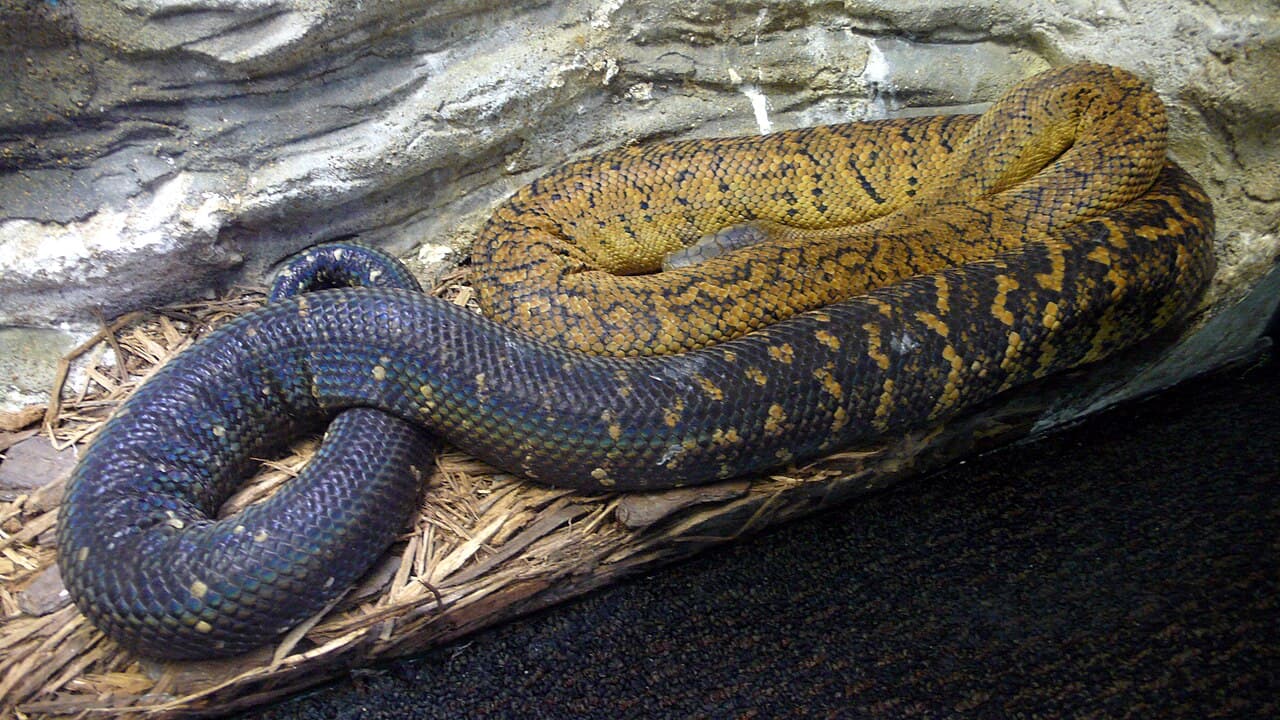
A yellow-gold Jamaican boa coiled around a tree branch in dappled forest light

Photo · Wikimedia Commons

What is it?

The Jamaican yellow boa is the largest snake in Jamaica and one of the most beautiful. Its scales shift from pale yellow to rich gold and dark brown, making it almost invisible among tree branches. Despite its size, this snake is gentle and spends most of its life quietly hunting birds and lizards in the forest.

Tell me more

Adult Jamaican boas can grow up to two metres long - about as long as a tall adult. They are not venomous; instead, like all boas, they use their strong muscles to squeeze their prey gently before swallowing it whole.

These snakes are excellent climbers and spend much of their time up in trees, especially near caves. In fact, they often hunt near the entrances of bat caves, waiting patiently for bats to fly past at dusk. Caves across Jamaica are home to millions of bats, which makes a very reliable dinner for the boas.

Jamaican boas only live in Jamaica - they are endemic to the island. Because their forest habitat has shrunk over time, they are a protected species, which means it is illegal to harm or collect them.

Local Jamaicans sometimes call the boa 'nanka' or 'yellow snake'. Country people often welcome them near farms because they keep rat populations under control - a very helpful neighbour for any farmer.

In the classroom

Walk your class through this in 15 minutes.

Talk together

Discussion prompts

  1. 01The boa helps farmers by eating rats. Can you think of other animals that are helpful to humans even if people are sometimes scared of them?
  2. 02The boa squeezes its prey rather than using venom. What other animals use their strength rather than a sting or bite?
  3. 03Jamaican boas are protected by law. Why do you think countries make laws to protect certain animals?
Try this

Classroom activity

Research or think about three other animals that are endemic (found only in one place). Mark each place on a world map. Then compare - do endemic animals tend to live on islands or in rainforests? What patterns do you notice?