
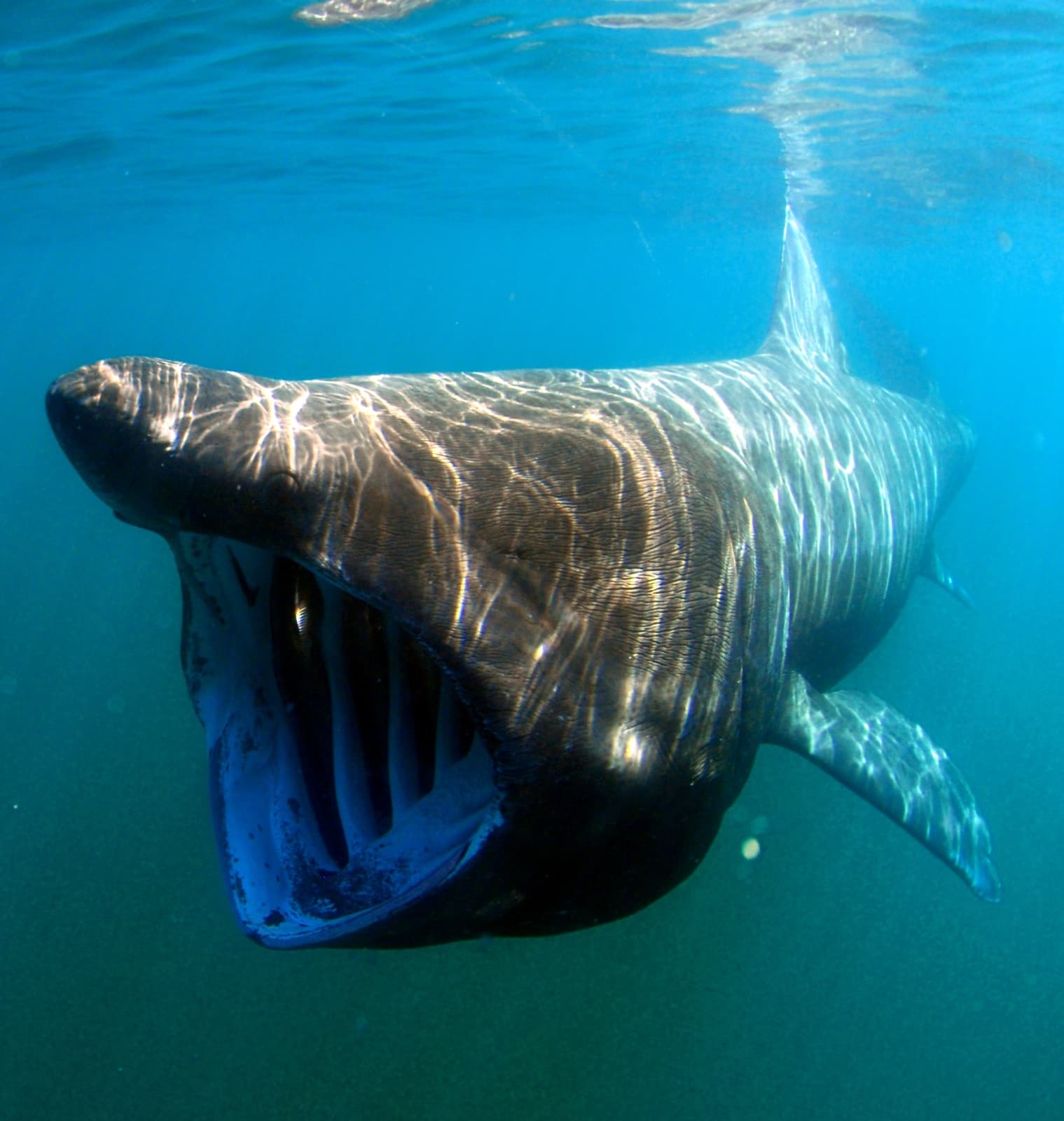
Despite their huge size, basking sharks are completely harmless to humans. They have no interest in chasing anything. Their giant mouths - up to a metre wide when open - are used to filter the sea, catching tiny floating creatures called zooplankton. They eat the smallest food and grow the biggest size.
A basking shark swims with its mouth wide open. Water rushes in through the mouth, passes over gill rakers (rows of comb-like bristles) and then back out through the gills. The plankton stays behind, trapped on the rakers, and the shark swallows.
They like to 'bask' near the surface, which is how they got their name. From a boat you might see a giant grey-brown back gliding along, with a tall triangular fin sticking out above the water. They are sometimes mistaken for whales.
Ireland's western waters are one of the best places in Europe to see a basking shark. In the past, people sadly hunted them, and the population dropped. They are now protected. Conservation groups in Ireland track the sharks by photographing the unique notches on their dorsal fins - like fingerprints.