
Classroom lesson · The Alborz Mountains · 🇮🇷 Iran

The Alborz Mountains

A great snowy range that runs along Iran's northern edge

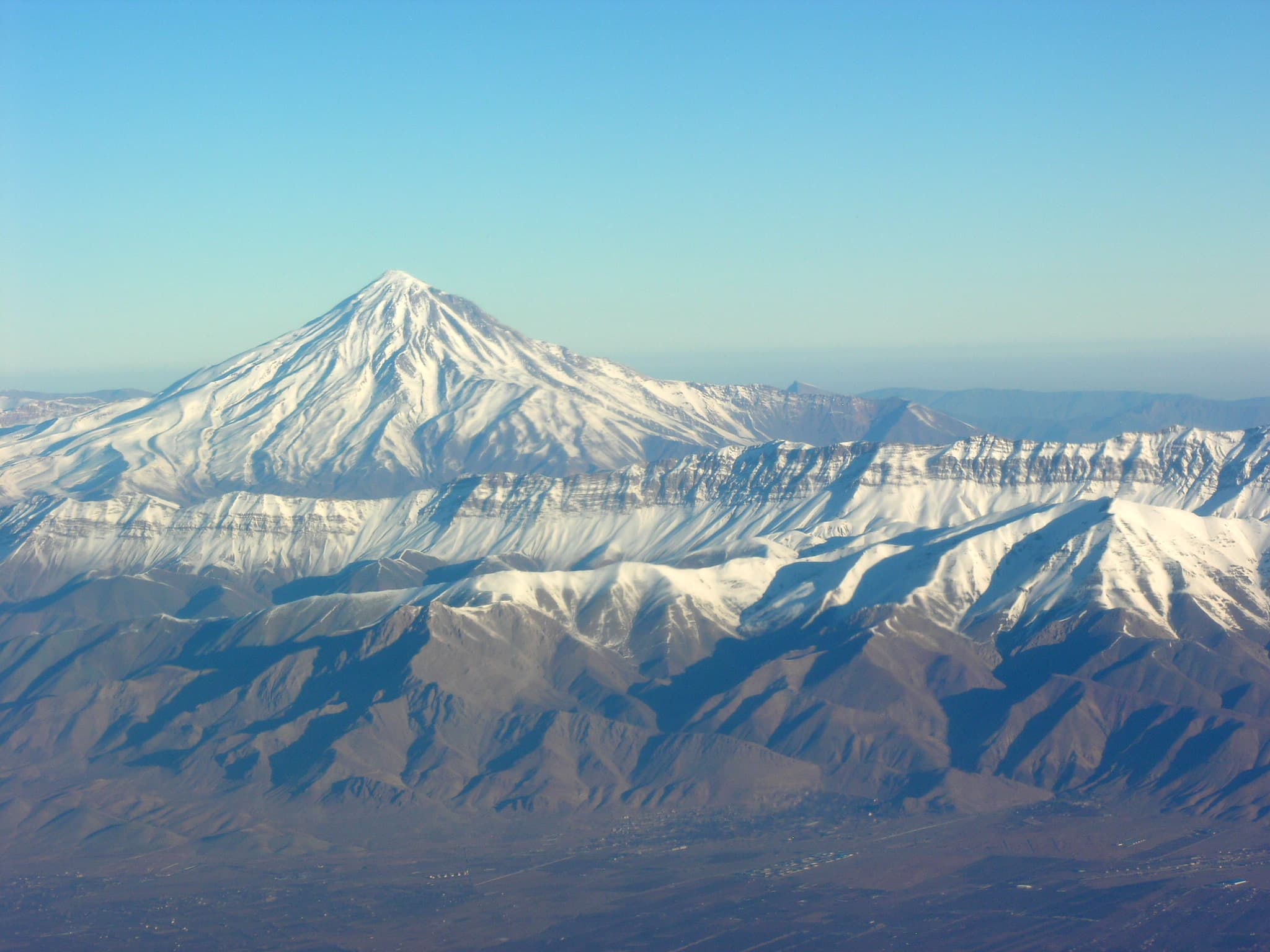
Snowy peaks of the Alborz Mountains above green valleys with a blue sky

Photo · Wikimedia Commons

What is it?

The Alborz Mountains sweep in a wide arc across the north of Iran, separating the hot desert plateau from the lush, rainy forests of the Caspian coast. At their highest point stands Mount Damavand - a dormant volcano and the tallest mountain in Iran and the whole of the Middle East, rising to 5,610 metres. That is high enough that snow covers the peak all year round.

Tell me more

Mount Damavand is not just the highest - it is also one of the most beautiful mountains in the region, with a perfectly cone-shaped peak often wrapped in clouds. On clear days it can be seen from the capital city of Tehran, about 80 kilometres away. In winter, skiers from all over the country head to the Alborz slopes, and in summer, hikers climb the trails through wildflower meadows.

The northern side of the Alborz faces the Caspian Sea, and it catches the rain clouds that roll in off the water. This means the forests here are surprisingly green and lush for a country that is mostly associated with deserts. Ancient oak, beech and hornbeam trees fill the valleys, and the rivers that rush down the mountains feed the fields of the lowlands where rice and tea are grown.

The mountains are home to many animals: Persian leopards prowl the rocky ridges, brown bears wander the forested slopes, and golden eagles soar on the warm currents of air. The Alborz has been a barrier and a highway for thousands of years - ancient trade routes wound through its mountain passes, connecting the civilisations of the Iranian plateau with those of Central Asia and the Caspian world.

In the classroom

Walk your class through this in 15 minutes.

Talk together

Discussion prompts

  1. 01One side of the Alborz Mountains is rainy and green; the other is dry and hot. How can a mountain change the weather on its two sides?
  2. 02Mountains have been used as highways as well as barriers throughout history. What might it have been like to travel through a mountain pass with a camel caravan 2,000 years ago?
  3. 03If you could name a new mountain, what would you call it and why?
Try this

Classroom activity

Draw a cross-section of the Alborz Mountains on A3 paper: show the Tehran side (dry, sunny), the snowy peak in the middle, and the green forested Caspian side. Add labels for the animals, plants and weather patterns on each side. Compare with a partner - did you imagine the same landscape?