
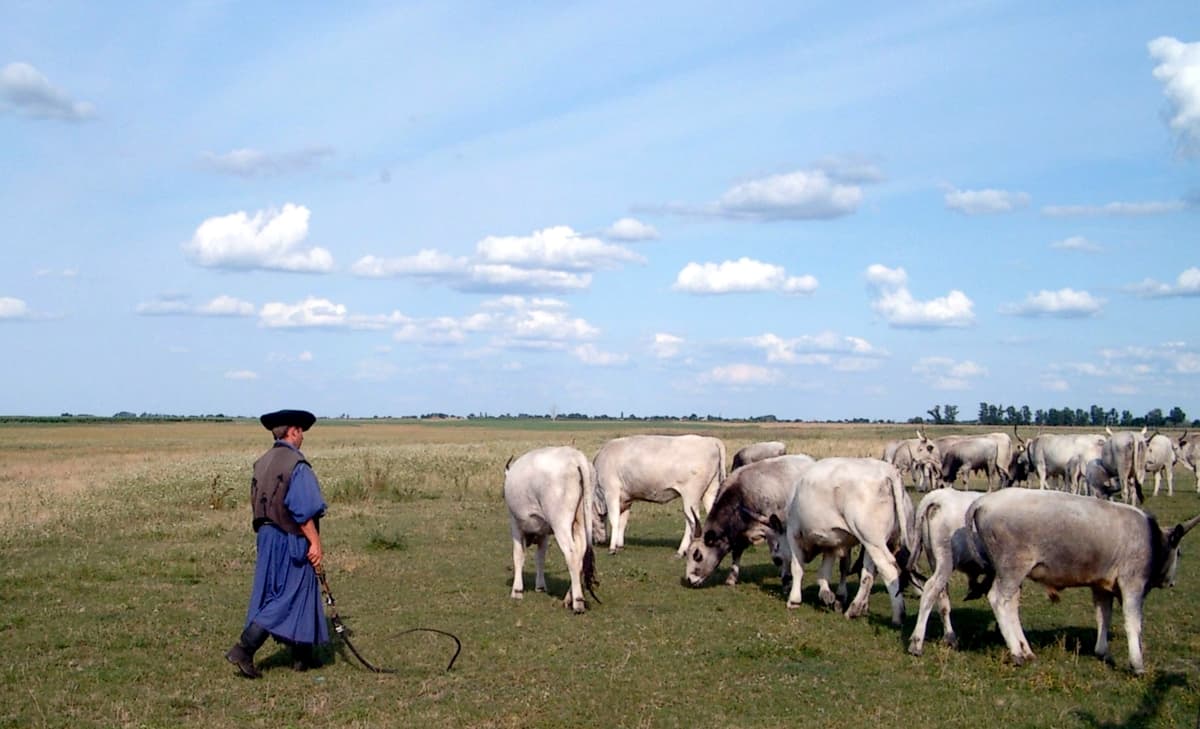
The word 'puszta' means 'bare' or 'empty' in Hungarian. But it is not really empty at all - it is full of life if you know where to look. Millions of insects live in the grass, which feeds thousands of birds, which in turn attract larger hunters like birds of prey circling high above.
The flat horizon of the Puszta plays tricks on your eyes. On hot summer days, the air above the ground shimmers and wavers, creating mirages - ghost-like reflections that look like puddles of water but are not really there. Ancient travellers found these mirages very confusing.
The Puszta is famous for its sweeping skies. Because the land is so flat for so many kilometres, you can see the weather coming from far away. Thunderstorms appear on the horizon long before they arrive, and sunsets light up the whole sky in orange, pink and purple for an incredibly long time.
The Hortobágy national park sits at the heart of the Puszta. It was declared Hungary's first national park in 1973. Ancient stone wells called sweep wells - long wooden poles balanced like a see-saw over a bucket - have dotted the plain for hundreds of years, and many still stand today.