
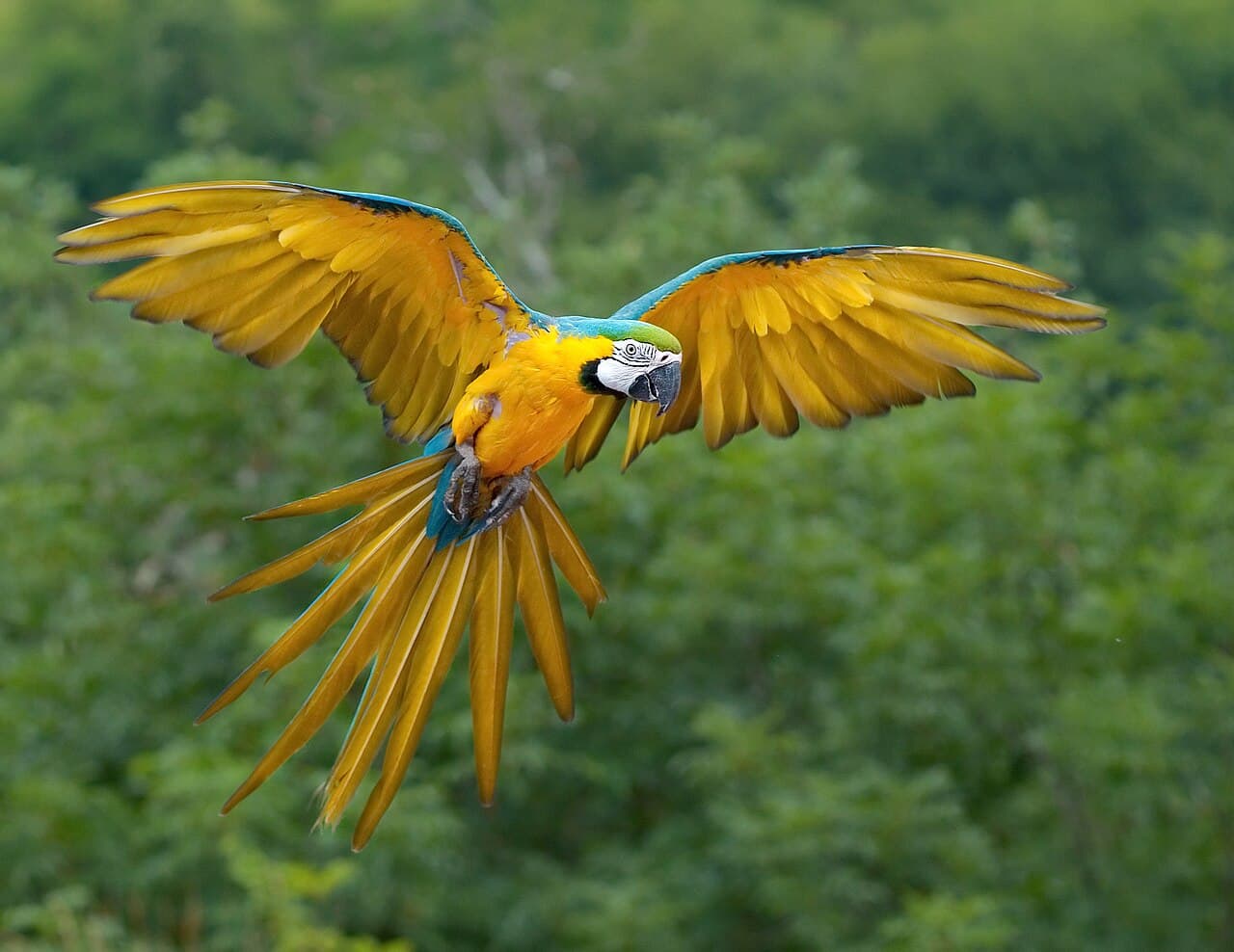
Macaws belong to the parrot family, and the blue-and-gold is one of the largest members - about 85 centimetres from beak to tail tip, roughly the same length as a guitar. When a flock of them flies overhead, their brilliant colours flash against the sky and their loud squawking calls fill the air. They are very hard to miss.
These birds are extremely intelligent. In the wild they use their feet almost like hands to hold food while they eat, and they can solve simple puzzles to reach a treat. They live in pairs or small groups and mate for life - meaning one macaw stays with the same partner for its whole life, which can be 40 to 60 years. Pairs preen (clean) each other's feathers and call to each other constantly.
Blue-and-gold macaws eat fruit, seeds, nuts, flowers, and clay from riverbanks. The clay might sound strange, but scientists think it helps neutralise toxins (natural poisons) found in some of the seeds they eat - a clever natural pharmacy. Large groups of macaws often gather at clay banks called 'macaw licks', which is quite a spectacle.
Like many colourful parrots, blue-and-gold macaws face threats from habitat loss as forests are cut down, and from the illegal pet trade. Conservation organisations in El Salvador and across Central America work hard to protect these birds and their forest homes so that future generations can enjoy them in the wild.