
Classroom lesson · Wildlife · 🇩🇴 Dominican Republic

West Indian Manatee

The gentle giant of the Caribbean coast

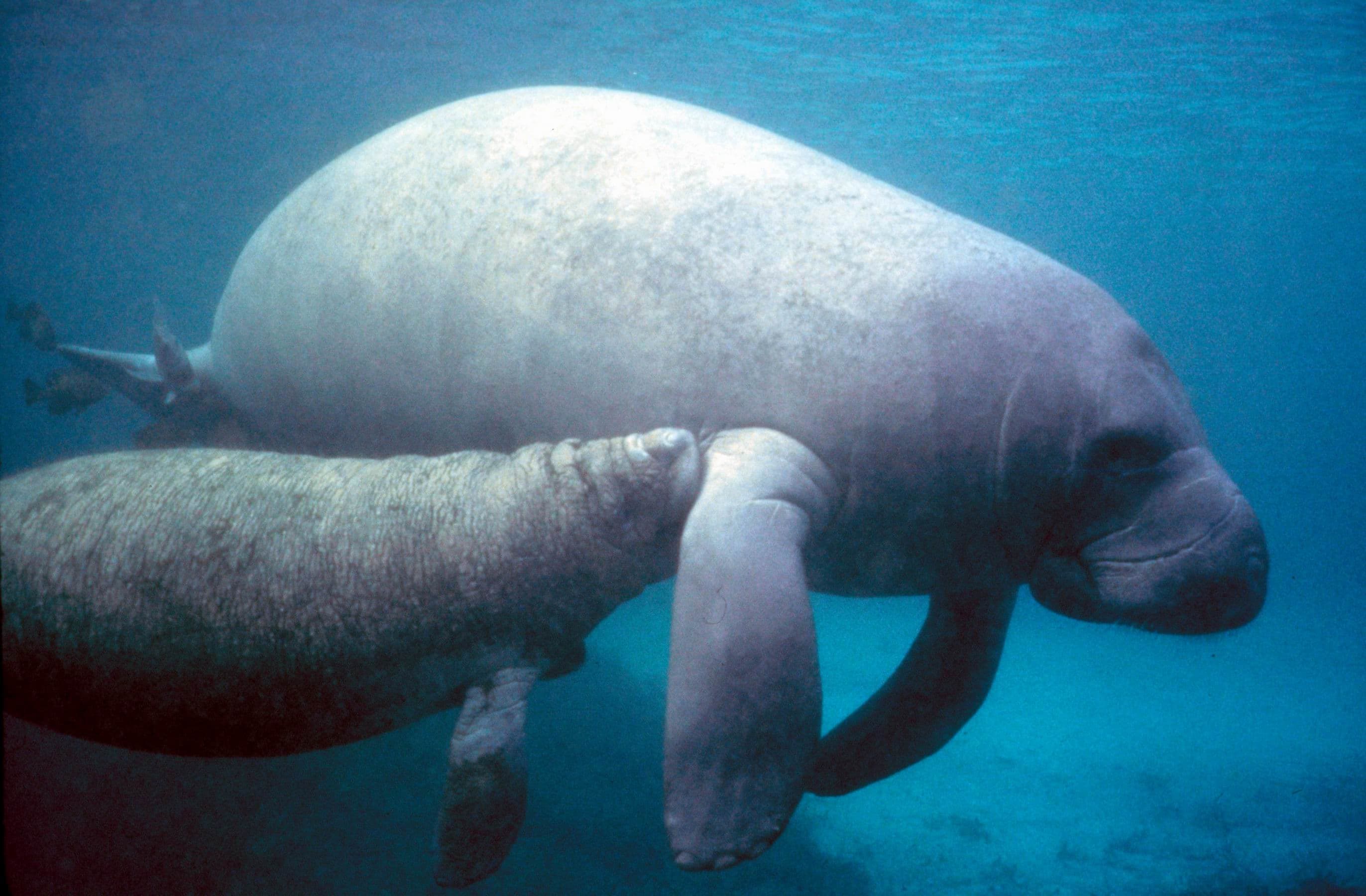
A large, round manatee floating peacefully in clear turquoise water

Photo · Wikimedia Commons

What is it?

The West Indian manatee is a huge, gentle sea mammal that lives in warm, shallow coastal waters around the Dominican Republic. It can grow to over three metres long and weigh as much as 600 kg - about the weight of a small car. Despite its size, it moves slowly and peacefully through the water, grazing on sea grass the way a cow grazes on land.

Tell me more

Manatees are sometimes called 'sea cows' because they spend their days quietly munching on underwater plants. They can eat up to 50 kg of sea grass and water weeds every single day. This grazing actually helps keep the sea grass healthy by trimming it evenly.

They breathe air and must come to the surface every few minutes. When a manatee breathes, it makes a sound like a big, satisfied sigh. Mothers and babies call to each other with a sound a bit like a bird's squeaky chirp - scientists say it sounds surprisingly high and sweet for such a large animal.

Manatees have no natural predators in the Dominican Republic. They are related - distantly - to elephants. Scientists can tell because both animals have similar nails on their flippers and the same slow, steady way of moving.

The north coast of the Dominican Republic, especially around Samaná and Monte Cristi, is one of the best places in the Caribbean to spot manatees from a boat. Conservation teams monitor them carefully to make sure their sea-grass meadows stay clean and healthy.

In the classroom

Walk your class through this in 15 minutes.

Talk together

Discussion prompts

  1. 01Manatees graze on sea grass like cows graze on grass. How does an animal's food tell you something about where it lives?
  2. 02Manatees move slowly and have no natural predators. Does being slow mean being less successful? Why or why not?
  3. 03If manatees and elephants are related, what clues might a scientist look for to discover that connection?
Try this

Classroom activity

Time your own breathing for one minute. Count how many breaths you take. Now imagine breathing only every 3-5 minutes like a resting manatee. Write a short diary entry from a manatee's point of view describing one morning of sea-grass munching.