
Classroom lesson · Bohemian Forest · 🇨🇿 Czechia

Bohemian Forest

One of Europe's largest wild woodland areas

Misty spruce forest in the Bohemian Forest (Šumava) in autumn

Photo · Wikimedia Commons

What is it?

The Bohemian Forest - called Šumava in Czech - is a wide, wild stretch of mountains and woodland along the south-western edge of Czechia. It is one of the largest continuous forest areas left in central Europe, full of ancient spruce and beech trees, clear mountain lakes and rushing streams.

Tell me more

Šumava has been a national park since 1991, and large parts of it are allowed to grow completely wild - meaning fallen trees are left where they land, new trees sprout up beside them, and no human cuts anything down. Scientists call this a 'primeval forest' and it is very rare in Europe.

The forest is full of glacial lakes - lakes that were carved out by huge glaciers during the last ice age, thousands of years ago. They are very deep and very dark. The largest, called Černé jezero (Black Lake), sits inside an almost circular rocky hollow and seems perfectly still on calm days.

Animals that have disappeared from most of Europe still live here: lynx, wolves, brown bears, black storks and white-tailed eagles all make their homes in the quietest parts of the forest. Because large areas have no roads, these animals can roam freely.

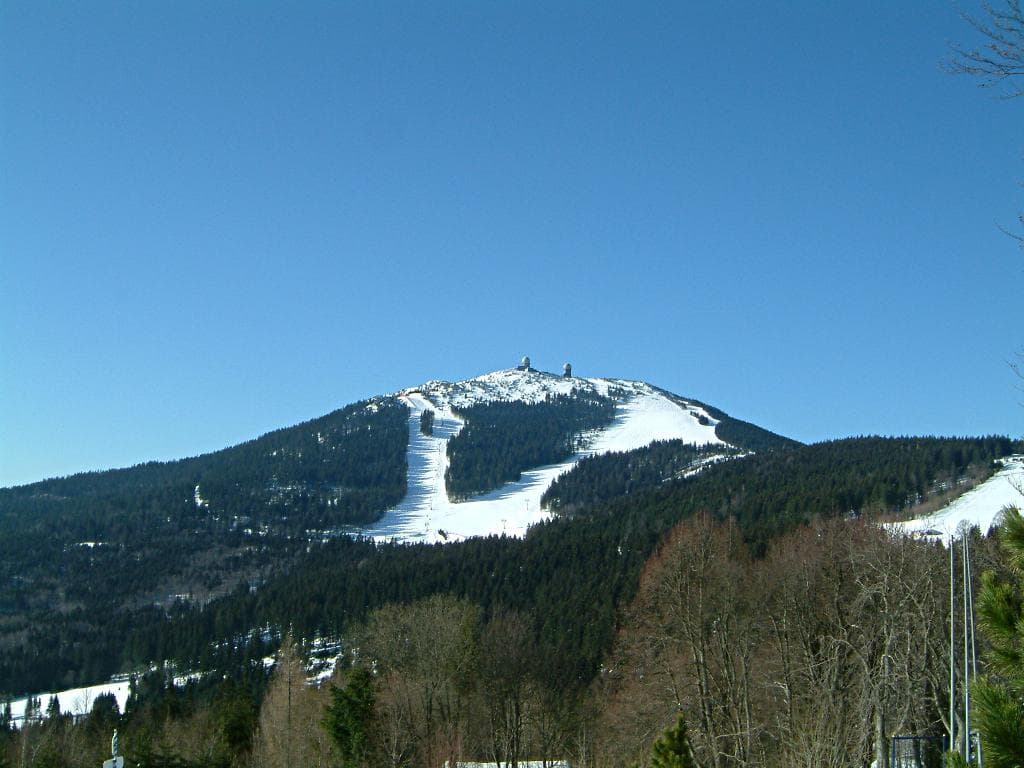
In autumn, the forests turn brilliant shades of orange, red and gold. In winter, the mountain ridges collect thick snow, and cross-country skiers trace trails through the trees. In spring, the snowmelt fills hundreds of streams with cold, clear water.

In the classroom

Walk your class through this in 15 minutes.

Talk together

Discussion prompts

  1. 01What is the difference between a managed forest (where people plant and cut trees) and a wild forest?
  2. 02Why might scientists want to study a forest that is left completely alone?
  3. 03How do you think a glacier could carve a lake out of solid rock?
Try this

Classroom activity

Compare a wild forest to a managed park near your school. Make a two-column chart: what things would you find in each? Think about fallen logs, open spaces, animal homes, and how light reaches the ground.