
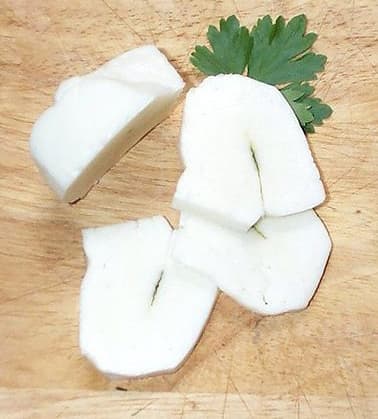
Making halloumi is an ancient tradition in Cyprus. The cheese is formed into blocks, then briefly cooked in whey (the liquid left over from cheese-making) before being salted and packed with dried mint. That mint is part of what makes Cypriot halloumi taste different from similar cheeses made in other countries - you can see the green flecks running through the white cheese.
Halloumi has a very high melting point, which is unusual for cheese. Most cheeses turn runny and gooey when heated, but halloumi holds its shape and develops a golden, slightly crispy crust while the inside stays springy. Some people describe the texture as 'squeaky' against your teeth. It is delicious eaten with watermelon in summer - the salty and sweet flavours work wonderfully together.
Today halloumi is one of Cyprus's most important exports. You can find it in supermarkets across Europe, North America, and Australia. The European Union has given it 'Protected Designation of Origin' status - which means that for cheese to be sold as 'halloumi', it must be made in Cyprus. This protects the Cypriot tradition and the farmers who make it.