
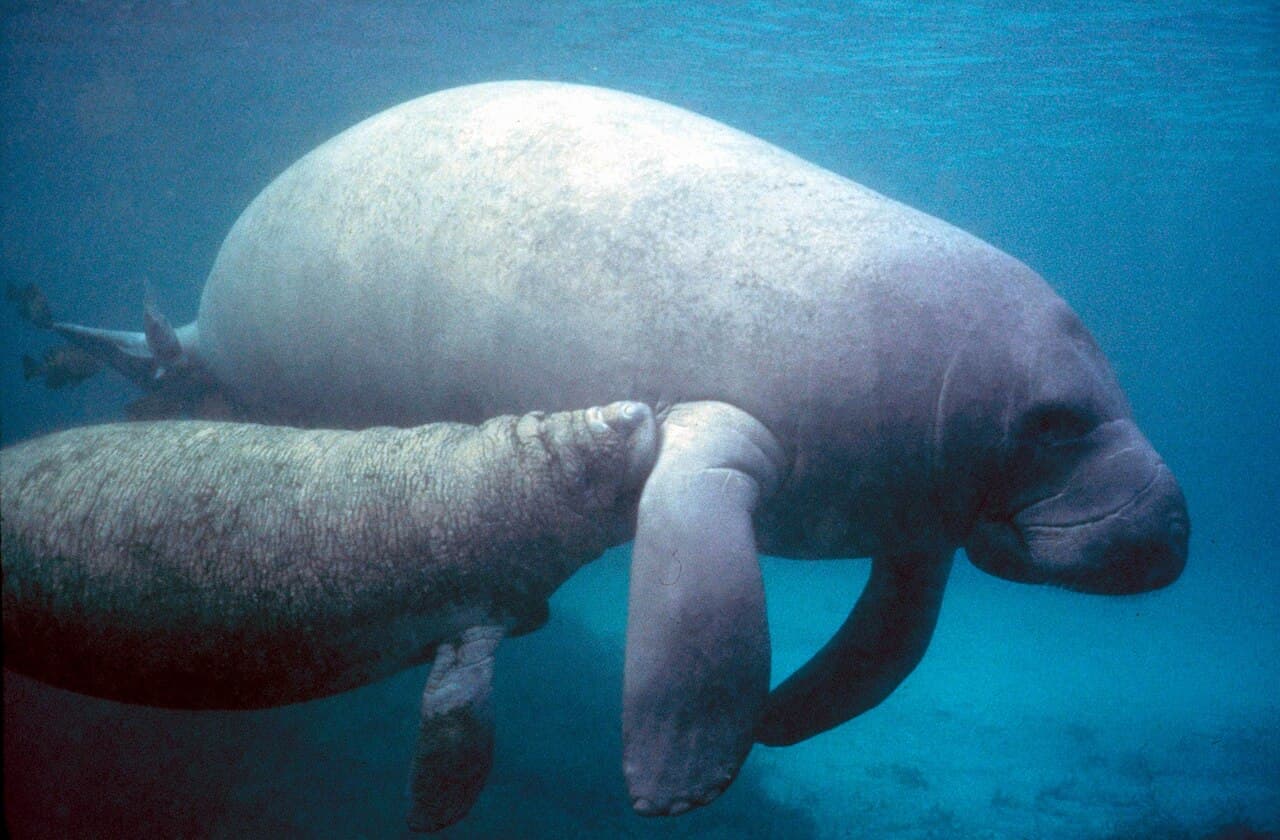
Manatees breathe air, just like you do, so they must come to the surface every few minutes to take a breath. When they do, they take a long, slow breath and then sink back down gently. They are so calm that snorkellers sometimes swim alongside them, and the manatees barely seem to notice. Scientists say manatees have no natural enemies other than humans, which is why they are so unhurried and unbothered.
A manatee's closest living relatives are elephants - not dolphins or whales. If you look at a manatee's flipper, you can see tiny finger bones inside, just like an elephant's foot. Both animals share common ancestors that lived millions of years ago on land. It is thought that the ancestors of manatees gradually moved from land into the water over a very long time.
Manatees eat up to 10% of their body weight in sea grass every day - that is like a child eating 5 to 7 kilograms of food. Huge herds of manatees once grazed the Caribbean, keeping sea grass beds trimmed and healthy. Today they are a vulnerable species, but Cuba's protected coastal areas are one of the places where their populations remain relatively strong.