
Classroom lesson · Livingstone's Fruit Bat · 🇰🇲 Comoros

Livingstone's Fruit Bat

One of the world's biggest bats, with wings as wide as your arms

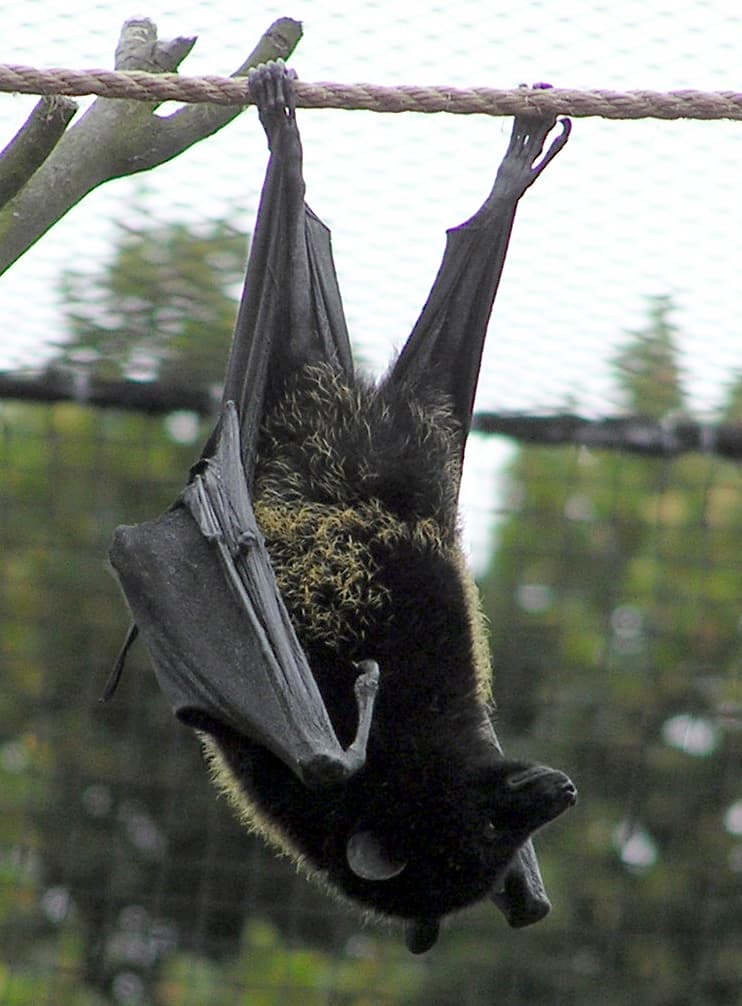
A large Livingstone's fruit bat hanging in a tree on Anjouan island, Comoros

Photo · Wikimedia Commons

What is it?

Livingstone's fruit bat is a giant bat that lives only on the islands of Anjouan and Mohéli in Comoros. It is one of the biggest bats in the entire world - when it spreads its wings, they can stretch up to 1.4 metres from tip to tip, which is wider than most grown-ups' arms. Despite its huge size, it only eats fruit and flowers.

Tell me more

Fruit bats are sometimes called 'flying foxes' because their faces look a little bit like foxes - they have big eyes, pointy ears, and furry bodies. Livingstone's fruit bat is the biggest and rarest of all the flying foxes. It has dark brown fur, orange patches, and enormous leathery wings.

These bats spend their days hanging upside down in tall forest trees, resting and keeping cool. At night they fly off to find ripe fruit to eat. As they move from tree to tree, they spread seeds in their droppings - which helps new trees grow. This makes them very important for keeping the island's forests healthy.

Livingstone's fruit bat is found nowhere else on Earth except Comoros, which makes it a very special animal. Conservation groups and local communities work together to protect the forests where the bats live, because without tall old trees, the bats have nowhere to roost. Children in Comoros are proud to share their islands with such an extraordinary creature.

In the classroom

Walk your class through this in 15 minutes.

Talk together

Discussion prompts

  1. 01Why might an animal found in only one small place in the world be especially important to protect?
  2. 02How do fruit bats help forests grow without meaning to?
  3. 03If you held your arms out wide, how close would you be to a 1.4-metre wingspan? Try it!
Try this

Classroom activity

Using a tape measure or string, mark out 1.4 metres on the floor - that is the wingspan of Livingstone's fruit bat. Now measure your own arm-span. Make a chart comparing bat wingspan to arm-spans of five people in your class. Who comes closest?