
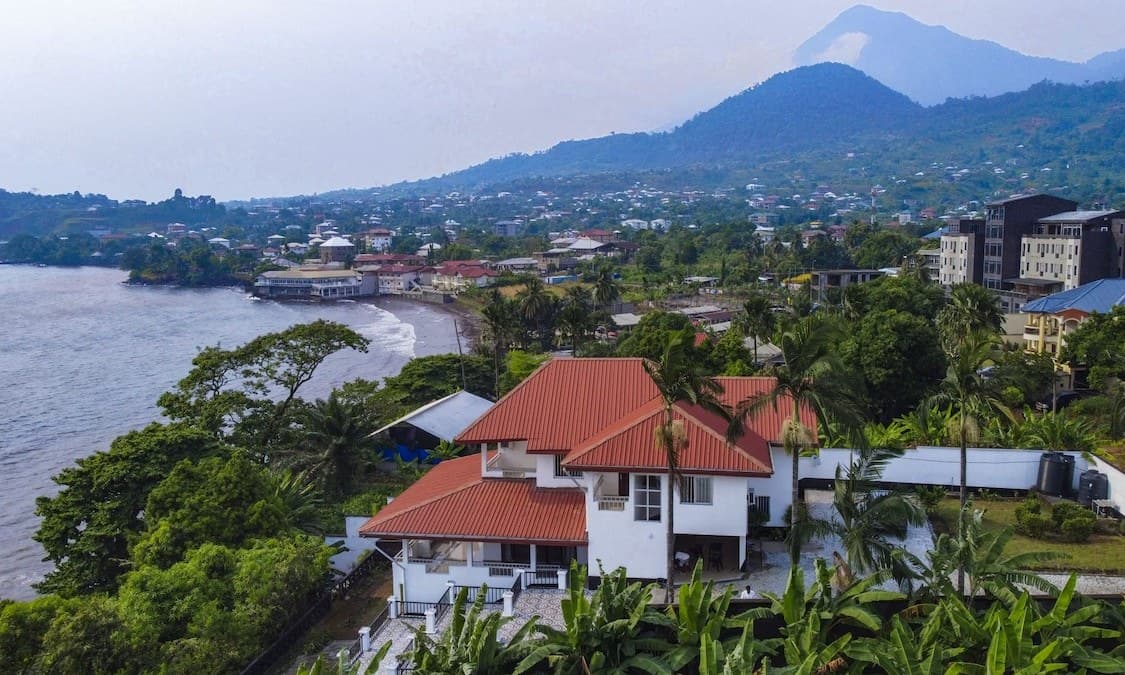
Most sand is made when rocks or shells are slowly broken down by waves and wind over millions of years. At Limbe, the rock that broke down was dark volcanic basalt - the same kind of rock that forms when lava cools. This gives the sand its beautiful black, grey and deep-brown colours. The sand feels slightly coarser than typical beach sand.
Limbe sits right at the foot of Mount Cameroon, next to the Atlantic Ocean. The town is lush and green because it rains a lot - the mountain catches clouds rolling in from the sea. Palm trees line the shore and the warm ocean water is perfect for swimming. The combination of black sand, green palms and blue sea makes Limbe's beaches look quite unlike anywhere else.
Limbe is also home to a brilliant wildlife centre where rescued chimpanzees, gorillas and other primates that have been found in need of care are looked after. Visitors can watch the animals and learn about efforts to protect them. So a trip to Limbe can include both a beach day and a wildlife adventure.
Local fishermen launch colourful wooden boats from the black-sand shores every morning. Fresh fish is sold right on the beach and cooked in nearby restaurants. The harbour area is always busy with people, colour and the smell of grilling seafood - a wonderful mix of the ocean and everyday Cameroonian life.