
Classroom lesson · Wildlife · 🇧🇷 Brazil

Toucans - that famous beak

A beak the size of a banana - and it's mostly hollow

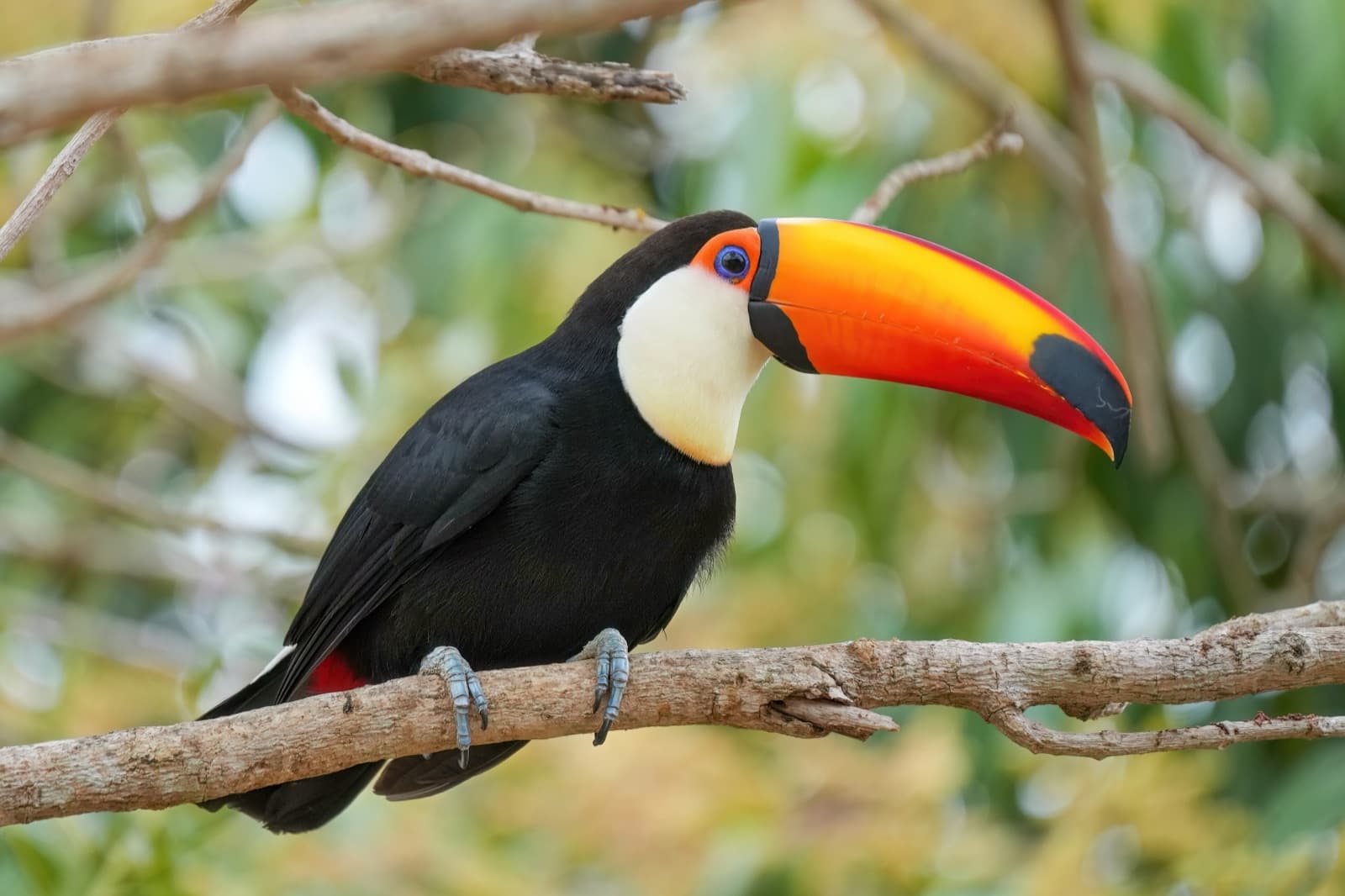
A toco toucan perched on a branch, showing its huge orange beak

Photo · Wikimedia Commons

What is it?

Toucans are some of the most recognisable birds in the world thanks to their enormous, colourful beaks. The biggest kind, the Toco toucan, lives across Brazil and has a beak nearly 20 cm long - about the size of a banana - that's bright orange with a black tip.

Tell me more

If you saw a toucan's beak, you'd probably think it must be heavy. It isn't. The beak is made of a sponge-like material called keratin (the same stuff your fingernails are made of) with lots of tiny air pockets inside. It looks huge but barely weighs anything at all.

Scientists used to wonder why toucans have such big beaks. We now think it works a bit like a radiator. When the toucan is hot, blood flows into the beak and lets the heat escape into the air. When it's cool, blood flows away and the toucan saves warmth. It is basically built-in air conditioning.

Toucans eat mostly fruit, picking it from branches with the very tip of their beak and then tossing it up into the air to swallow. They also eat insects, lizards, and sometimes eggs. The long beak helps them reach food on thin branches that would never hold their weight.

There are over 40 different kinds of toucan, and they live across Central and South America. They prefer the warm forests near the equator, like the Amazon. Most of them are noisy birds - they call to each other in croaks, yelps and clicks across the treetops.

In the classroom

Walk your class through this in 15 minutes.

Talk together

Discussion prompts

  1. 01If you had a giant beak, what would you find useful about it? What would be tricky?
  2. 02Toucans' beaks help them keep cool. What other ways do animals manage hot weather?
  3. 03Why might it help to be very brightly coloured if you live in a forest full of green leaves?
Try this

Classroom activity

On A3, draw a toucan to actual size - around 60 cm beak to tail. Use rulers to keep the beak the right length (about 20 cm). Cut out and pin around the classroom. How many toucans would it take to fill the wall?