
Samba grew in Brazil around 100 years ago, in the streets of Rio de Janeiro. People with roots from many places - Africa, Portugal, and Indigenous Brazil - made music together, mixing rhythms that hadn't been mixed before. The result was samba: a rhythm that makes people want to move.
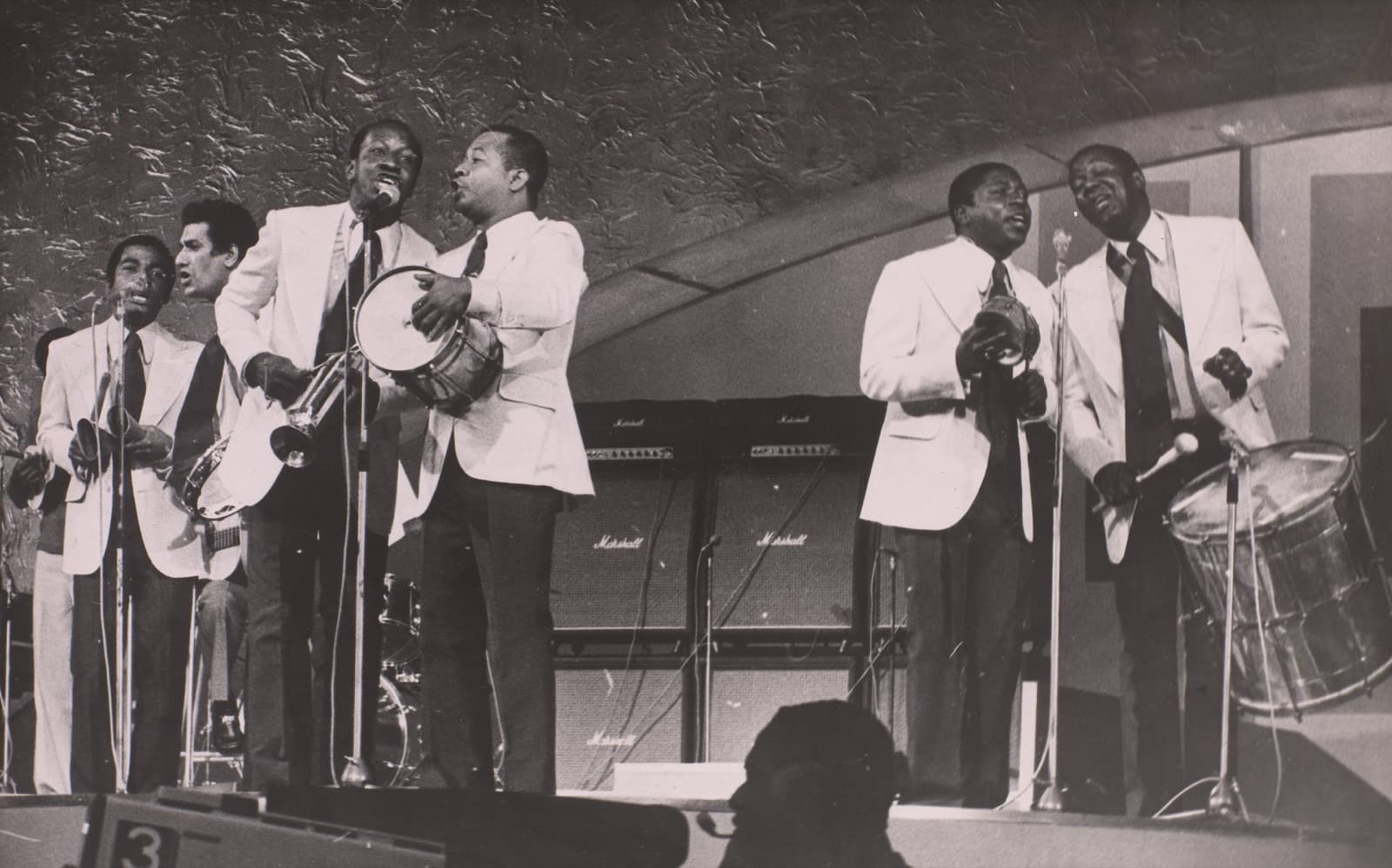
There are lots of instruments in a samba band, and many of them are easy to make from things in a kitchen. There's a big drum (the surdo), small high-pitched drums (tamborims), shakers (chocalhos), a small frying-pan-shaped instrument (the agogô bell), and a one-stringed friction drum (the cuíca) that makes a squeaky, talking sound.
Samba schools are big community groups that meet up all year to practise. They are not really schools - they are more like neighbourhood youth clubs where kids, parents and grandparents all play together. Every year they prepare a routine for Carnaval, with hundreds of drummers all playing in time.
There are different styles of samba. Some are slow and gentle, played at home with an acoustic guitar. Some are very fast, played with a hundred drummers at full volume. There's even a style called 'samba de roda' (samba in a circle) where everyone stands in a ring, clapping and taking turns dancing in the middle.