
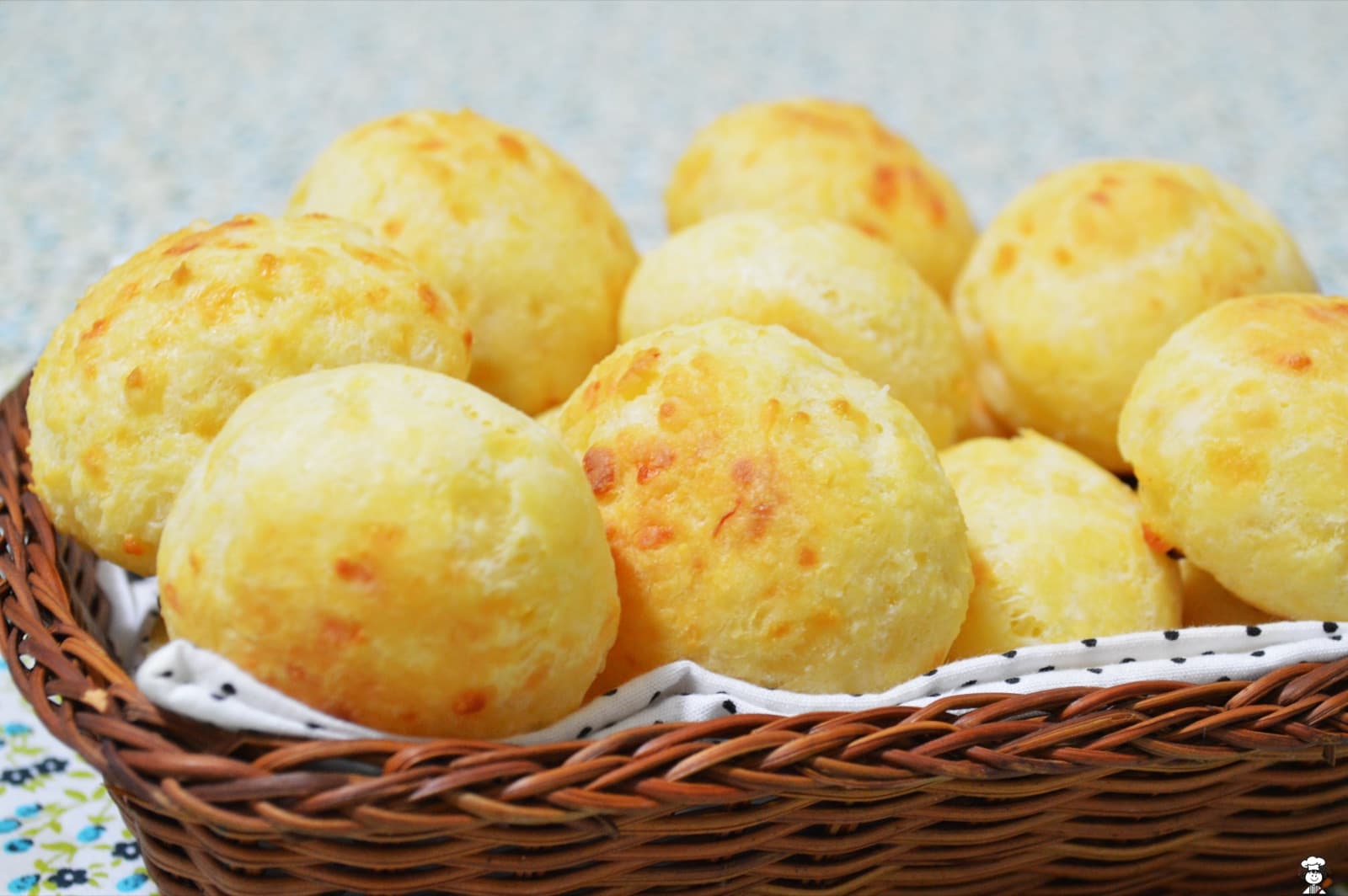
What makes pão de queijo special is the flour. Instead of wheat flour, it is made from tapioca - a starchy flour that comes from a plant called cassava. Cassava grows all across Brazil, and Indigenous people have used it for food for thousands of years.
Because tapioca isn't wheat, pão de queijo is naturally gluten-free. That means people who can't eat wheat (some people get sick from it) can still enjoy them. The tapioca is also what makes them so chewy - it gives them that stretchy, slightly bouncy texture that wheat bread doesn't have.
The cheese is mixed straight into the dough before baking. As the breads bake, the cheese melts inside, making the middle creamy and gooey. The outside crisps up to a golden brown. Eaten warm, straight from the oven, pão de queijo is one of the most popular foods in Brazil.
They come from a region called Minas Gerais - the same place that grows most of Brazil's coffee. The two go together: a tiny cup of strong Brazilian coffee for the grown-ups, a glass of milk for the kids, and a basket of warm pão de queijo on the table in the middle.