
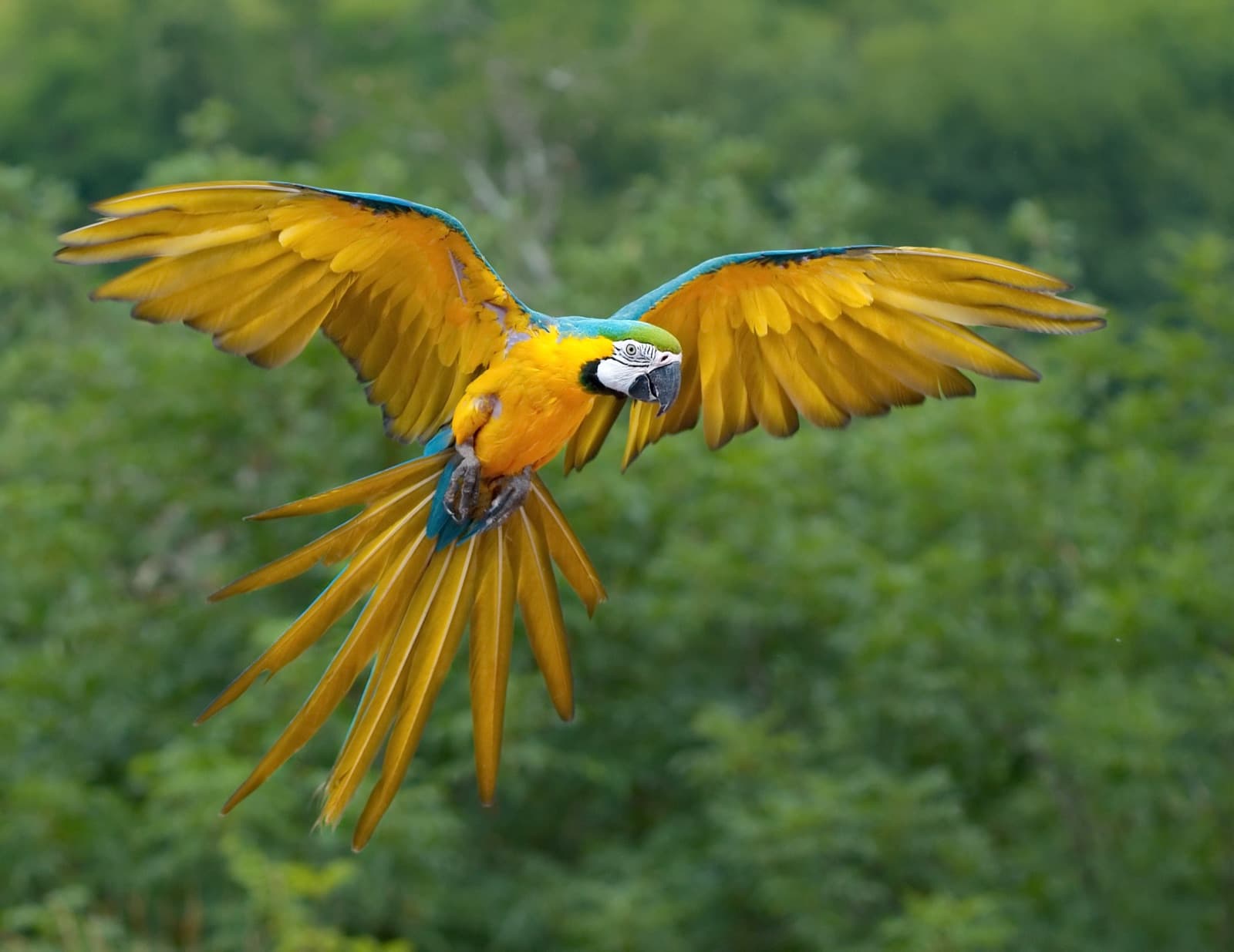
A macaw's beak is one of the strongest in the bird world. They use it to crack open hard nuts that other birds couldn't even dent - including the Brazil nut. Their tongues are dry and bony, perfect for getting at the soft middle once the shell is open.
Macaws are very clever. They can solve puzzles, use simple tools to reach food, and learn to say words. In the wild they don't really 'talk', but they do call to each other constantly in loud squawks and screeches that can be heard from far across the forest.
Macaws mate for life. They pick a partner when they're young and stay together for as long as they live - which can be 50 or 60 years for the bigger species. You'll often see two macaws flying side by side, their wings almost touching as they go.
Many macaws gather at a special place called a 'clay lick' - a riverbank made of soft, mineral-rich clay. They land in their hundreds at a time, perch on the wall, and nibble the clay. Scientists think the minerals help them digest the bitter fruit and seeds they eat in the forest.