
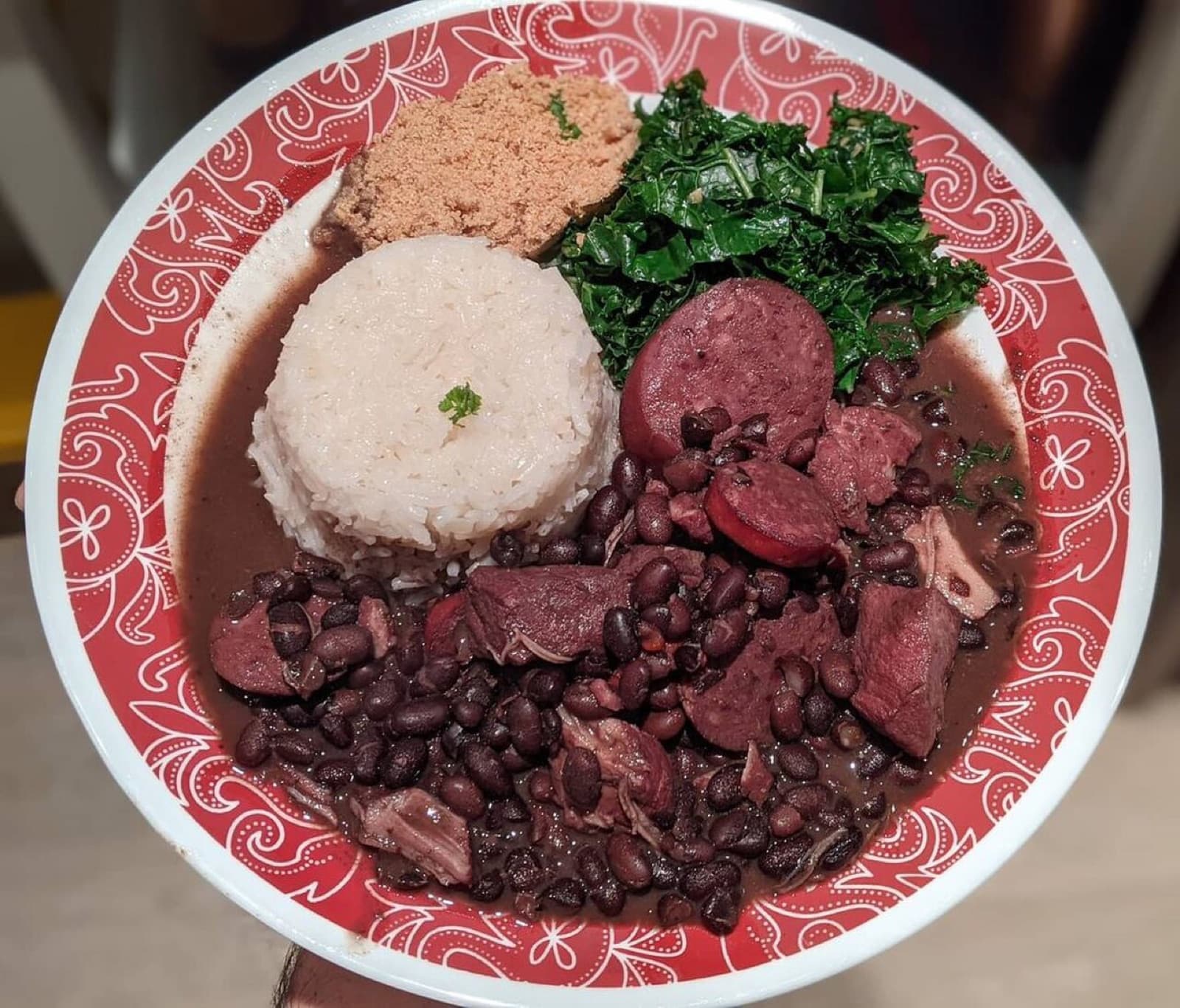
Cooking feijoada is a slow business. The black beans are soaked overnight, then simmered with bay leaves and meats for hours until the whole pot turns into a rich, dark stew. In many Brazilian homes, the smell of it filling the kitchen on a Saturday morning means it's about to be a long, happy meal.
Feijoada is not eaten alone - it always comes with side dishes that balance the flavour. The rice and the orange slices add lightness. The couve (cooked greens, a bit like spring cabbage) adds freshness. The farofa, which is crunchy and tastes a little like toasted breadcrumbs, soaks up the sauce. Together it is a meal you eat slowly.
Different parts of Brazil have their own version. In Rio, feijoada is rich and dark. Further south, the beans might be a different colour. In the north, families might add things like banana or palm oil. Almost every Brazilian family has the recipe their grandparents used.
Sharing food matters in Brazil. A bowl of feijoada is not a quick lunch - it's a meal where everyone sits around the table for an hour or two, telling stories and helping each other to seconds. It is the kind of dish you remember the smell of long after you've grown up.