
Coffee 'beans' aren't actually beans. They are the seeds inside a small red fruit called a coffee cherry. Each cherry has two seeds. To make a cup of coffee, the cherries are picked, the seeds are taken out, washed, dried, and finally roasted in big ovens until they turn dark brown.
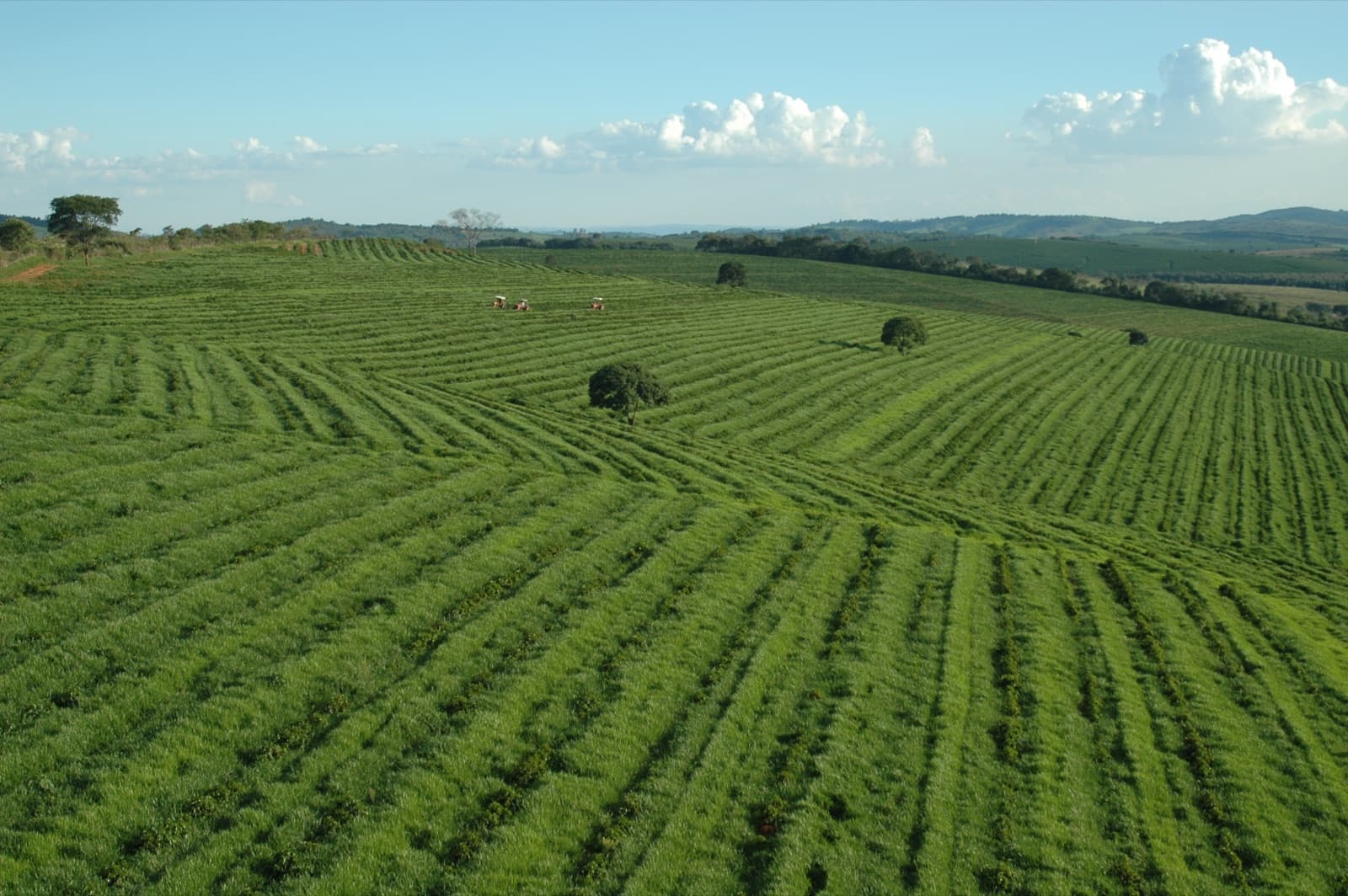
Most Brazilian coffee grows in a region called Minas Gerais. The land there is gently hilly, the weather is warm but not too hot, and there are months of sunshine and months of rain - perfect conditions for coffee plants. Some farms stretch as far as you can see, with millions of bushes lined up in neat rows.
Coffee likes to grow slowly. When the weather is right and the soil is good, the cherries take eight to nine months to ripen from green to bright red. Farmers walk along the rows checking by hand which cherries are ready, because they don't all ripen at the same time.
Brazil became the world's biggest coffee grower partly because of its huge size and partly because the climate is just right. Today coffee is one of Brazil's most important exports - meaning it sells huge amounts of it to other countries. Next time you walk past a café, there is a good chance the beans inside started life on a hill in Brazil.