
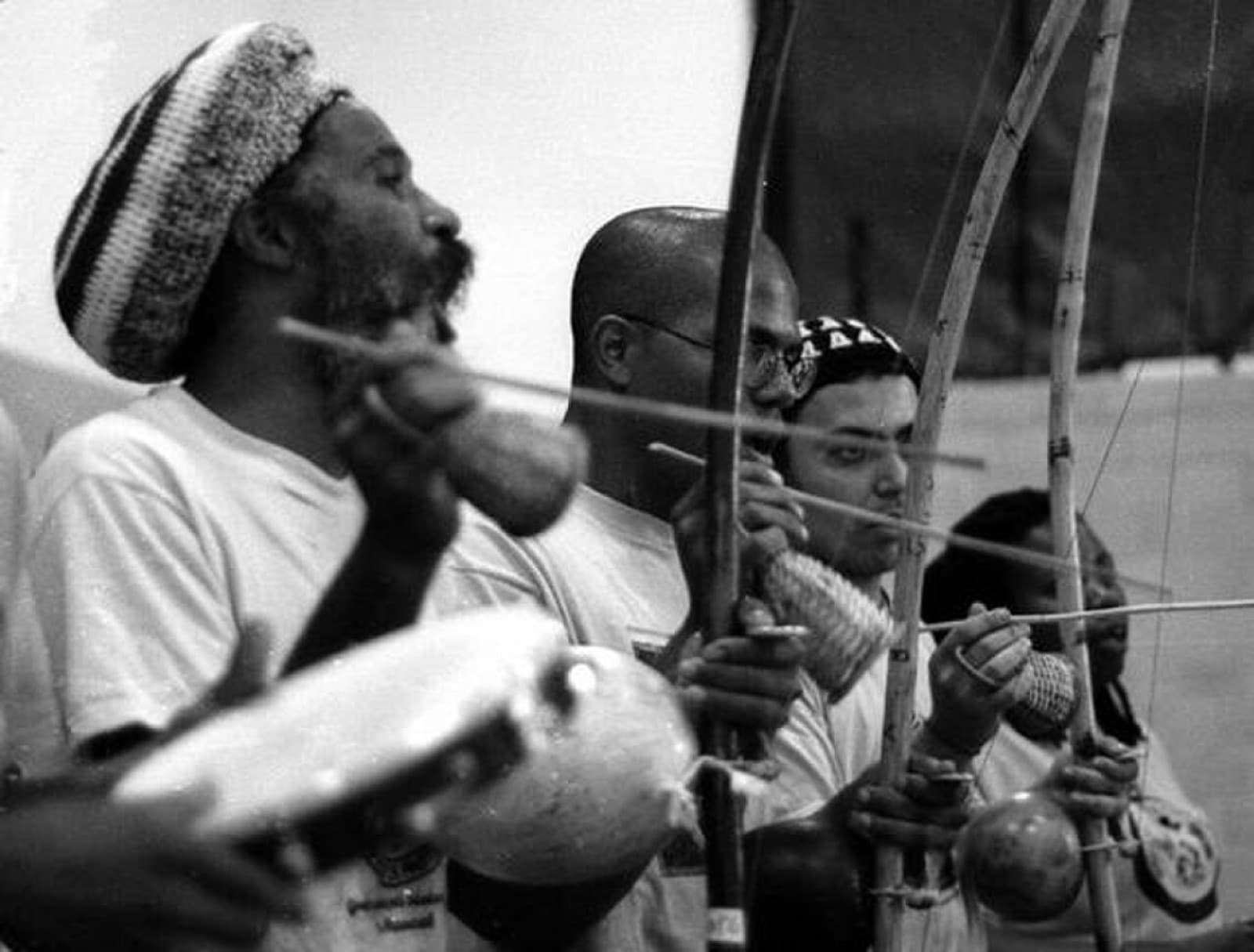
Capoeira is always played to music. There are four main instruments. The berimbau is a bow-shaped wooden stick with a single string and a gourd on the end - it makes a low, twanging sound. The atabaque is a tall drum. The pandeiro is a tambourine. And then there's the human voice: everyone sings together in a call-and-response.
The circle of people watching is called the roda (pronounced 'HOH-da'). Two players step into the middle and start moving to the beat. Capoeira moves are flowing and acrobatic - cartwheels, low sweeps, handstands, spinning kicks. The key is that the moves never connect. You aim near your partner but pull back at the last second.
Capoeira is the kind of activity where you spend ages learning the basics: how to stand low, how to flow from one move to the next, how to spot what your partner is about to do. Beginners often start with a simple swaying step called the ginga (pronounced 'JEEN-ga'), which is the foundation of every other move.
Today, capoeira is taught in schools and clubs all over the world - in Japan, the US, the UK, all over Europe. People love it because you don't just exercise, you also learn music, dance, balance, and how to read another person's movements. It is one of Brazil's gifts to the rest of the world.