
Classroom lesson · Pliva Lakes & Wooden Mills · 🇧🇦 Bosnia and Herzegovina

Pliva Lakes & Wooden Mills

Twin mountain lakes with a row of ancient wooden watermills still turning on the river

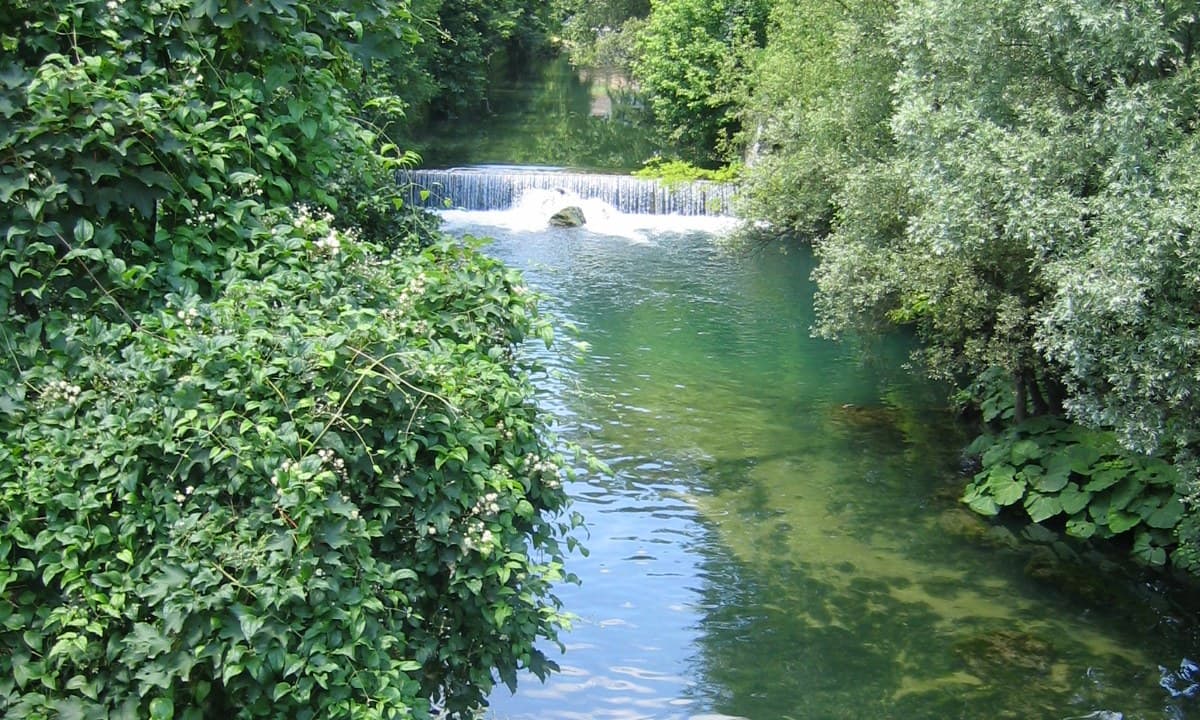
Old wooden watermills perched on a weir above the Pliva River with autumn-coloured forest behind

Photo · Wikimedia Commons

What is it?

The Pliva Lakes near Jajce are two beautiful mountain lakes - one large and one small - connected by rivers and waterfalls. Where the Pliva River flows out of the lakes, a row of ancient wooden watermills sits on a weir, their wheels still turning in the rushing water. Some of these mills have been grinding grain for hundreds of years.

Tell me more

A watermill uses the power of moving water to turn a heavy stone wheel called a millstone. As the water pushes the wooden paddle wheel round, it spins the millstone inside the mill, which crushes grain (usually wheat or corn) into flour. Before electricity, every village that needed flour had to build a mill near a stream or river.

The Pliva mills are unusual because there are so many of them in a row - about seventeen old mills clustered together. They were built by local families who each owned and operated one mill. Even today, a few are used to grind grain the traditional way, and visitors can watch the millstones turning and feel the flour dust in the air.

The lakes themselves are calm and mirror-like, reflecting the forests and sky above them. The larger lake is called Veliko Plivsko jezero and the smaller one is called Malo Plivsko jezero. They were formed naturally when landslides long ago blocked the river valley and the water backed up behind the debris.

Just below the lakes, the town of Jajce has its own dramatic waterfall - the Pliva Waterfall - right in the middle of the town, where the Pliva River leaps into the Vrbas River below. It is quite rare to have a large waterfall in the centre of a town.

In the classroom

Walk your class through this in 15 minutes.

Talk together

Discussion prompts

  1. 01Before electricity, people had to be clever about finding natural energy sources. What other natural forces do people use to make power? (Think of wind, sunlight, tides.)
  2. 02Why do you think seventeen families all built their mills in the same spot rather than on different parts of the river?
  3. 03Would you rather live in a town with a waterfall in the middle of it, or a town by the sea? Why?
Try this

Classroom activity

Build a model watermill paddle wheel using a pencil, cardboard strips, and a plastic bottle cap as the hub. Pour a steady stream of water from a jug onto the blades and see if it spins. Measure how many times it turns in 10 seconds for different amounts of water flow.