
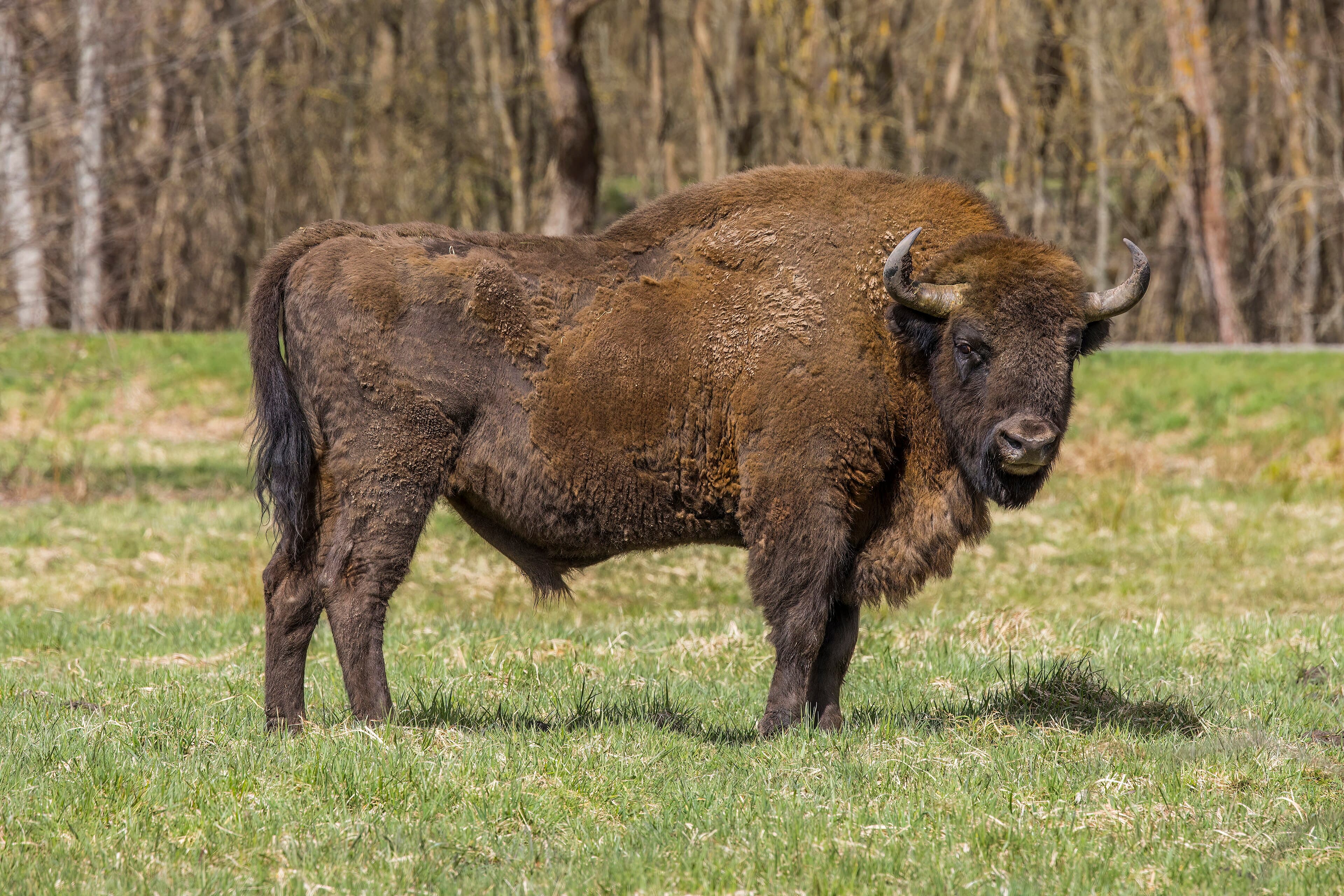
A fully grown male zubr can weigh up to 900 kilograms - that is about the same weight as twelve adult humans. They can be 1.8 metres tall at the shoulder and 3 metres long from nose to tail. Despite their enormous size, they can move very quietly through the forest.
By the early 1900s, European bison had been hunted so heavily and had lost so much of their forest that the very last wild ones disappeared. Only a small number survived in zoos. Scientists and conservationists worked for decades to breed these zoo animals carefully, then slowly reintroduce them into the wild. Belavezhskaya Pushcha was the first place where bison were released back into the forest.
Today there are over 7,000 European bison living in the wild - a wonderful success story. The largest free-ranging population lives in Belavezhskaya Pushcha. The zubr has become a symbol of nature conservation: proof that with care and effort, animals that are nearly gone can be brought back.
Bison are gentle grazers. They eat grasses, leaves, bark, and acorns. In winter, rangers sometimes leave out hay for them in the forest. Visitors to Belavezhskaya Pushcha sometimes spot a herd of bison moving silently among the ancient trees - one of the most exciting wildlife sights in Europe.