
Classroom lesson · Devil's Bridge · 🇦🇬 Antigua and Barbuda

Devil's Bridge

A natural limestone arch carved by the sea over thousands of years

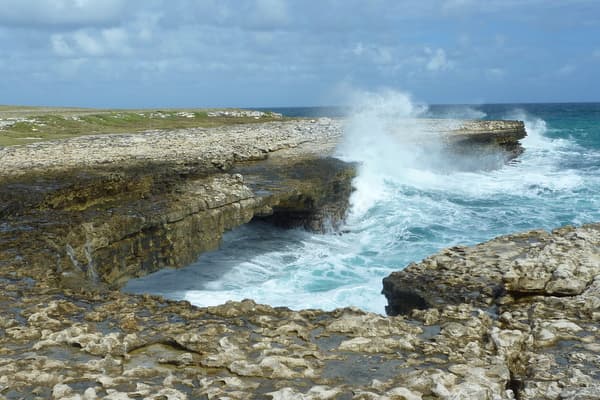
The natural limestone arch of Devil's Bridge on Antigua's Atlantic coast

Photo · Wikimedia Commons

What is it?

Devil's Bridge is a natural arch of limestone rock on the wild Atlantic coast of Antigua. The sea has been crashing against these rocks for thousands of years and slowly carved out a bridge shape underneath. When waves roll in, they shoot up through holes in the rock in big foamy jets called blowholes.

Tell me more

Limestone is a type of rock that water can slowly dissolve and shape over a very long time. The powerful Atlantic waves hit this part of Antigua's coast much harder than the calm Caribbean side - and that energy, over thousands of years, has sculpted the rock into this amazing arch.

The blowholes around Devil's Bridge are just as exciting as the arch itself. When a big wave rolls in underneath the rock, it has nowhere to go but up through cracks and holes, shooting a column of white foam and spray high into the air. If you time it right, you get completely splashed!

The area around Devil's Bridge is part of a national park. You can walk along the rocky shore and look into natural rock pools full of tiny crabs, sea urchins, and little fish. The water here is too rough for swimming, but it is a brilliant place for exploring and watching the power of the ocean.

Local legend says the arch got its dramatic name because the waves there were so fierce they seemed almost magical. Today it is one of Antigua's most visited natural landmarks, and people come from across the island to see the blowholes in action after a storm.

In the classroom

Walk your class through this in 15 minutes.

Talk together

Discussion prompts

  1. 01Can you think of other shapes in nature that have been made by wind, water, or ice over a very long time? What do they have in common?
  2. 02If you watched the same rock being hit by waves every day for a thousand years, what do you think would eventually happen to it?
  3. 03Why do you think different sides of the same island might have completely different wave sizes and weather?
Try this

Classroom activity

Put a sugar cube on a plate and drip water onto it drop by drop. Watch what happens over a few minutes. Draw and label what you see - then explain in one sentence how this is similar to what the sea does to limestone over thousands of years.