
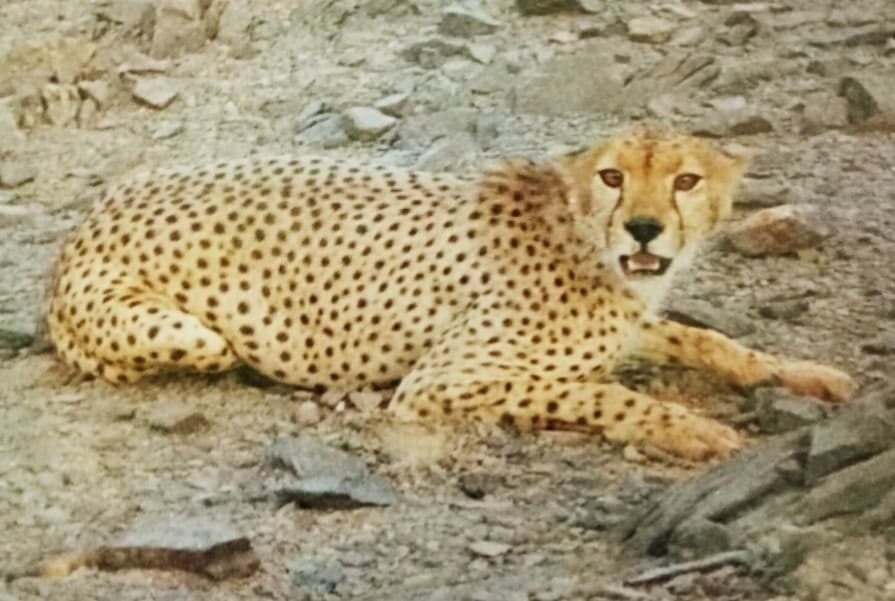
Scientists believe there are only about 250 Saharan cheetahs left in the whole world. They live across a vast area of desert and mountain - so they are spread very thinly, with lots of space between each cat. You could spend years in the Sahara without ever seeing one.
Their pale colour is brilliant camouflage on sandy, rocky ground. From a distance, a Saharan cheetah is almost invisible - just a pale shape that flickers and is gone again. Scientists track them mostly using hidden 'camera traps' - cameras tied to trees that take a picture whenever something walks past.
Unlike African cheetahs, who hunt in the day, Saharan cheetahs often hunt at night when the desert is cool. They eat gazelles, hares and birds. They can survive without drinking much water because they get moisture from the blood and meat of the animals they catch.
Algerian park rangers and scientists work together to protect them. Some local Tuareg families act as 'cheetah scouts', reporting where they spot tracks. Children in schools near the Ahaggar mountains learn that they share their home with one of the most special animals in the world.