
Classroom lesson 路 Wildlife馃嚛馃嚳 Algeria

The dromedary camel

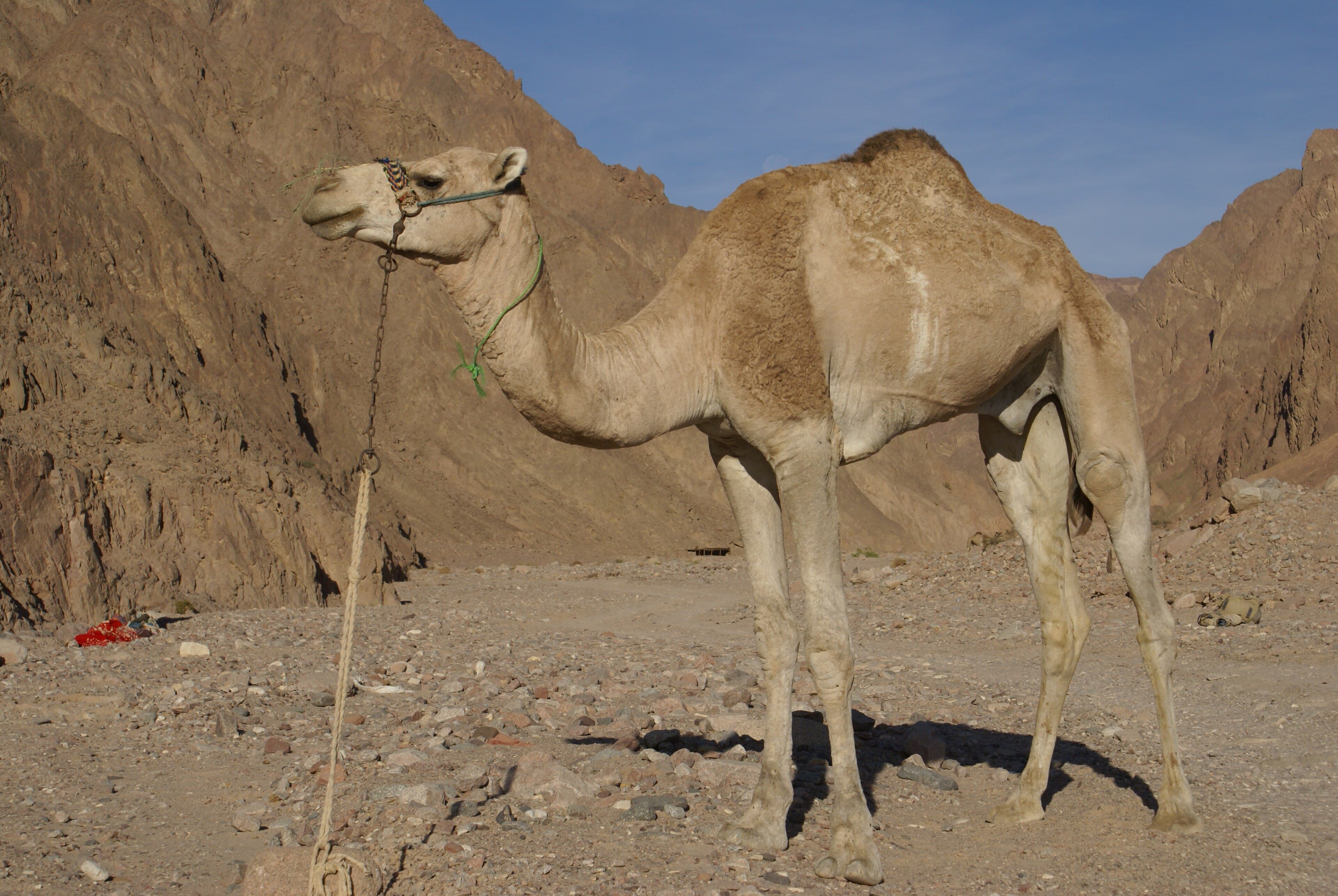
The 'ship of the desert' with one big hump

A dromedary camel walking across the orange sand dunes of the Algerian Sahara

Photo 路 Wikimedia Commons

What is it?

The dromedary camel is one of the most important animals in the Algerian Sahara. It has one big hump on its back (the bactrian camel, in Asia, has two). For thousands of years, dromedaries have carried people, food and trade goods across the desert - which is why they are nicknamed the 'ship of the desert'.

Tell me more

The hump is not full of water - it is full of fat. When food is scarce, the camel slowly uses up the fat and the hump goes a bit floppy. Once the camel eats well again, the hump fattens back up. So a healthy camel has a tall, upright hump.

Camels can drink up to 100 litres of water in 10 minutes - more than five big buckets. Then they can go for over a week in the desert heat without another drink. Their bodies are amazing at saving every drop of water, even from their breath.

Their feet are built for sand. Each foot has two big toes joined by a wide leathery pad that spreads out as the camel steps - like built-in snowshoes. That stops them sinking into soft sand. They walk with both legs on one side at the same time, which makes them rock gently like a boat - one reason their riders call them ships.

Camels are still vital to many Saharan families. The Tuareg people, who live across the southern Algerian desert, have been camel herders for over 1,000 years. Their long camel caravans used to carry salt, dates and silk across the Sahara on journeys that lasted weeks.

In the classroom

Walk your class through this in 15 minutes.

Talk together

Discussion prompts

  1. 01If a camel's hump is fat, where does it store water?
  2. 02Why might it help to have feet that spread out on sand?
  3. 03Why have camels been used for trade across deserts for thousands of years instead of horses?
Try this

Classroom activity

Compare three desert animals: the camel, the fennec fox, and a lizard. Make a class chart of how each one deals with heat, thirst and sand. Whose tricks are most clever? Which would you most like to have for your own?