
Classroom lesson 路 Wildlife馃嚛馃嚳 Algeria

The addax antelope

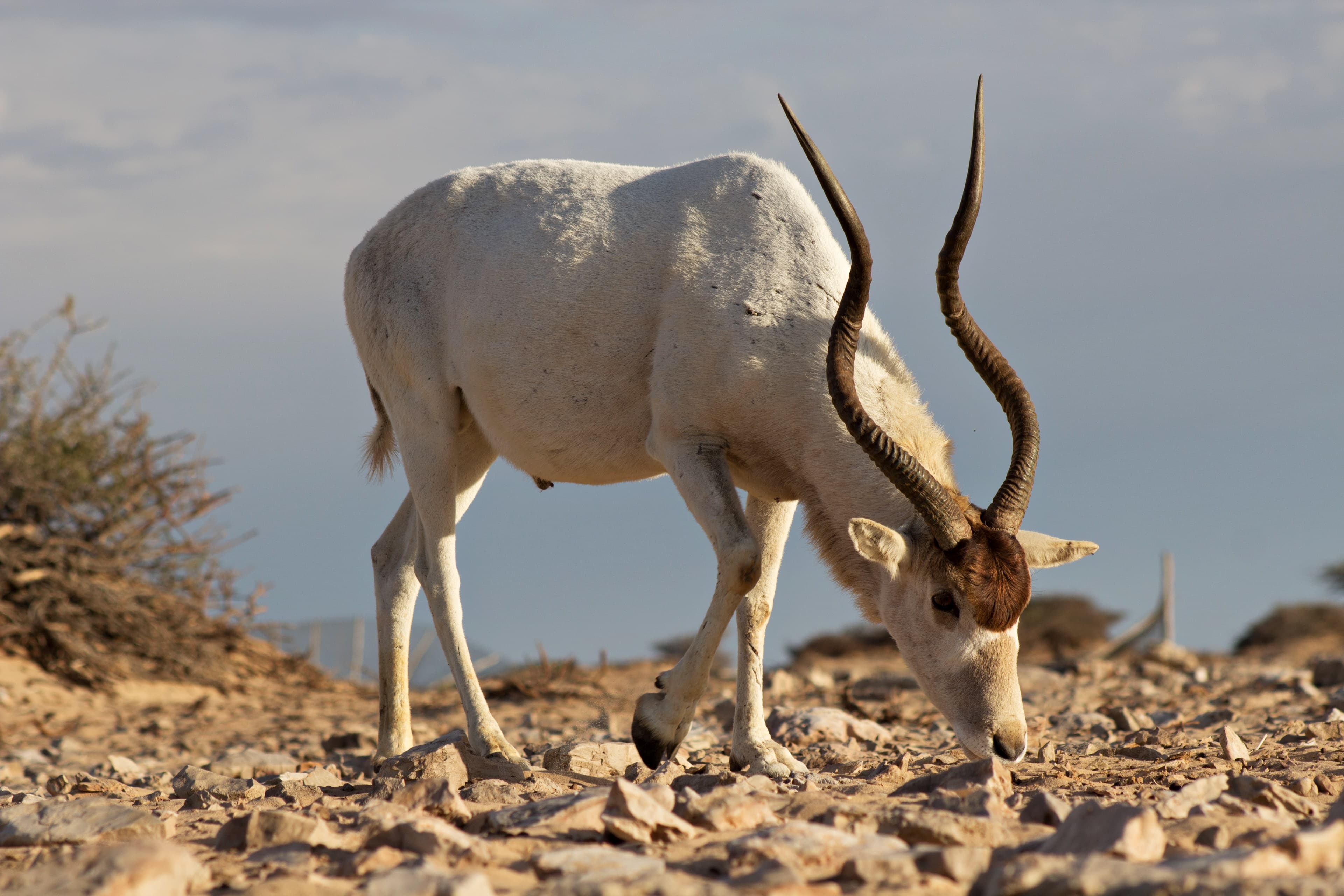
A pale desert antelope with beautiful spiral horns

A pale white-coated addax antelope with long spiral horns standing on desert sand

Photo 路 Wikimedia Commons

What is it?

The addax is an extraordinary antelope built for the deepest part of the Sahara. It has a creamy-white coat in summer that turns soft brown in winter, and long horns that twist into beautiful spiral shapes. It is one of the rarest large animals on Earth, and the Algerian Sahara is one of the last places it lives wild.

Tell me more

Addax barely ever drink water. They get almost all the moisture they need from the plants they eat. They can sniff out the smell of dry grasses from kilometres away - and they walk towards rain clouds when they see them, knowing fresh grass will pop up soon after a desert shower.

Their wide, flat hooves spread out across soft sand the same way camels' do, so they don't sink. They are also brilliant runners - they can sprint at 70 km/h across the dunes when they need to escape from danger.

Both male and female addax grow long curling horns that twist into a spiral - up to 90 cm long. Up close, you can count the rings on the horns to work out roughly how old the antelope is, the same way you can count rings inside a tree.

There are sadly only a few hundred addax left in the wild. Algeria, Niger and Chad share the last wild population. Scientists in zoos around the world are breeding more addax and very slowly releasing them back into the Sahara. The hope is that one day there will be big herds again.

In the classroom

Walk your class through this in 15 minutes.

Talk together

Discussion prompts

  1. 01How can a coat that changes colour through the year help an animal survive?
  2. 02Why might it be important to keep an animal alive in the wild and not only in zoos?
  3. 03What's something around you that has rings or stripes you could count - like the addax horns?
Try this

Classroom activity

Each pupil designs their own 'spiral horns' on a paper antelope head shape. Make the spirals different sizes and shapes. Pin them up as a herd. Talk about how spirals appear in nature - shells, snails, ferns, ram horns.