
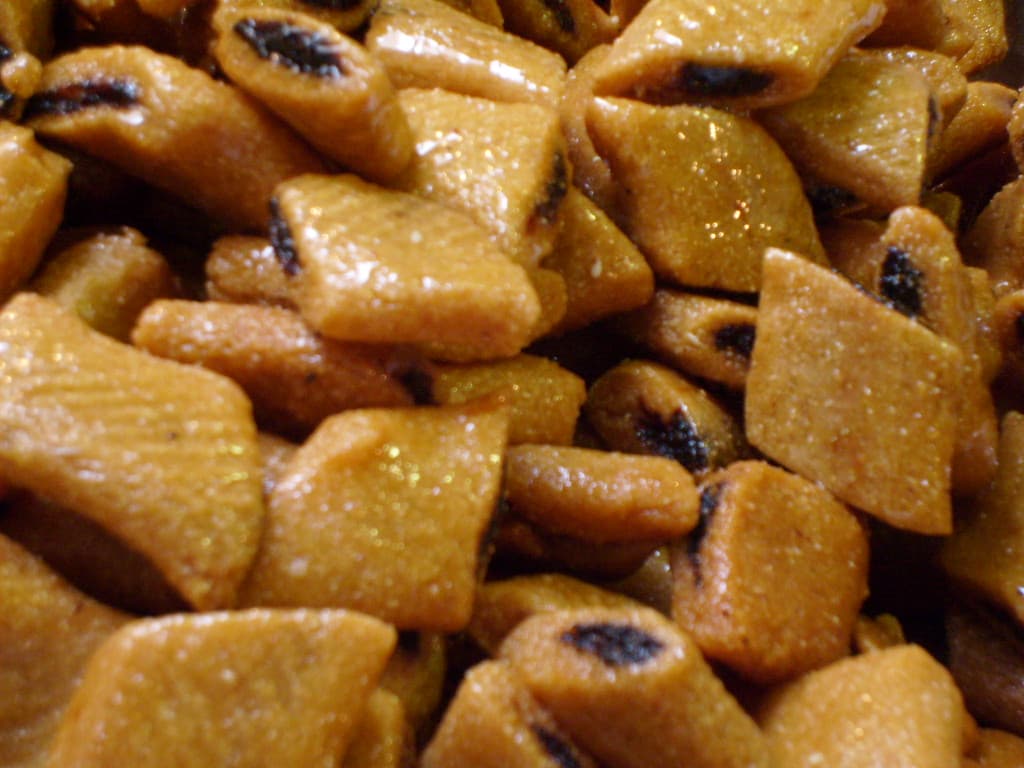
Making makroud takes time and patience. The cook mixes semolina with butter and water, lets it rest, then rolls it into long ropes. A line of date paste goes down the middle of each rope. The dough is folded over the dates, pressed flat, and cut on a diagonal to make diamond shapes. Each diamond is decorated with little ridges using a fork or a special carved stamp.
Dates are the secret ingredient. Algeria grows millions of dates every year, especially in the southern oases. The most famous variety, called 'deglet nour' ('finger of light'), is soft, sweet and golden brown. People all over the world eat Algerian dates - in mueslis, in baking, or just on their own.
Makroud is eaten with mint tea. The bitterness of the strong green tea cuts through the sweetness of the honey, and the two flavours together are perfect. In some homes, a plate of makroud is always sitting somewhere - on a sideboard, in a cupboard - waiting for the next guest.
Different cities have different shapes and styles. The town of Constantine makes a 'royal' makroud filled with almonds as well as dates. The city of Biskra, in the south, makes a soft, gently spiced makroud rolled in sugar instead of honey. Wherever they go in the world, Algerian families often bring their grandmothers' makroud recipes with them.