
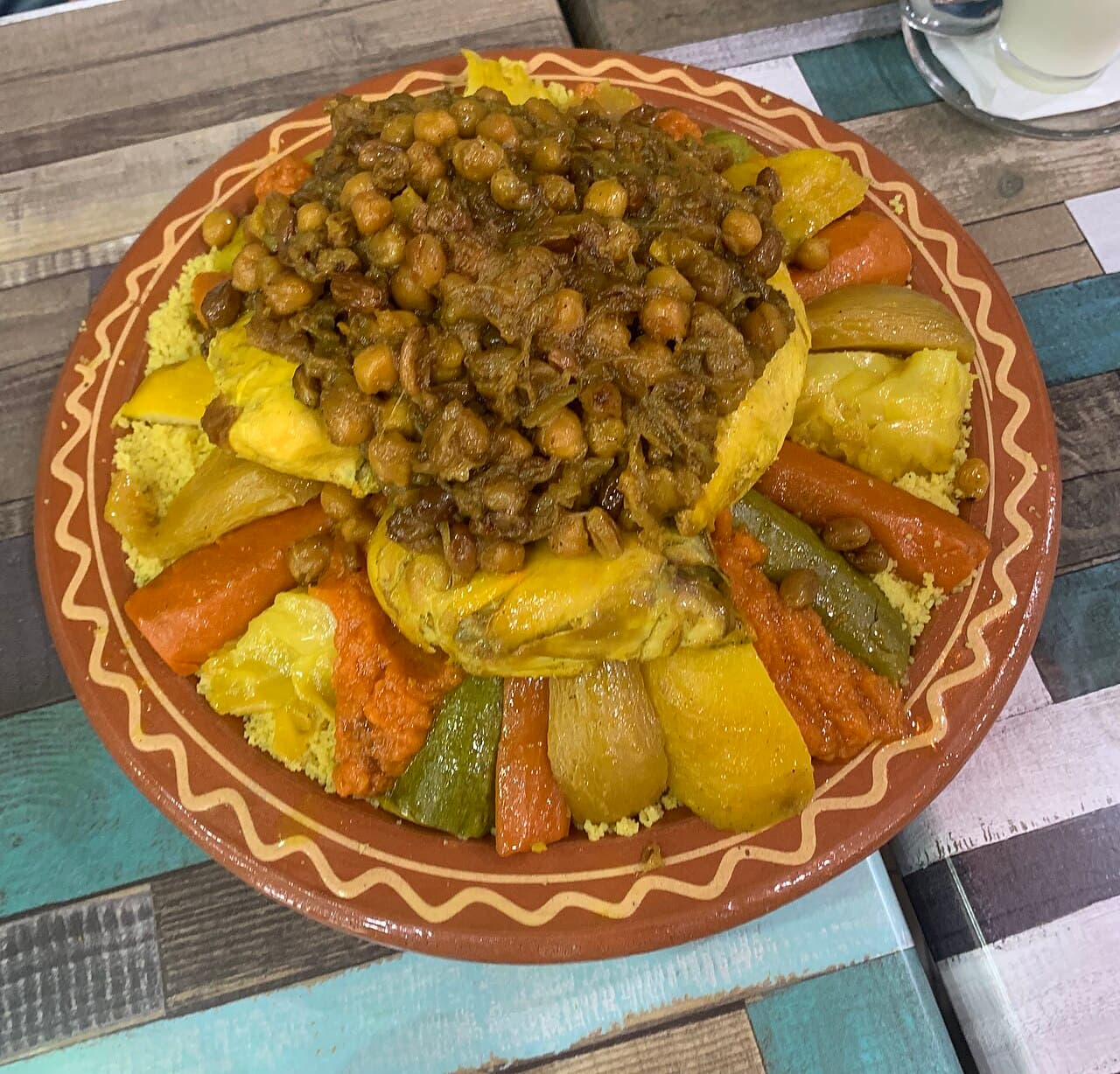
Making couscous from scratch is an art. The cook sprinkles flour and water onto coarse semolina and gently rolls them with the palms of the hands until tiny round grains form. Then the grains are steamed twice in a special two-part pot called a 'couscoussier' - a pot below for the stew, a steaming basket on top for the grains.
Different parts of Algeria make couscous differently. In the north, it is often topped with lamb and seven kinds of vegetables - carrots, courgettes, turnips, pumpkin, cabbage, chickpeas and tomatoes. In Kabylia, couscous is sometimes made with barley instead of wheat and served with a fresh herb sauce. In the south, dates are added for sweetness.
Couscous Friday is a tradition in many Algerian families. After the midday prayer, everyone gathers around one giant platter of steaming couscous. There is talking, laughing, lots of mint tea, and seconds (and sometimes thirds). The biggest pile of couscous is usually placed in front of any visiting friend - hospitality is part of the meal.
In 2020, UNESCO added couscous to its list of important world traditions. Algeria, Morocco, Tunisia and Mauritania all worked together on the application - because the dish belongs to all of them. It was one of the only times those four countries have all signed the same UN paper together.